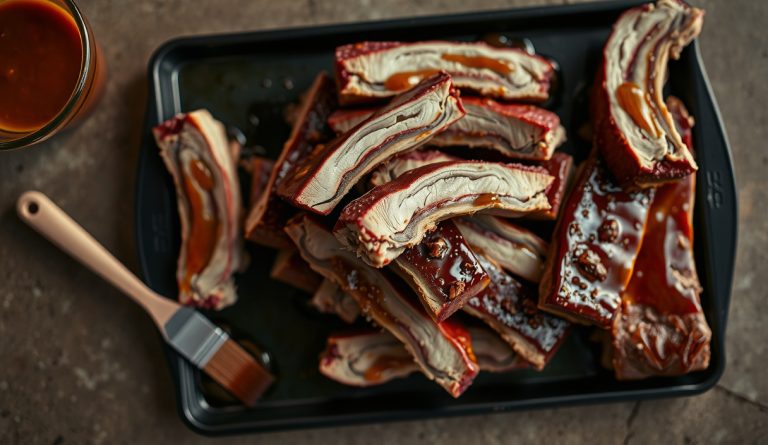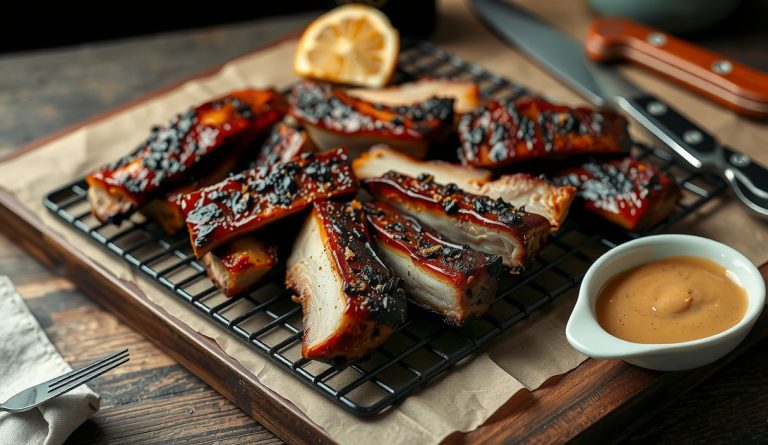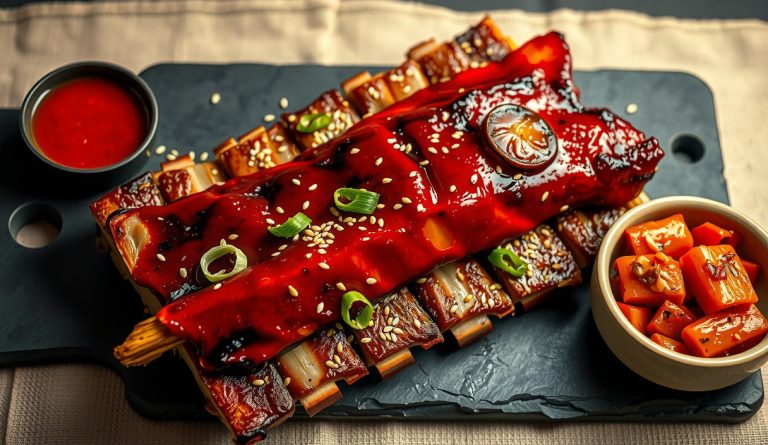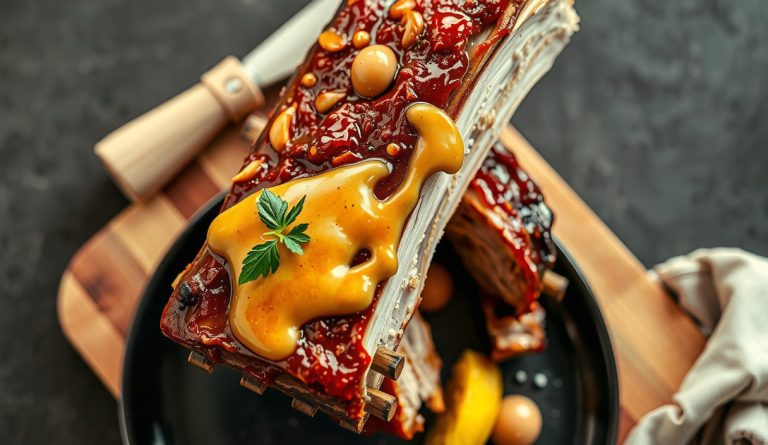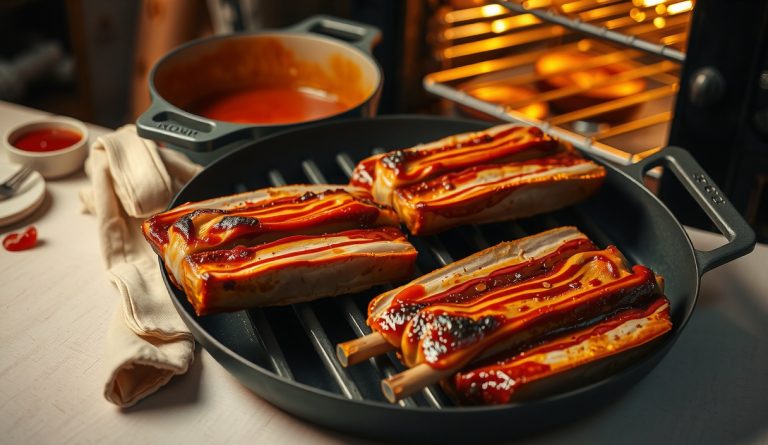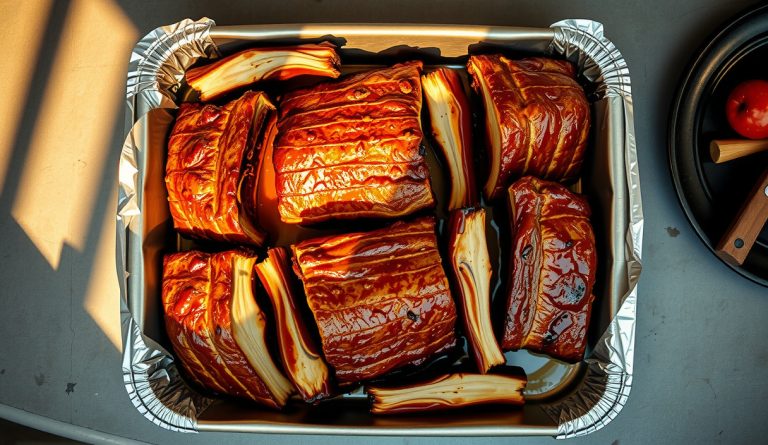
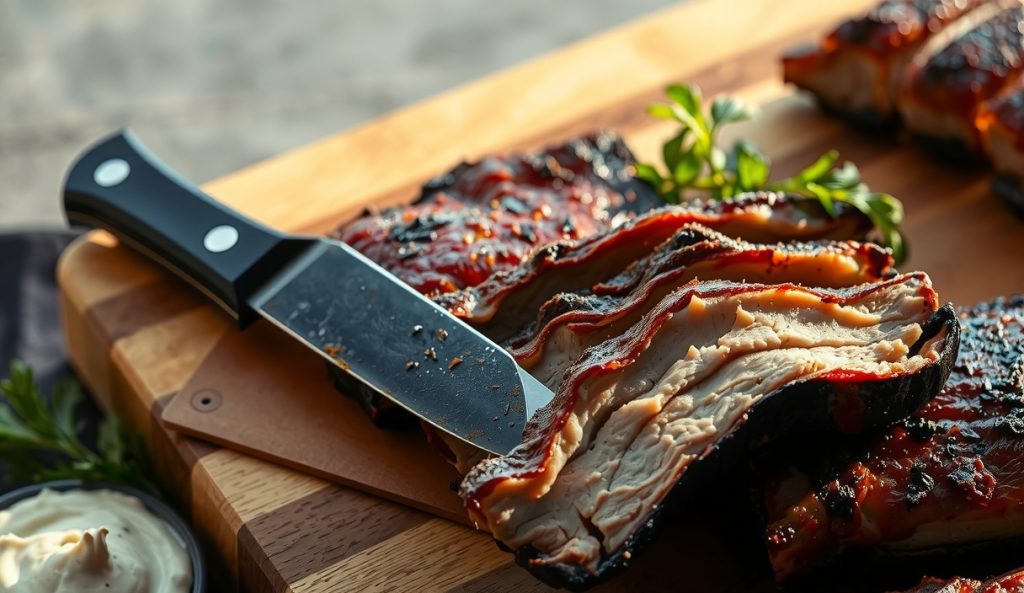
Smoked Country-Style Pork Ribs are structurally one of the most keto-compatible BBQ cuts available — a high-fat blade-end loin section that thrives at low-and-slow temperatures. The fat-to-protein ratio is favorable, and the collagen-to-gelatin conversion that makes this cut so satisfying is entirely carb-free. The carbohydrate problem is concentrated in three specific places: the brown sugar in the dry rub, the commercial BBQ sauce in the braise, and the high-fructose finishing glaze. This adaptation addresses each with specific sweetener science — not a vague “use a sugar substitute” wave of the hand.
What needs to change — and why does each ingredient matter?
Brown sugar in the dry rub. Brown sugar is the canonical bark-builder in this rub, contributing both hygroscopic surface moisture — which sets up the amino-carbonyl Maillard cascade — and caramel color. The best keto substitute is allulose, a rare sugar with 0.4 kcal/g that is not metabolized and carries 0 net carbs. Critically for smoked country-style pork ribs, allulose browns and caramelizes at temperatures nearly identical to sucrose, with caramelization onset around 320°F, making it the only common keto sweetener that genuinely replicates bark color and crust texture. Substitute allulose at a 1:1 ratio by weight.
Erythritol/monk-fruit blends (such as Lakanto) will work in the rub but carry two caveats: erythritol has a higher caramelization threshold, browns less aggressively, and can recrystallize on cooling, producing a slightly grainy mouthfeel on the bark’s surface. If using an erythritol blend, add ¼ teaspoon of xanthan gum to the rub to improve surface adhesion and reduce crystallization. Avoid pure powdered erythritol alone — the cooling sensation from its endothermic dissolving is perceptible on the finished bark.
BBQ sauce in the braise and glaze. Commercial BBQ sauce is a dense carbohydrate payload — typically 12–16 g of sugar per 2-tablespoon serving — built from ketchup, corn syrup, and molasses. Replace with a keto BBQ sauce using tomato paste (lower sugar than ketchup), apple cider vinegar, smoked paprika, garlic powder, onion powder, and allulose for sweetness, plus a small amount of liquid smoke if needed. Target a sauce that delivers under 2 g net carbs per 2-tablespoon serving. The viscosity function — the hydrocolloid moisture shield the canonical recipe depends on — is preserved by tomato paste’s natural pectin content and can be reinforced with ¼ teaspoon xanthan gum per cup of sauce.
Apple juice in the braise. Unfiltered apple juice carries roughly 14 g of sugar per half-cup, making it the primary carb contributor in the braise liquid. Replace with unsweetened apple cider vinegar diluted 1:4 with water to approximate apple juice’s pH of 3.5–4.0 without the fructose load, or use a small amount of apple extract in water. The acid-hydrolysis acceleration of collagen conversion is fully preserved with this swap; the reducing-sugar contribution to the final Maillard glaze is handled instead by the allulose already present in the rub and sauce.
Net-carb delta. The canonical smoked country-style pork ribs recipe likely runs 20–30 g net carbs per serving from sauce, apple juice, and rub sugar combined. This keto version lands at approximately 3–5 g net carbs per serving — a reduction of roughly 80–85%, driven almost entirely by the sauce and braise-liquid swaps.
What stays exactly the same?
The entire smoke-and-braise architecture is unchanged: the 225°F smoke phase, the foil-pan braise to 195°F internal temperature, and the open-lid caramelization finish all proceed identically to the canonical method. The collagen hydrolysis timeline, the smoke ring chemistry, the bark-formation desiccation mechanics, and the moist-braise moisture-reservoir principle all operate on the same physics regardless of which sweetener is in the rub. Pork blade-end loin fat is already keto fuel — nothing about the cut itself requires adjustment.
Who is this keto version the right choice for?
This build is for anyone tracking net carbs seriously — keto maintenance, therapeutic ketogenic protocols, or low-carb eating where a single BBQ meal should not consume a full day’s carbohydrate budget. At 3–5 g net carbs per serving, smoked country-style pork ribs become a genuinely sustainable weekly cook rather than an occasional treat, delivering the full smoke-and-braise payoff without the glycemic spike that a sugar-heavy glaze produces.
All temperatures, timing, and technique details live at the original Smoked Country-Style Pork Ribs recipe.