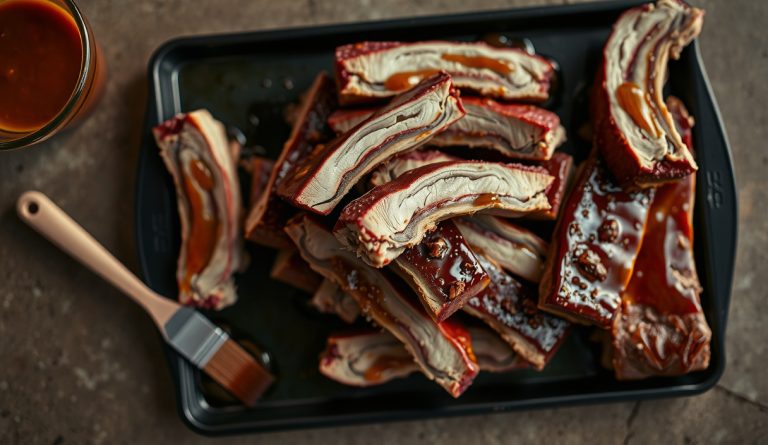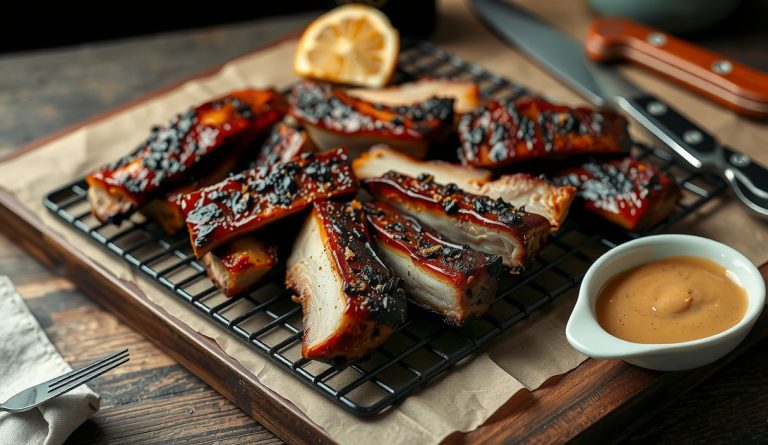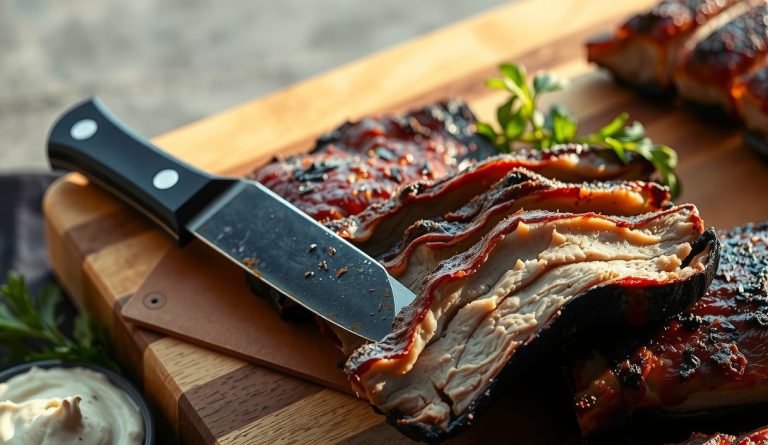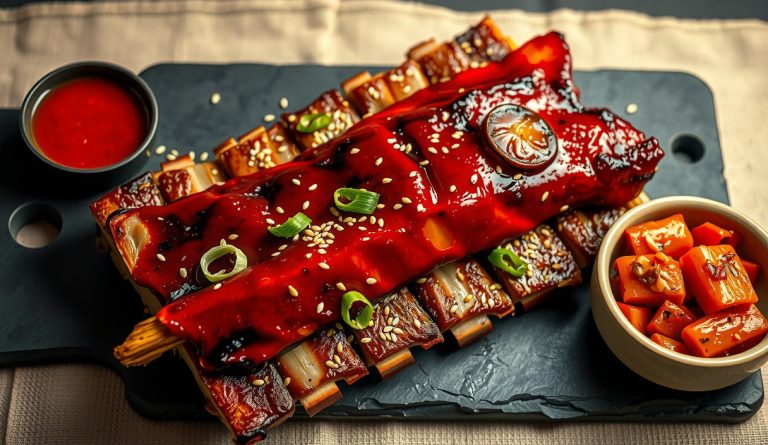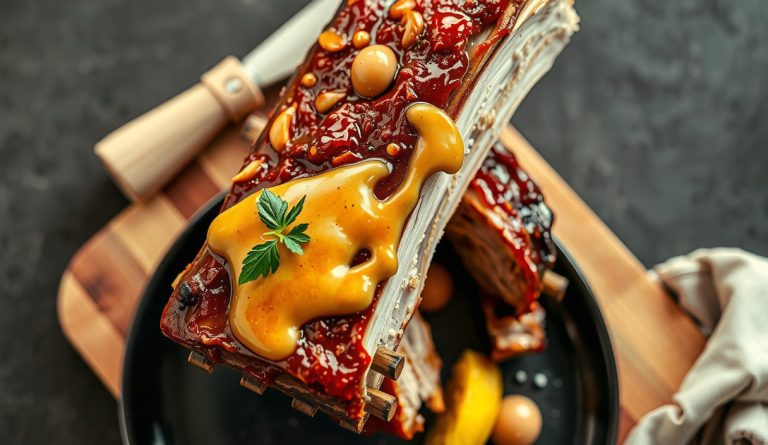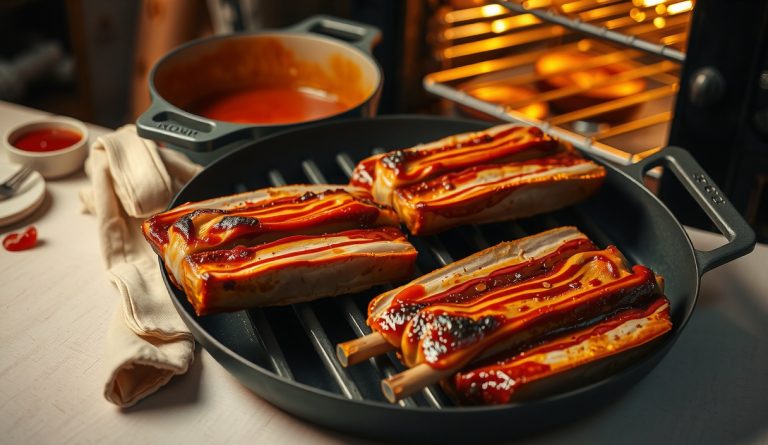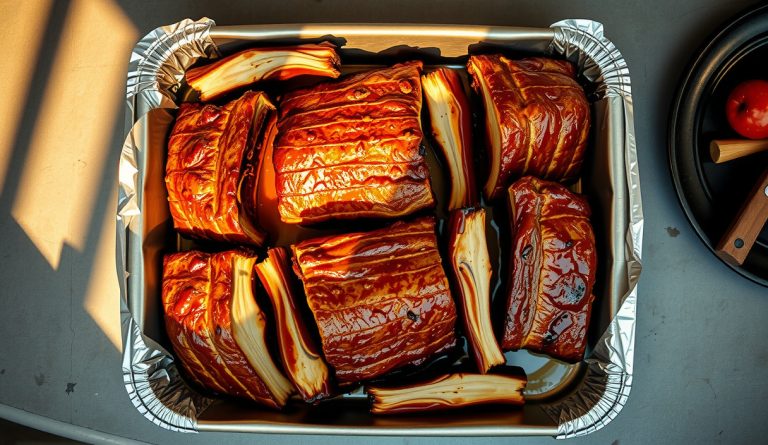
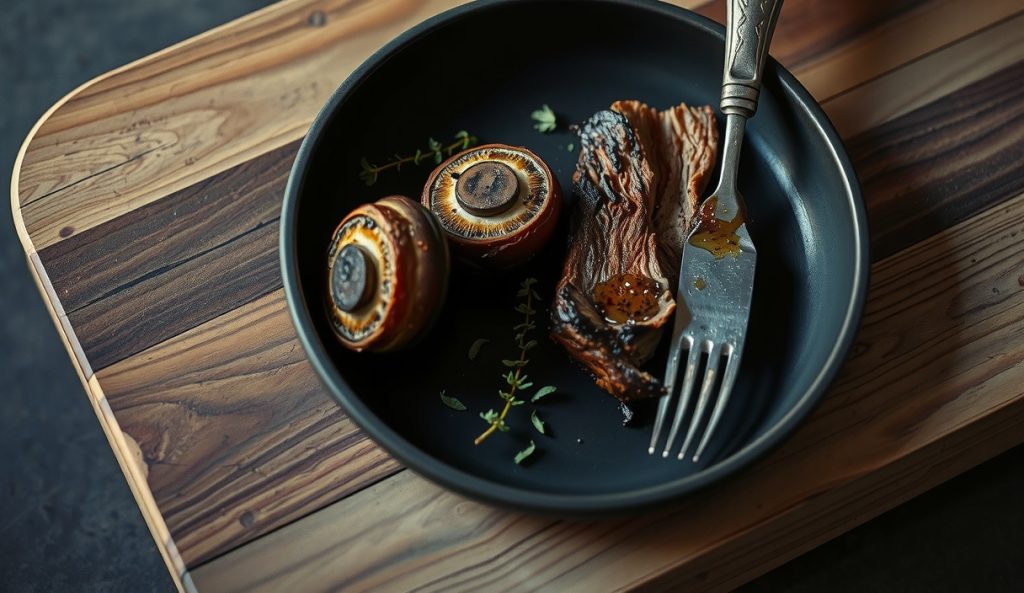
This is not a replacement. Smoked Country-Style Pork Ribs exist because blade-end pork loin carries a specific architecture of intramuscular fat, myofibrillar protein, and collagen that no plant material can replicate molecule-for-molecule. What we can do is identify the vegetarian analog that shares the most functional properties — dense fibrous texture, high surface area for smoke uptake, sufficient moisture content to survive a braise — and treat it with exactly the same rub, wood, and technique sequence. The result belongs on a longer table, not a higher fence. The best analog for this recipe is thick-cut king oyster (Pleurotus eryngii) mushroom slabs, cut into 1.5-inch planks that approximate the cross-sectional profile of a country-style rib.
What changes — and why does the substitution actually work?
The analog and why. King oyster mushrooms have a dense, meaty stipe composed of tightly packed parallel hyphae — fungal cell walls built from chitin rather than collagen, but structurally analogous in their fibrous, bundled geometry. At low-and-slow temperatures, the hyphal cell walls dehydrate progressively, concentrating glutamate and 5′-nucleotide umami compounds (principally GMP and AMP) that make the finished king oyster slab taste substantially more savory than raw mushroom. The stipe’s low initial water activity relative to its cap means it desiccates controllably rather than weeping and steaming, giving the exterior the conditions to form a genuine Maillard crust — the same amino-carbonyl cascade that builds bark on pork — because the mushroom surface reaches the required low water-activity threshold above 280°F surface temperature.
Smoke uptake mechanics. Plant cell walls absorb volatile smoke compounds — guaiacol, syringol, and 4-methylguaiacol — more readily than muscle tissue because the porous hyphal structure offers dramatically higher surface-area-to-volume ratios. King oyster slabs reach a fully smoked flavor profile in roughly 60–75 minutes at 225°F, versus the 2-hour smoke phase required for pork. Deep mahogany exterior color is the smoke-completion indicator to watch for; pulling the slabs earlier prevents the bitterness that over-smoking porous plant tissue reliably introduces.
The braise adaptation. The pork braise is designed to hydrolyze collagen at 195°F — king oyster mushrooms contain no collagen. The foil-pan braise step still serves a valuable purpose: it re-hydrates the desiccated hyphal structure, allows BBQ sauce and apple juice to penetrate cell walls via osmotic pressure, and delivers a final steamed-tender texture that prevents the slabs from turning leathery. Reduce braise time to 25–30 minutes and target an internal temperature of 175°F — there is no collagen-hydrolysis floor to hit, and the goal is managing texture and liquid absorption, not connective-tissue chemistry.
Rub and wood. Use the canonical dry rub unchanged — smoked paprika, brown sugar (or allulose for keto guests), black pepper, garlic powder, onion powder, kosher salt. Apple or cherry wood pairs perfectly with the mild, slightly sweet flavor of king oyster mushroom, exactly as specified for the pork version. Press the rub firmly into the cut faces of each slab; the flat-cut surface exposes hyphal ends that grip the rub more aggressively than the smooth exterior of a whole mushroom.
Texture target and honest assessment. The finished king oyster slab will be smoky, savory, chewy with a yielding center, and deeply flavored. The king oyster slab will not pull apart into collagen-coated shreds, and it will not carry the lipid richness of pork blade fat. What it delivers is a substantial, smoke-forward vegetarian centerpiece that shares the table with the canonical pork version rather than competing with it.
What stays the same as the original pork recipe?
The rub formula, the wood selection (apple or cherry), the smoker temperature (215°F–225°F), the foil-pan braise sequence, and the open-lid finishing caramelization step all carry over from the pork recipe without modification. The flavor scaffold — smoke, spice crust, sweet-tangy glaze — is identical across both versions.
When is the vegetarian version the better choice?
Set the king oyster tray beside the pork at any mixed table — it lets a vegetarian guest participate in the same cook, the same flavors, and the same communal ritual without requiring a separate meal or an apology. The king oyster version also functions as a compelling smoke-forward vegetable course for omnivore cooks who want a substantial side that earns its place on the board.
The full pork technique, timing, and science live at the original Smoked Country-Style Pork Ribs recipe.