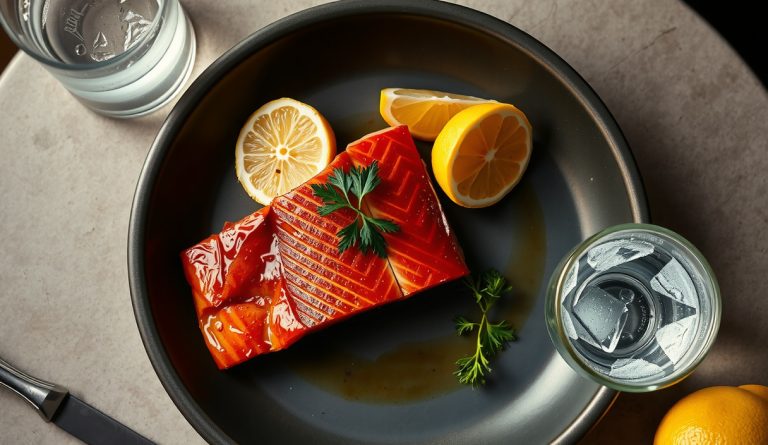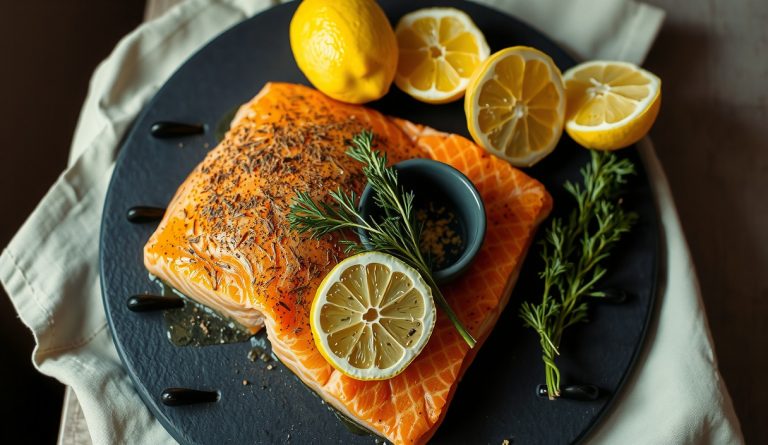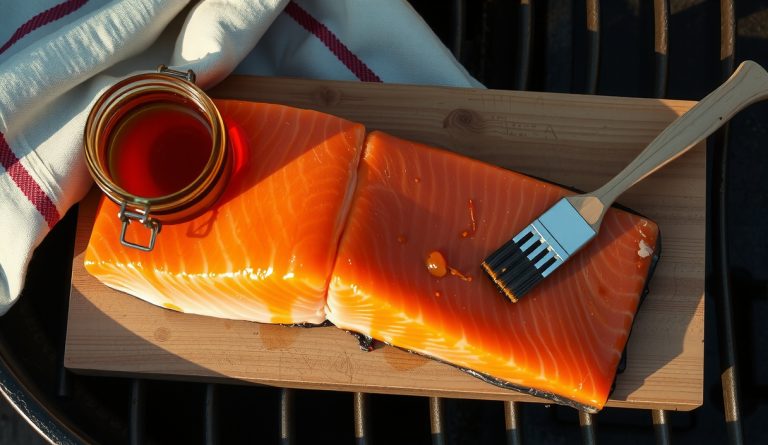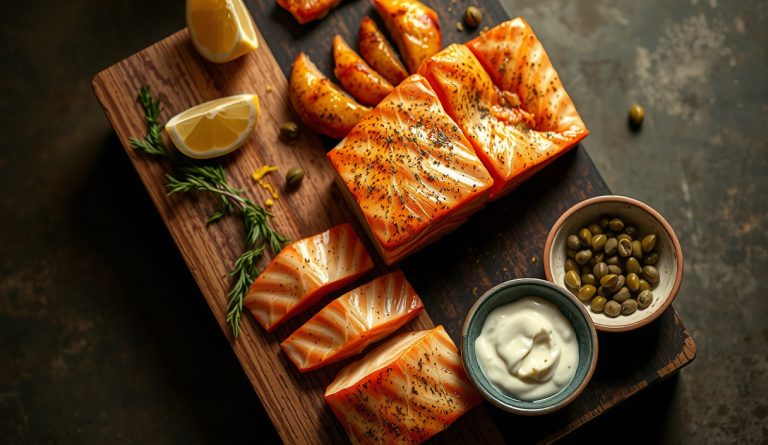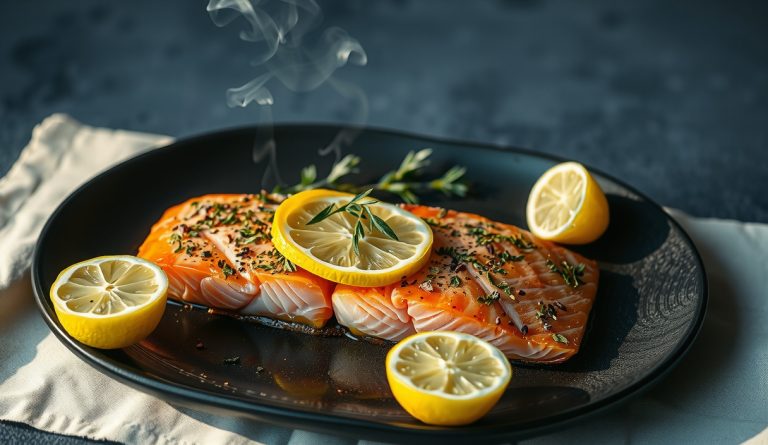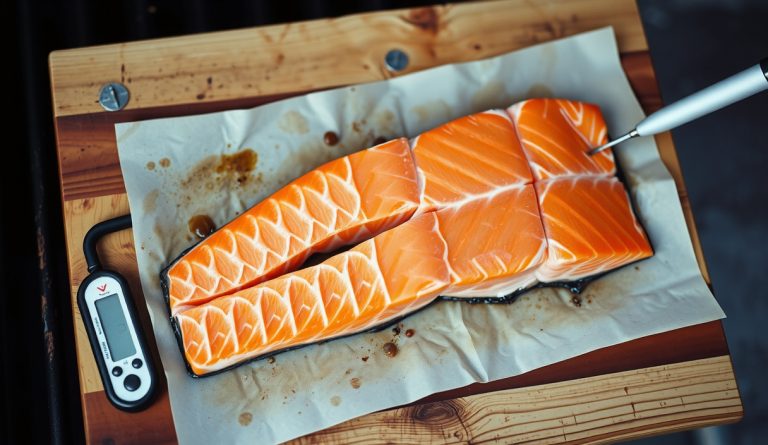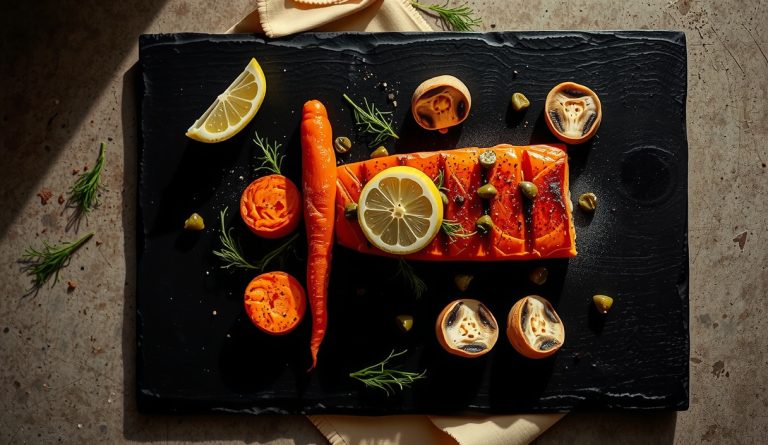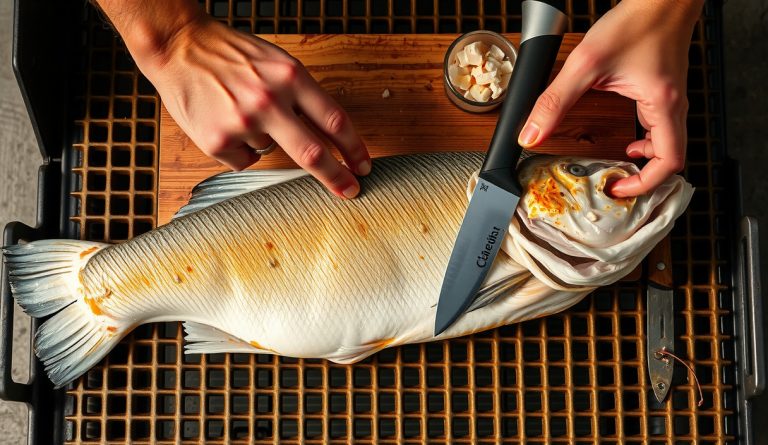
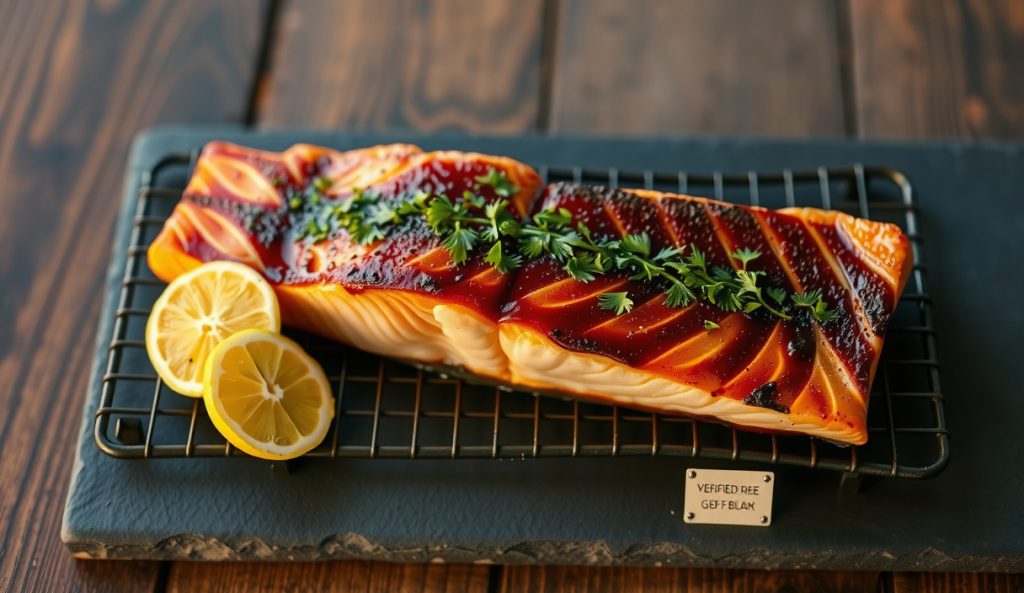
Good news first: salmon, wood smoke, kosher salt, and granulated white sugar are inherently gluten-free. The risk in this recipe is narrow but real, and it lives in two places — the cure’s sugar source and any store-bought rubs, glazes, or sauces added at the table. Once you close those gaps, the method is completely untouched and the finished fillet is identical in texture, bark, and smoke character.
What changes for a gluten-free pellet-smoked king salmon?
The canonical cure calls for granulated white sugar, which is gluten-free as a pure sucrose product — no issue there. The vulnerability appears when you substitute brown sugar or a commercial “smoked sugar” product, because some of these are processed on shared equipment with barley-malt syrups or use malt-derived caramel color. Use certified GF granulated white sugar or certified GF light brown sugar and you are covered.
Glazes and dipping sauces added at the table are the second hidden risk. Conventional soy sauce contains wheat and is a frequent salmon companion; replace it with tamari (most tamari is brewed without wheat, but verify the label) or coconut aminos. Worcestershire-based dipping sauces often contain barley malt vinegar; use a certified GF Worcestershire instead — Lea & Perrins in the US is GF, but the UK formulation is not — or substitute a few drops of apple cider vinegar plus a pinch of tamarind. Malt vinegar used as a finishing acid on smoked fish must be replaced with cider vinegar or rice vinegar, both of which are gluten-free and share a similar bright-acid profile.
Commercial pre-mixed rubs applied over the cure can contain wheat flour as an anti-caking agent. Make your own rub from scratch or look for a certified GF label before using a store-bought blend. Pellet composition also matters: pure hardwood pellets — alder, cherry, apple — are gluten-free, but some flavored or blended pellets use wheat starch as a binder. Check the manufacturer’s specification sheet or choose a certified GF pellet brand before loading the hopper.
Cross-contamination deserves its own note. A spice grinder used for wheat-containing rubs, a marinade brush that touched a flour-dusted protein, or a cutting board with embedded bread crumbs can each deposit enough gluten to provoke a reaction in celiac patients. Use a dedicated brush for the salmon, rinse the grill grates thoroughly, and grind cure ingredients in a clean grinder. The pellicle-drying rack and wire cooling rack should be washed with hot soapy water before use.
What stays exactly the same in the gluten-free version?
Every parameter of the core recipe is unchanged. The 3:1 kosher-salt-to-sugar cure ratio, the four-hour cure window, the pellicle-development step, the 180°F pellet grill temperature, the alder or cherry smoke, and the 130°F internal temperature target are all identical to the original. Gluten plays no role in bark chemistry, smoke adsorption, albumin suppression, or myosin denaturation, so the physics and final texture of the pellet-smoked king salmon fillet are exactly the same.
When is the gluten-free adaptation the better choice?
This adaptation is essential for anyone with celiac disease or non-celiac gluten sensitivity, and it is equally useful for households serving mixed-tolerance guests. The audit costs nothing in flavor — zero adjustments to temperature, time, or smoke wood — so there is no reason not to apply it every time you smoke salmon regardless of who is at the table.
Follow the complete method, timing, and temperature protocol at the original recipe.