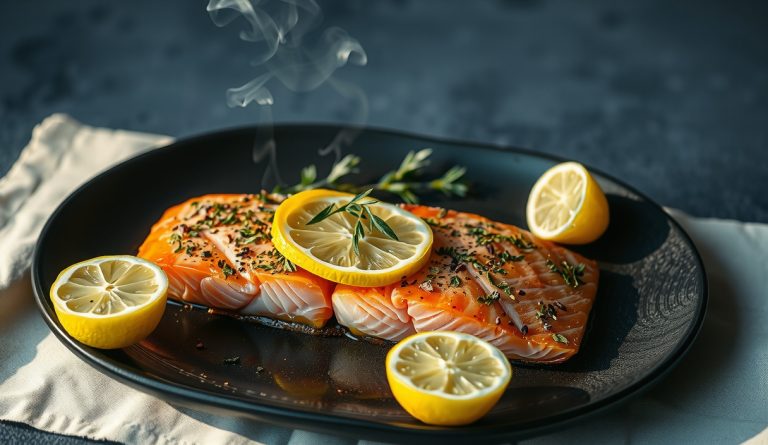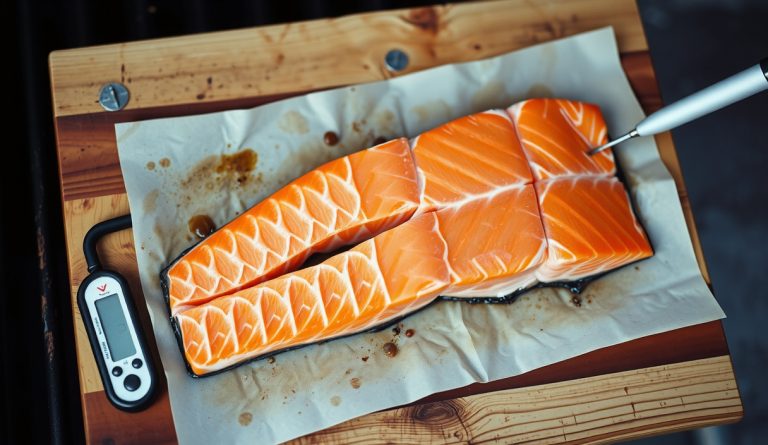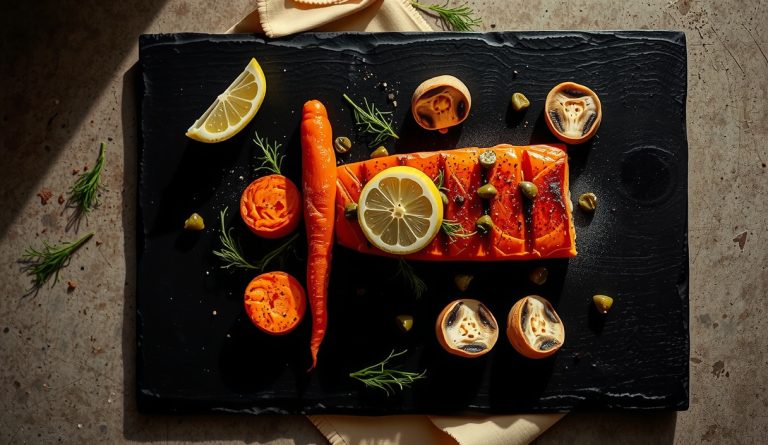
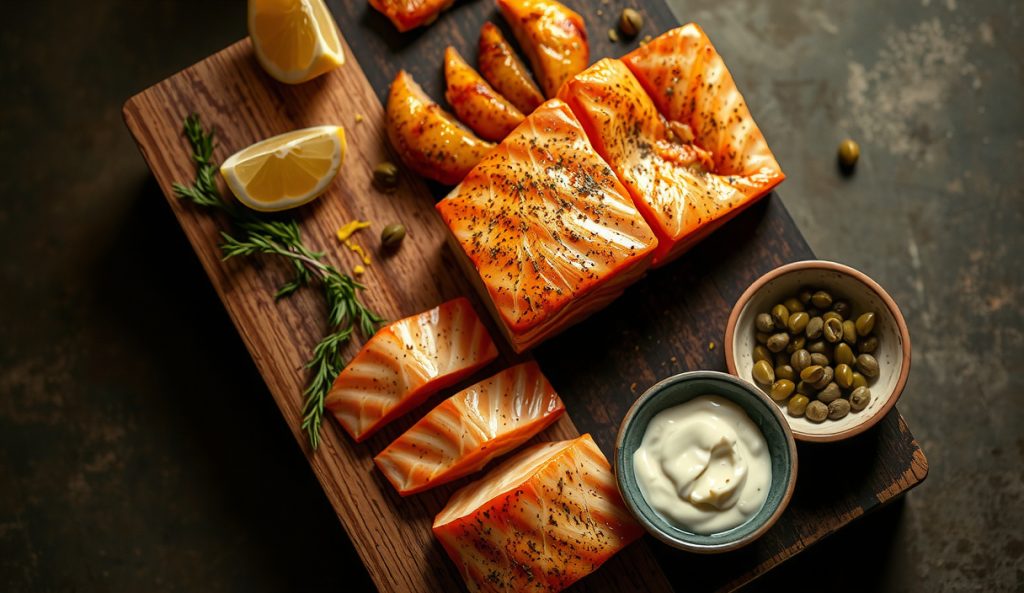
King salmon is one of the most keto-compatible proteins you can put on a smoker: 15%-plus intramuscular fat, zero net carbs in the raw flesh, and a cooking method driven entirely by salt, smoke, and controlled heat. The only keto-hostile element in this recipe is the granulated sugar in the cure, and replacing it demands more thought than a simple 1:1 swap — the sucrose is doing osmotic work, not just adding sweetness.
What changes when you make pellet-smoked King salmon keto?
The canonical cure runs 3:1 kosher salt to granulated white sugar by weight. At 180°F smoke temperature, the sucrose’s primary function is osmotic — drawing free moisture and dissolved albumin outward to assist pellicle formation — rather than Maillard browning, which requires surface temperatures well above this cook’s ambient. Your sugar substitute must therefore match sucrose’s osmotic activity in aqueous solution, not just its sweetness.
Allulose is the best available option for a keto cure. Allulose is a rare monosaccharide with near-zero metabolic impact (approximately 0.4 kcal/g, not counted toward net carbs in most frameworks), and critically, allulose participates in Maillard browning and caramelization at temperatures similar to sucrose — so any incidental surface color development on the skin side remains intact. Use allulose at a 1:1 weight substitution for the granulated white sugar in the cure.
Erythritol-based blends (erythritol/monk-fruit) will also function osmotically, but erythritol has a well-documented cooling sensation on the palate from endothermic dissolution, and erythritol can recrystallize on the pellicle surface as moisture evaporates during the cure — producing a faintly gritty texture on the finished fillet. If erythritol is your only option, reduce the quantity by 15% and extend the pellicle-drying step by 30 minutes to allow full moisture evaporation before crystals can set.
The net-carb impact of this substitution is significant: the canonical cure across a 2-pound fillet contributes roughly 6–8g of sugar, distributed across multiple servings. Substituting allulose drops the net-carb contribution to effectively 0g per serving.
If you serve the salmon with a glaze, replace any ketchup, honey, or maple syrup in the glaze with a combination of allulose-sweetened tomato paste thinned with apple cider vinegar, plus a few drops of liquid smoke for depth. For sides, smoked King salmon over a dressed arugula salad with capers and a lemon-olive oil vinaigrette, or alongside cauliflower purée finished with cold butter, keeps the full meal under 5g net carbs total.
What stays the same in the keto version?
The kosher salt quantity, the four-hour cure window, the pellicle-development step, the 180°F cook temperature, alder or cherry pellets, and the 130°F internal-temperature pull point are all identical to the original recipe. The fat content, protein structure, and smoke-adsorption mechanics of King salmon are entirely unaffected by the sugar substitution.
Who is this keto adaptation the better choice for?
This adaptation suits anyone managing blood glucose, following a strict ketogenic protocol, or simply minimizing added sugars. Because King salmon’s 15%-plus intramuscular fat content is the actual star of this recipe, removing the sugar costs virtually nothing in flavor or texture when allulose is used correctly.
Follow the complete cure ratios, timing, and smoke protocol at the original recipe.