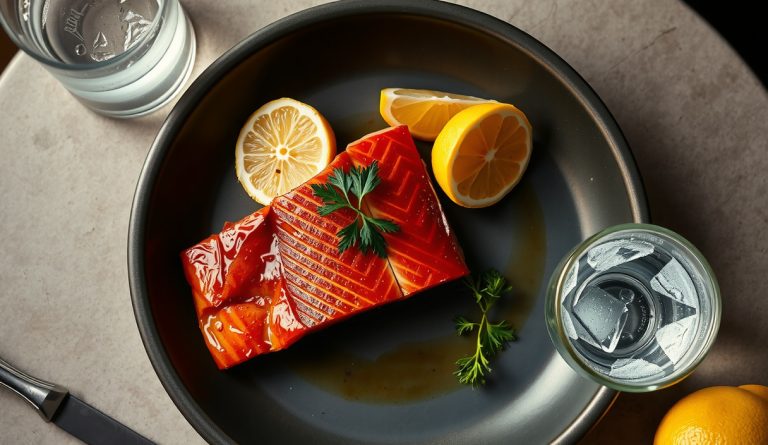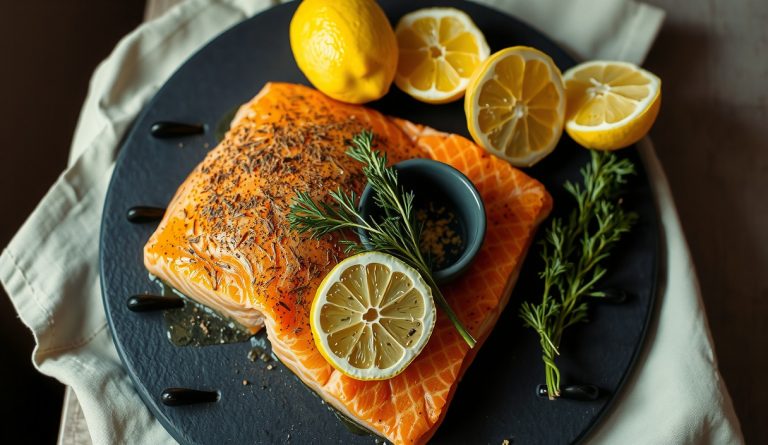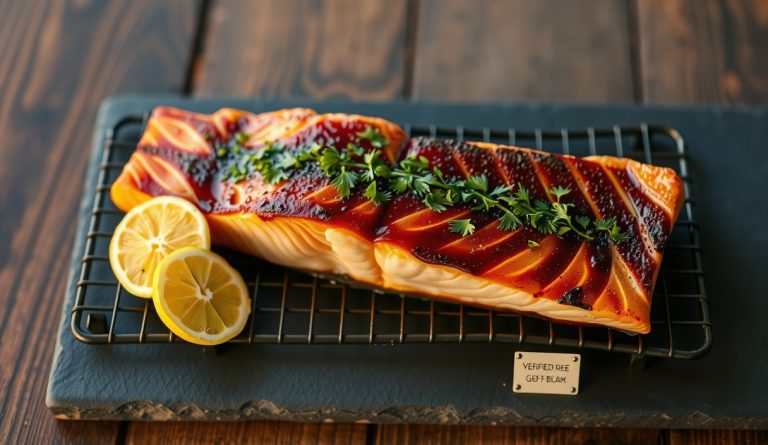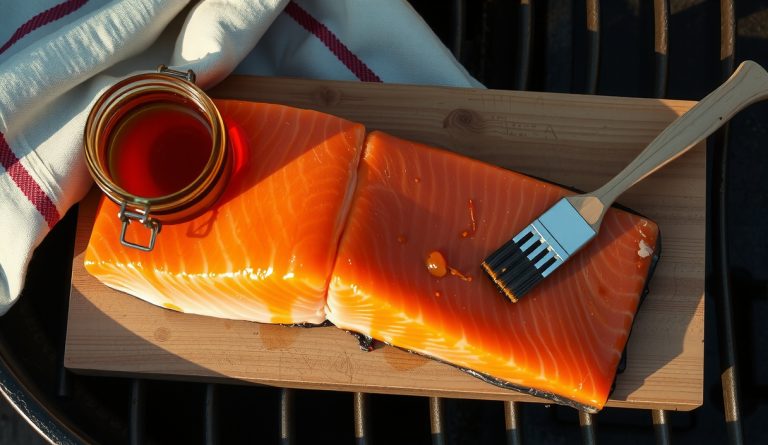
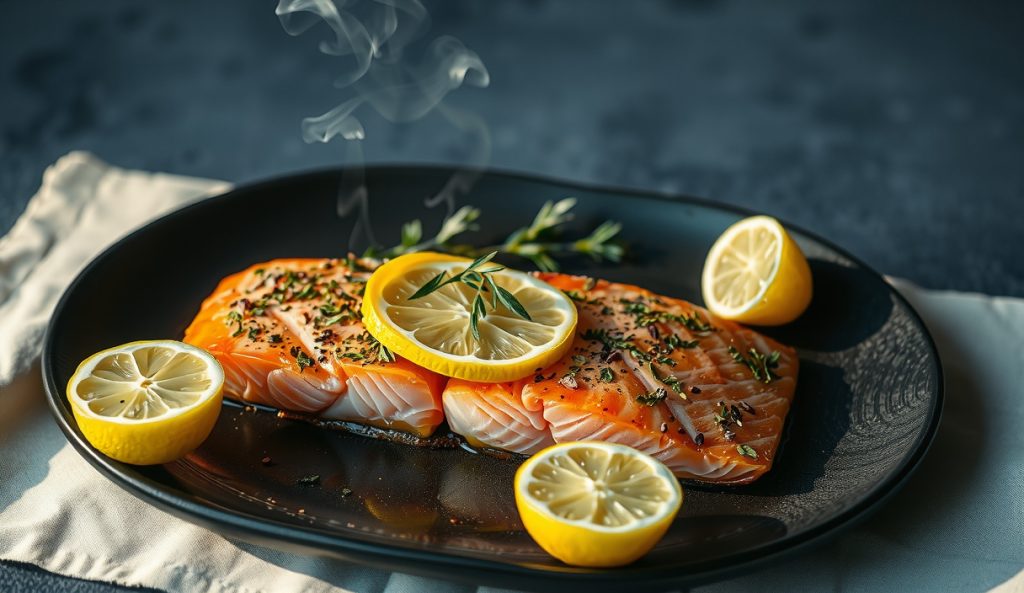
Low-sodium smoked King salmon requires an honest reckoning with salt’s role in the cure. Sodium chloride at a 3:1 ratio to sugar is not seasoning — it is the mechanism that initiates myofibrillar protein denaturation on the fillet’s surface within the first hour, forcing free moisture and dissolved albumin outward to create the tacky pellicle that controls smoke adsorption and prevents weeping during the cook. Cut sodium carelessly and you lose the pellicle, the albumin control, and the structural integrity of the finished fillet simultaneously. Cut it intelligently and you can meaningfully reduce sodium while preserving most of the outcome.
What changes when you reduce sodium in the cure?
Reduce the kosher salt in the cure by 50% — from the canonical weight to half — and compensate with a potassium chloride salt substitute (Nu-Salt, NoSalt) to maintain total ionic strength. Potassium chloride functions osmotically and causes protein denaturation through the same ionic mechanism as sodium chloride, which means pellicle formation, albumin suppression, and moisture management all proceed on a similar timeline.
Potassium chloride has a threshold bitterness that becomes perceptible above roughly 30–35% of the total chloride-salt blend in direct applications. Staying at a 50/50 NaCl-to-KCl blend by weight keeps the cure safely below that bitterness threshold in most palates, particularly on fatty fish where lipid richness buffers bitter perception. Do not attempt a full sodium-chloride-to-potassium-chloride swap — the bitterness on the finished fillet will be distracting.
Extend the cure time by 60 to 90 minutes beyond the canonical four hours to compensate for the reduced ionic driving force. Lower salt concentration means slower osmotic draw, so the pellicle will take longer to develop properly. During the air-drying step, extend pellicle time by an additional 30 minutes and use a small fan if possible — airflow accelerates moisture evaporation and partially compensates for a less fully denatured surface layer.
The result will be a slightly thinner, less lacquered pellicle than the full-sodium version; smoke adsorption will be marginally shallower and the surface will be less glossy. To rebuild the flavor depth lost with the salt reduction, add the following to the cure mix per pound of fish:
- Finely grated lemon zest from one lemon — contributes aromatic brightness and mild astringency without sodium
- One teaspoon of smoked paprika — adds layered smoke character and color
- One teaspoon of white pepper — delivers low-heat complexity and aromatic depth
Lean harder on the smoke itself: run the pellet grill in Super Smoke mode for the full duration to maximize guaiacol and syringol deposition on the pellicle surface. Avoid finishing sauces with significant sodium — most commercial hot sauces run 100–200 mg of sodium per teaspoon. A squeeze of fresh lemon and a drizzle of good olive oil is the correct low-sodium finisher for this preparation.
What stays the same in the low-sodium version?
The sugar quantity, the 180°F cook temperature, the alder or cherry pellet selection, and the 130°F internal temperature target are all unchanged. The fundamental myosin-actin denaturation physics of King salmon respond to heat, not to salt concentration — the low-sodium adaptation adjusts the cure chemistry without altering any of the cook’s thermal parameters.
Who is the low-sodium smoked salmon version right for?
This version is appropriate for anyone managing hypertension, following a cardiac or renal dietary protocol, or cooking for guests with strict sodium restrictions. It is worth knowing that even at 50% reduced sodium, the pellicle-and-cure method still produces a dramatically better result than an uncured, unsalted fillet placed directly on the grill.
All timing, temperatures, and cure mechanics are detailed at the original recipe.