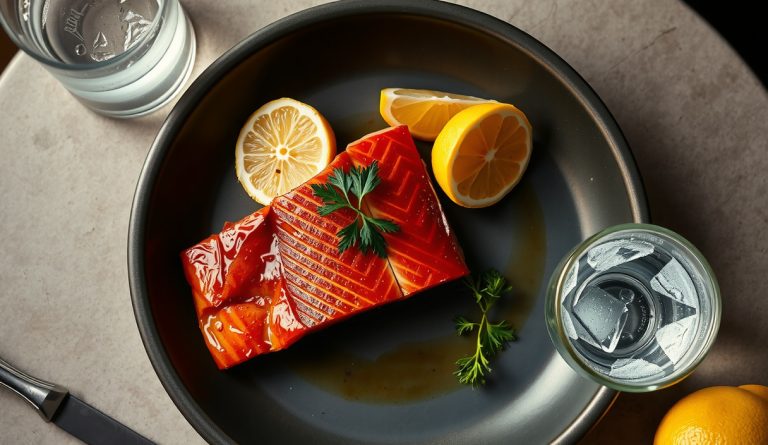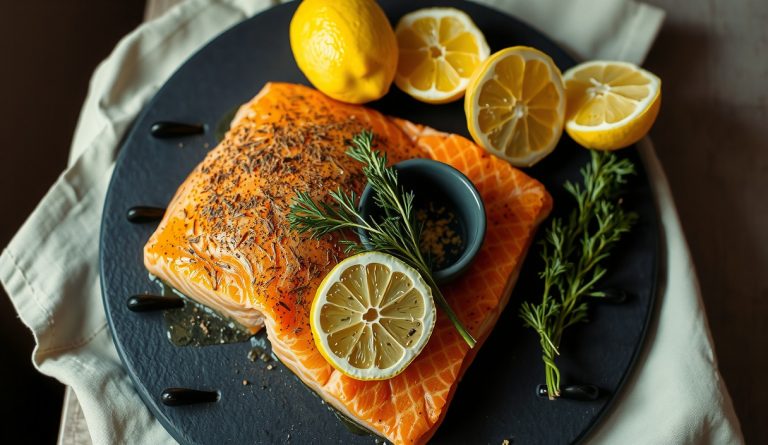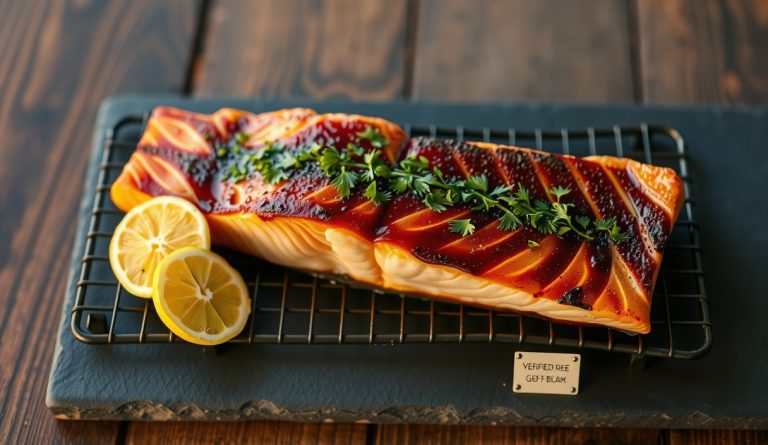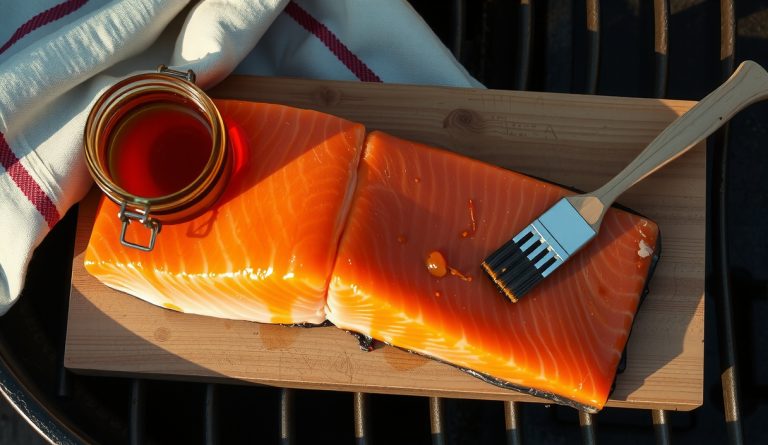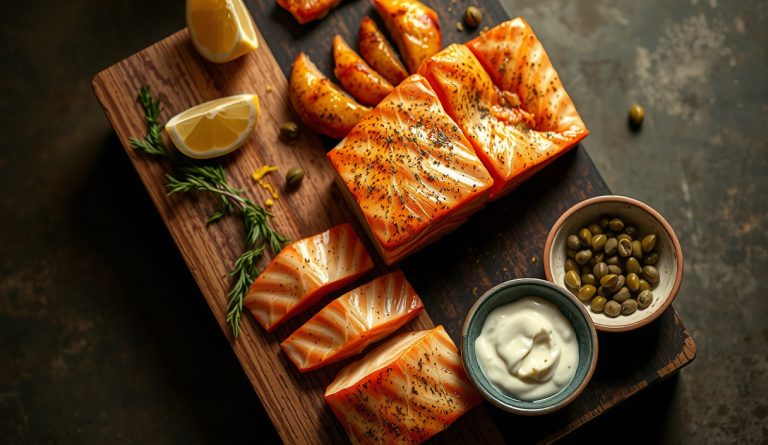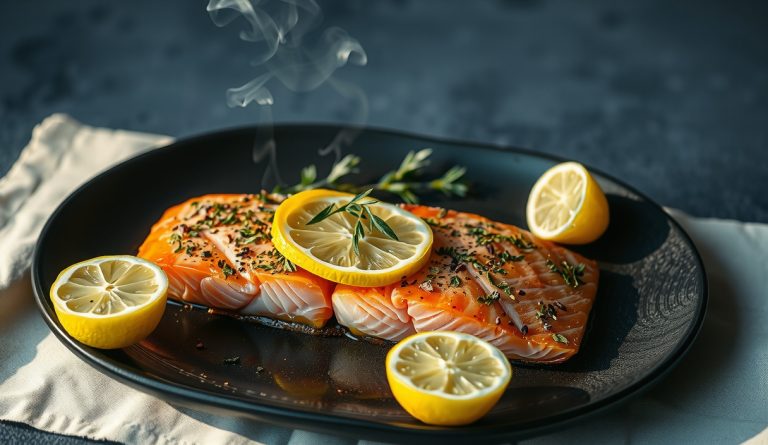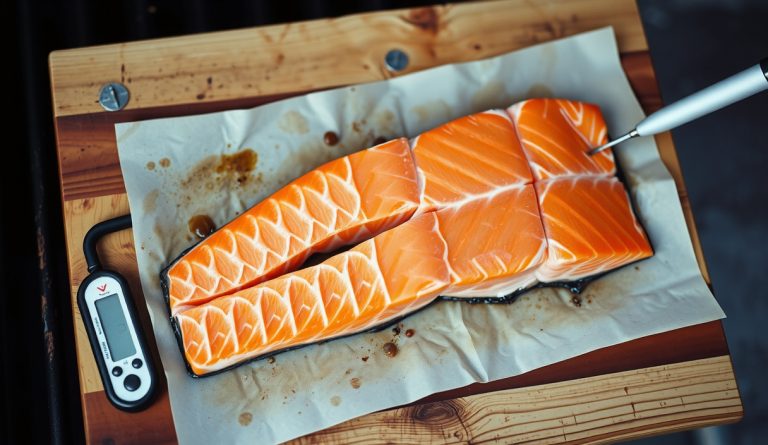
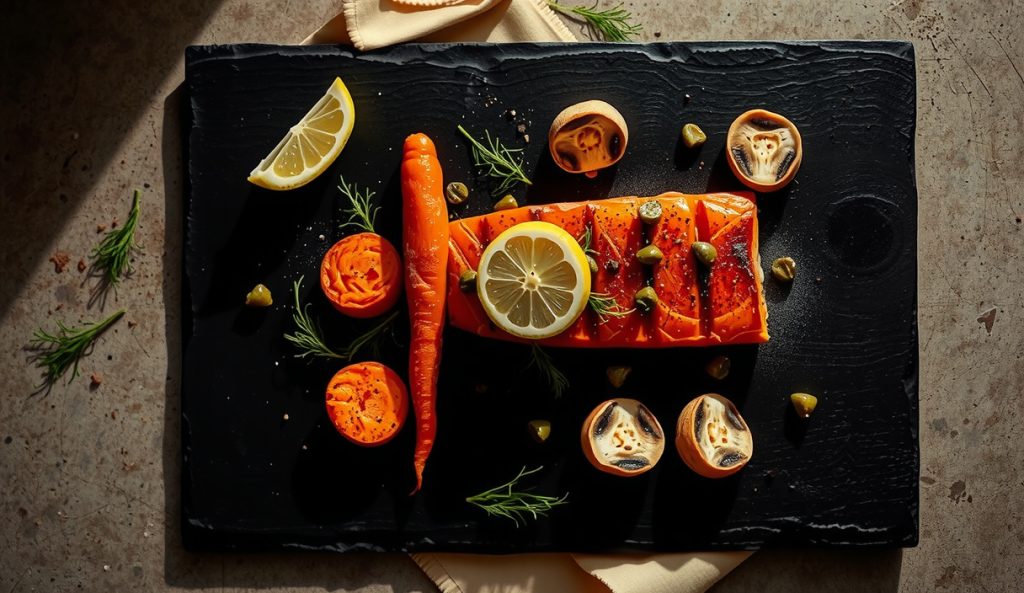
This is not a claim that smoked mushrooms taste like King salmon. They do not, and pretending otherwise disrespects both ingredients. What king oyster mushrooms can do — when subjected to the same dry cure, the same pellicle development, and the same low-and-slow alder smoke — is produce a lacquered, deeply savory, smoke-penetrated result that earns its place alongside the salmon at the same table. Longer tables, not higher fences.
What changes when you smoke mushrooms instead of salmon?
King oyster mushrooms (Pleurotus eryngii) are the correct analog here — not portobello, not shiitake. Their dense, fibrous stipe tissue has a firm, almost meaty cross-section that resists the heat collapse that destroys texture in more delicate fungi. Halve large king oyster stems lengthwise to expose a flat cut face: this is the surface that will develop the pellicle and receive smoke adsorption.
Apply the canonical 3:1 kosher-salt-to-sugar cure directly to the cut faces and the exterior. Mushroom cell walls are composed primarily of chitin and beta-glucans rather than myofibrillar proteins, so the denaturation mechanism differs fundamentally from fish. The cure draws intracellular water out through osmosis, concentrating the glutamates and nucleotides already present in the tissue — king oyster mushrooms are notably high in 5′-nucleotides, which synergize with free glutamate to produce pronounced umami — and firms the cell wall structure by dehydration rather than protein aggregation.
Cure time is shorter than salmon: 90 minutes to 2 hours is sufficient. Mushrooms have far higher free water content and a more porous cell structure than salmon myotomes, so osmotic draw is rapid. Rinse lightly, pat dry, and air-dry on a rack with airflow for 45 to 60 minutes until the cut face is visibly tacky.
That tacky surface behaves analogously to the salmon pellicle: volatile smoke compounds — guaiacol and syringol — adsorb readily to the sticky, dehydrated layer, and the reduced water activity prevents the steam-release that otherwise produces a wet, stewed texture in smoked mushrooms. Set your pellet grill to 180°F with alder or cherry pellets, the same wood selection used for the salmon, so both dishes can run simultaneously on the same grate.
Target an internal temperature of 140°F to 150°F at the center of the stipe. At that point, the chitin cell walls have contracted fully, the surface is lacquered and set, and the texture is dense and yielding without being mushy. Total smoke time runs 60 to 90 minutes — roughly half the salmon’s cook time. Finish with a light brush of good olive oil and a squeeze of lemon; the fat uptake on the surface amplifies perceived smoke depth.
What stays the same as the salmon recipe?
The 3:1 cure ratio, the pellicle-development concept, the 180°F pellet grill temperature, and the alder or cherry wood are all carried directly from the canonical salmon recipe. The smoke chemistry that produces guaiacol and syringol adsorption is ingredient-agnostic, and the principle of a dry, tacky surface as the prerequisite for deep smoke flavor applies equally to chitin-walled fungi as to myofibrillar fish protein.
When is the mushroom version the better choice?
Run the king oyster mushrooms alongside the salmon on the same grate for mixed-diet gatherings. The cure ratio, wood species, and grill temperature are identical, so there is no operational overhead. Vegetarian guests receive a dish built with the same rigor as the centerpiece rather than an afterthought.
The complete salmon method, timing, and pellicle science are at the original recipe.