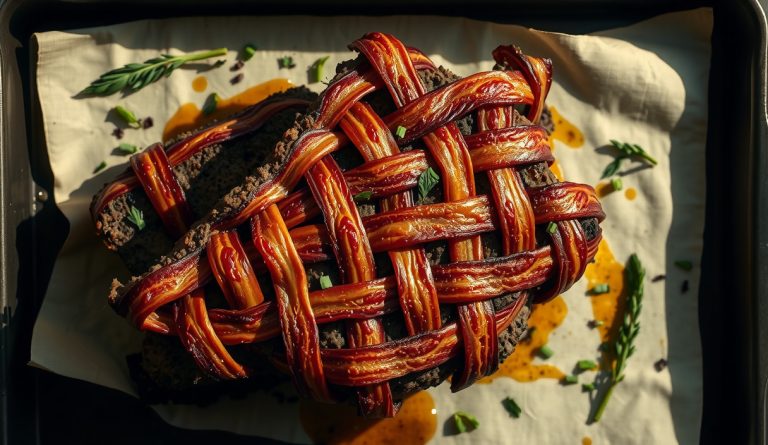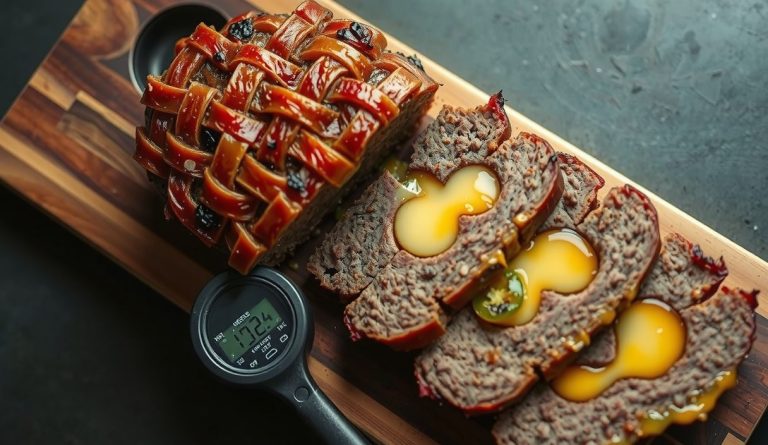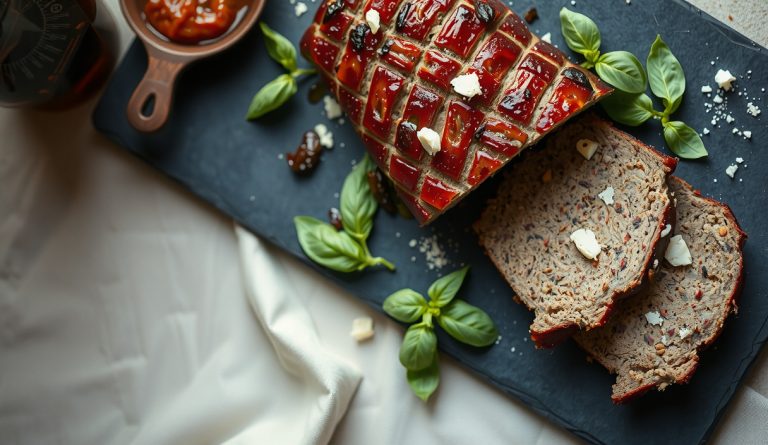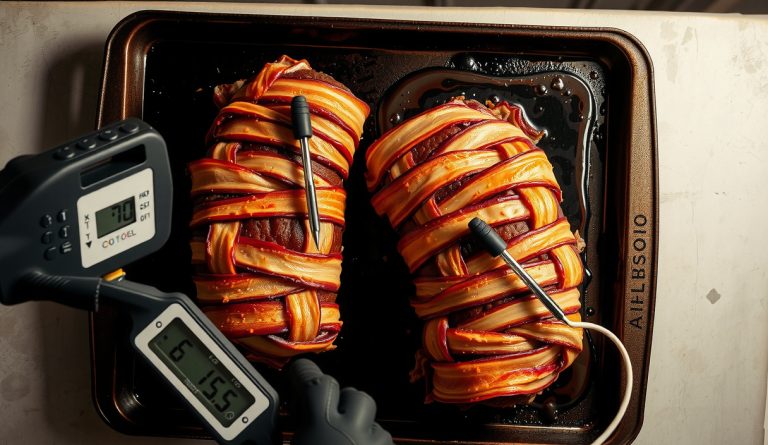
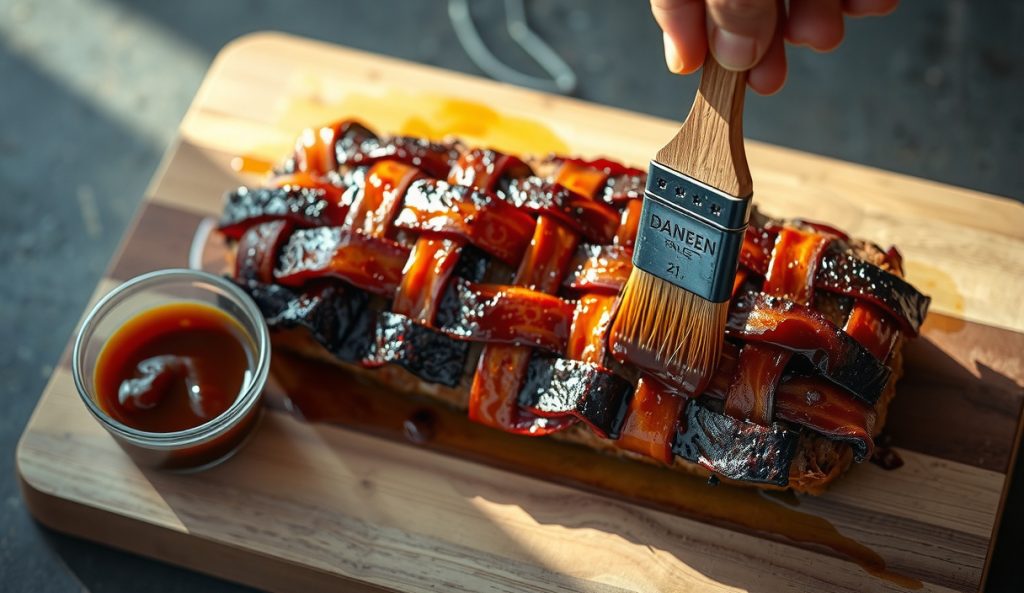
A BBQ glaze finish transforms the bacon weave on a smoked meatloaf from a savory wrapper into a glossy, candy-lacquered shell. Applied correctly in the final 20 minutes of the cook, the sauce caramelizes against rendered bacon fat rather than pooling or scorching — producing a deeply colored exterior that cuts cleanly and reads as a deliberate design choice rather than an afterthought.
What changes when you add the BBQ glaze finish?
Once the smoked meatloaf reaches 145°F internal temperature, begin the glaze sequence. Brush a thin, even layer of your house BBQ sauce across the entire bacon surface. Wait 10 minutes, then apply a second thin coat. Two coats spaced 10 minutes apart is the working method — a single thick coat either slides off the slick rendered fat or burns before the sugars have time to set into a stable caramel layer.
Why does the BBQ glaze caramelize instead of burning? The science
The glaze sets because sucrose and fructose caramelization begins around 160°C (320°F) at the surface — well within range on a 250–275°F smoker where bacon fat is actively rendering and radiating conducted heat outward. That surface-temperature spike above the ambient smoker temperature is what drives caramelization even though the smoker itself runs below 320°F. The rendered fat also acts as a solvent carrier for fat-soluble flavor compounds in the sauce, deepening the flavor bond between bacon and glaze. Pulling the glaze step too early, before adequate fat has rendered, means the sauce sits on a wet surface and steams rather than caramelizes.
What stays the same as the base recipe?
The meat mixture, bacon weave construction, smoker temperature, and pull temperature do not change when adding the BBQ glaze finish. The glaze is a surface finish applied in the final 20 minutes only — the glaze finish does not affect total cook time, internal doneness targets, or resting protocol. The loaf still rests 10 minutes tented before slicing.
When is the BBQ glaze finish the better choice?
The BBQ glaze finish is the right call when you are serving at a backyard cookout where visual presentation carries weight, or when you want a flavor bridge between the smoke character of the loaf and a sauce-forward side like baked beans or coleslaw. The glaze finish is also well-suited to competition or potluck contexts where first impressions on a slicing board matter. The canonical unglazed version is the better choice when the loaf will be sliced cold for sandwiches the next day — the glaze softens overnight and loses its shell character.
Use the full method, equipment, and rub measurements from the original Smoked Meatloaf — Bacon-Weave Wrapped.