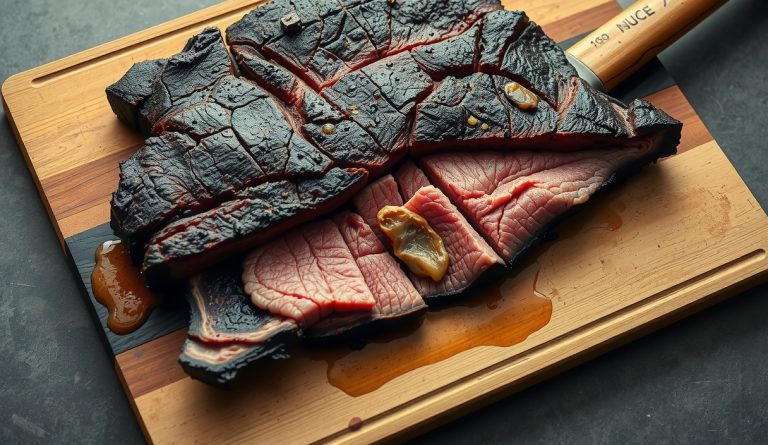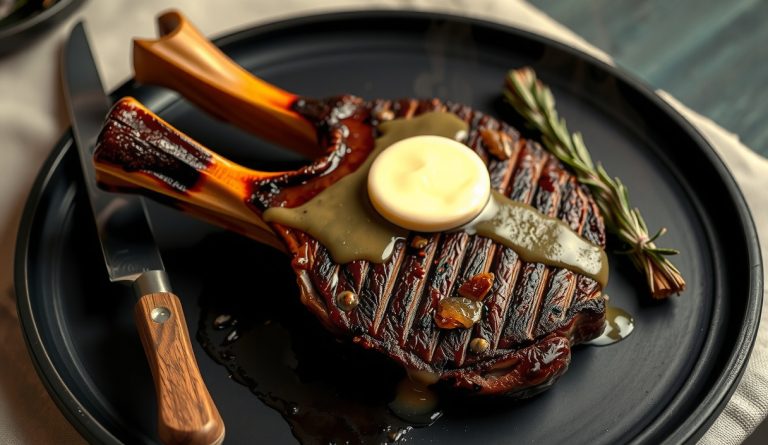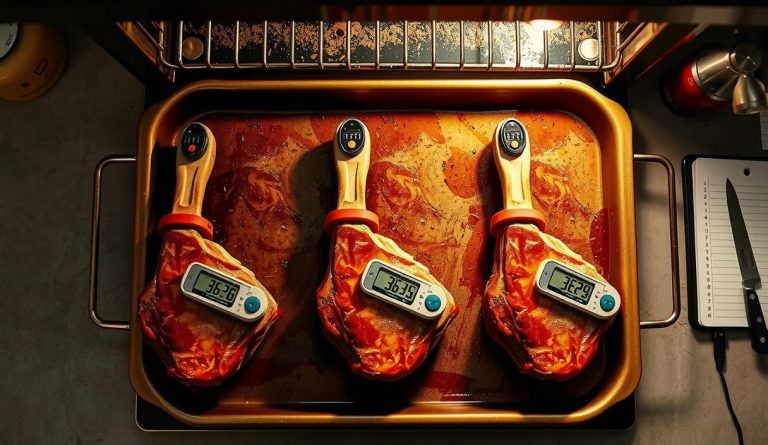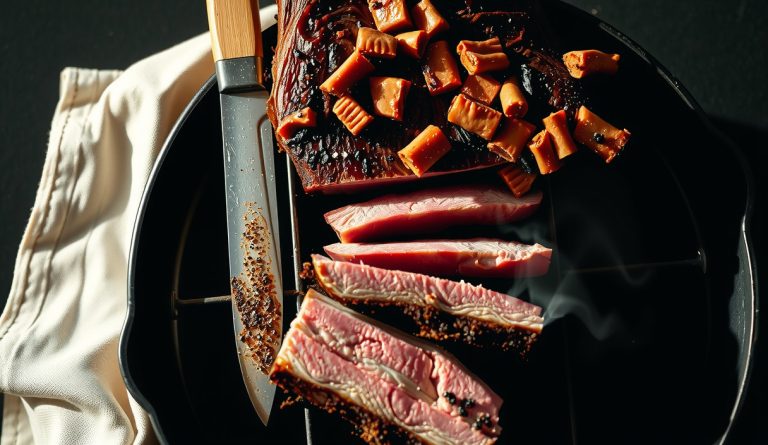
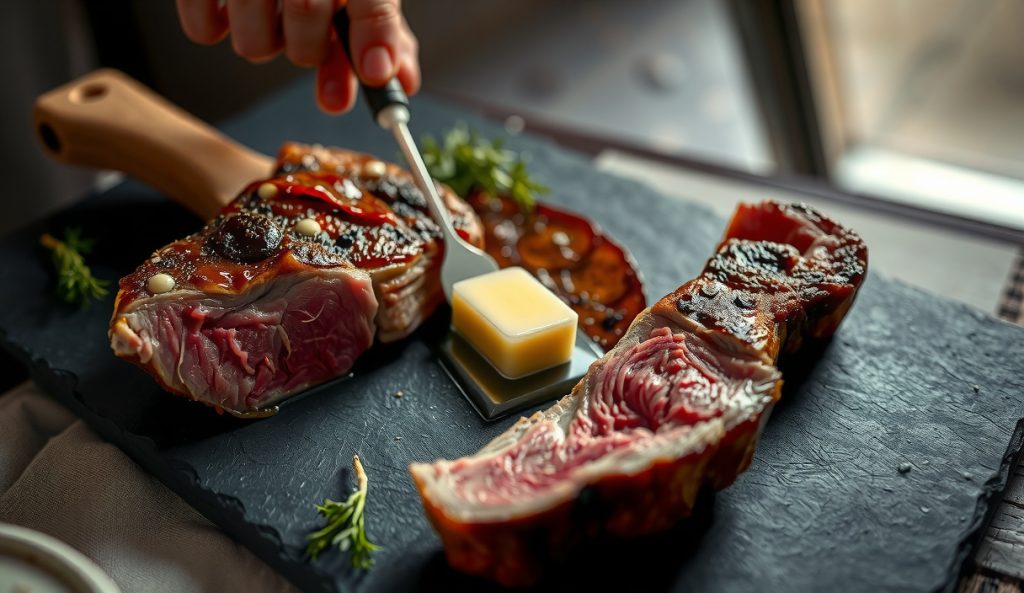
A5 Wagyu and heavily marbled USDA Prime tomahawks are not simply better versions of a standard tomahawk ribeye — they are physically different in ways that demand a genuine adjustment to the reverse sear protocol. Applying standard timing and temperature targets to a heavily marbled cut risks rendering out the very characteristic that makes these steaks worth their price: the fine, evenly distributed intramuscular fat that melts on the tongue rather than in the pan.
What changes with Wagyu and high-marbling cuts?
The critical difference is fat chemistry. The triacylglycerols in Japanese Wagyu carry a higher proportion of unsaturated fatty acids — particularly oleic acid — compared to conventional beef. This lowers the intramuscular fat’s melting point to approximately 77°F to 95°F, versus roughly 104°F to 113°F for the saturated-dominant fat in commodity beef.
In practical terms, the intramuscular fat in A5 Wagyu begins rendering meaningfully during the low oven phase rather than waiting for the sear. If the steak reaches a final internal temperature of 130°F or beyond, the marbling has already partially liquefied and migrated out of the muscle fibers, producing a greasy surface texture instead of the clean, buttery mouthfeel the cut is known for.
To preserve that mouthfeel, pull the Wagyu tomahawk from the oven at 110°F rather than the standard 115°F, and target a final internal temperature of 125°F to 127°F rather than the standard 130°F to 132°F. These numbers are not suggestions — they are the thermal thresholds that keep the intramuscular fat intact inside the muscle rather than pooled in the pan.
The sear must also be compressed: 45 seconds per side at absolute maximum heat rather than the standard 90 seconds. The goal is to build Maillard crust on the surface without driving further heat deep into the muscle. A cast-iron pan preheated for eight to ten minutes over the highest available burner is the most controllable surface for this shorter sear window. Allow the same five-minute rest. The slightly lower final temperature means the steak will feel softer when probed — that is expected, not an indicator of undercooking.
What stays the same for Wagyu and high-marbling tomahawks?
The oven temperature (250°F ambient), the use of a probe thermometer, the resting protocol, and the structural sequence of low-phase then high-heat sear all remain intact. The reverse sear logic applies directly to Wagyu tomahawks — only the temperature thresholds and sear duration are tightened to account for the fat’s lower thermal stability.
When is the Wagyu and high-marbling method the right choice?
Use this version any time you are working with A5 Wagyu, A4 Wagyu, or a domestic USDA Prime tomahawk with visibly heavy marbling throughout the longissimus muscle — not just in the fat cap. The adjustments are small in number but high in consequence: the difference between a 110°F and a 115°F pull point, and 45 seconds versus 90 seconds on the sear, determines whether a premium-priced steak expresses its full character or tastes like an expensive disappointment.
Use the full method, oven setup, and seasoning guidance from the original Tomahawk Ribeye — The Reverse Sear Method, applying the modified pull temperature and sear timing described above.