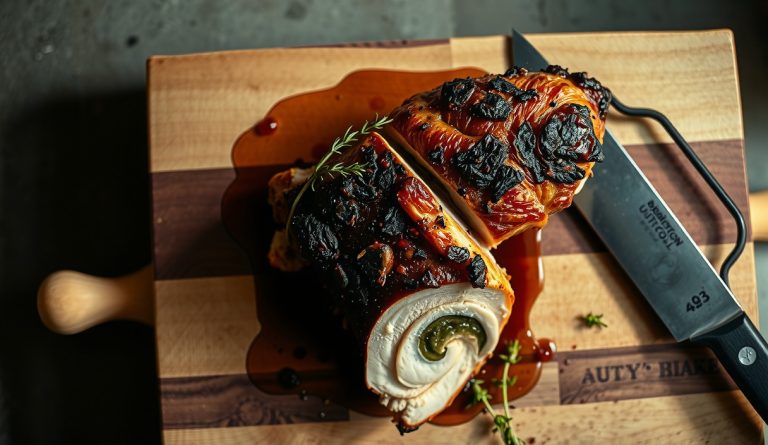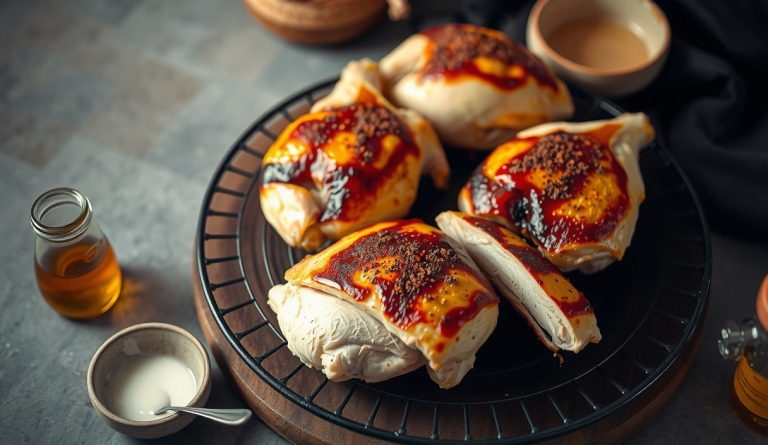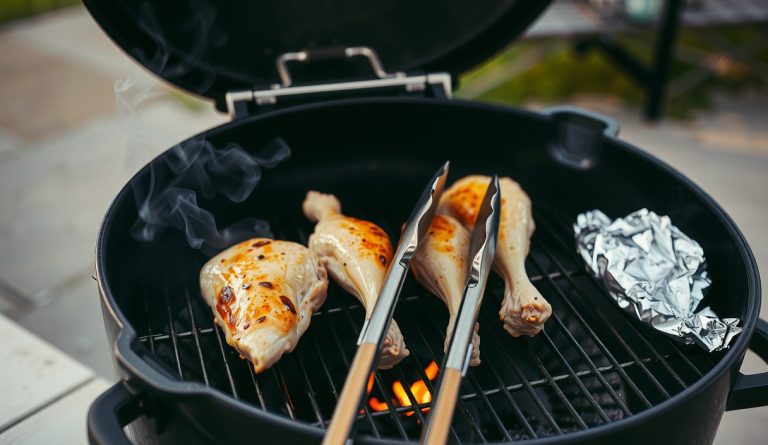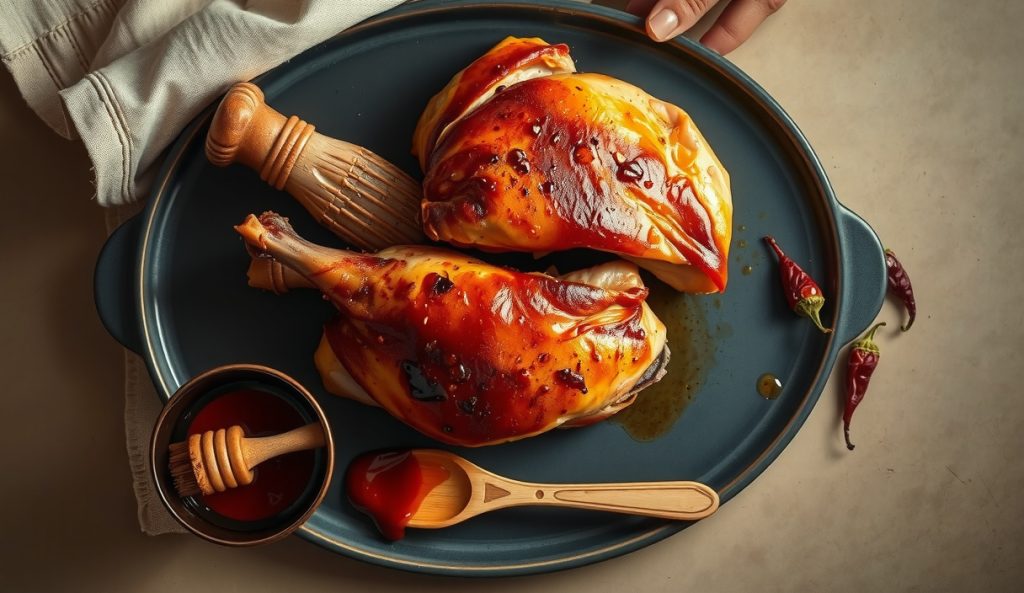
The honey-chipotle glaze is a precision finishing move, not a marinade or sauce. It goes on during the final three minutes of the smoker pass — not earlier — because the reducing sugars in honey behave very differently at 350°F than they do at lower temperatures. Apply the glaze too soon and the sugars carbonize; apply it at the correct moment and the result is a glossy, tacky, deeply colored crust that clings to the skin and amplifies every savory compound the smoke deposited during the cook.
This variation is built for cooks who want a presentation-quality finish — the kind of bronzed, lacquered skin that photographs well and reads as something beyond standard grilled chicken. The heat of chipotle powder stays measured and controlled: one teaspoon across two tablespoons of honey reads as warm and smoky rather than aggressively spicy.
What changes with the honey-chipotle glaze?
Mix 2 tablespoons honey, 1 teaspoon chipotle powder, and 1 teaspoon apple cider vinegar in a small bowl before the chicken goes into the smoker. The vinegar thins the honey slightly and introduces mild acidity, which balances the sweetness and helps the glaze penetrate micro-fissures in the skin rather than sitting on top as a uniform shell. During the final 3 minutes of the smoker finish, brush the glaze on in one generous, even coat using a silicone pastry brush.
The mechanism at work is twofold. Honey’s fructose content lowers the onset temperature for Maillard browning and accelerates caramelization — reactions that would take 10 or more minutes at 250°F instead occur in under 3 minutes at 350°F. This is why vigilance is non-negotiable: walk away for 90 seconds and the glaze can cross from lacquered to scorched. Pull the chicken the instant the surface shifts from wet-glossy to set-tacky, with a few slightly darker edges visible at the thinnest parts of the skin.
What stays the same as the base recipe?
The sous vide time and temperature, the dry brine, the rub application, and the smoker setup all remain identical to the canonical method. The honey-chipotle glaze is strictly a final-minute intervention — nothing upstream of the smoker finish changes in any way.
When is the honey-chipotle variation the better choice?
Choose this variation when the chicken breast is the centerpiece rather than a component — a plated dinner, a competition presentation, or any moment when visual impact matters. The glaze also works well when serving guests who find straight smoked chicken visually understated; the deep color and sheen signal care and technique immediately.
The honey-chipotle glaze is less suited to meal-prep situations where the chicken will be sliced cold and reheated, as the glaze loses its gloss and tackiness once refrigerated and warmed.
Use the full method, equipment, and rub measurements from the original Sous Vide Smoked Chicken Breast.