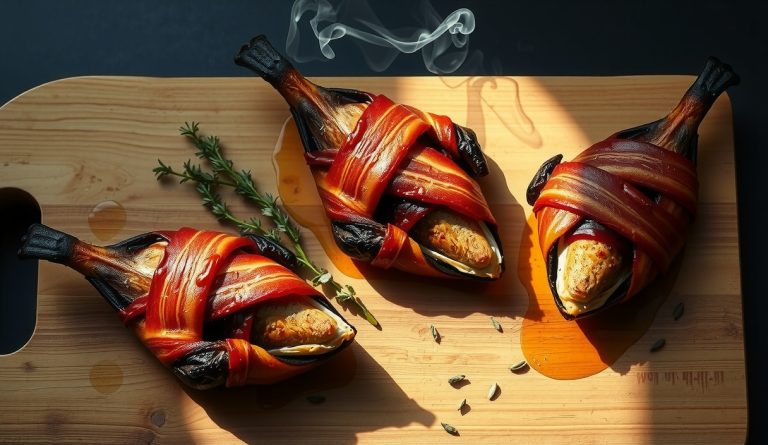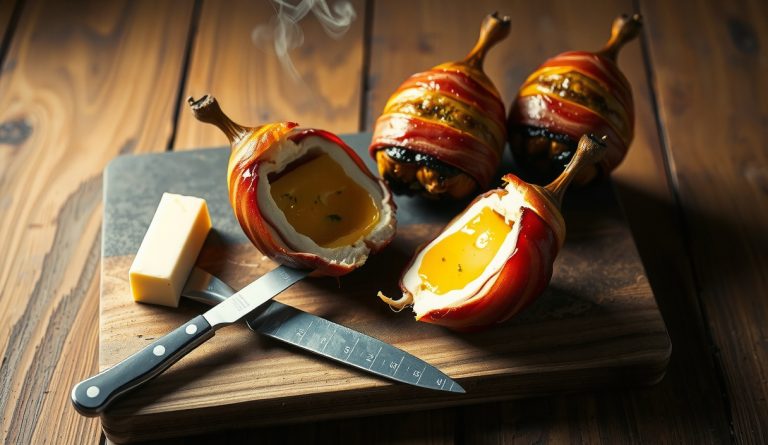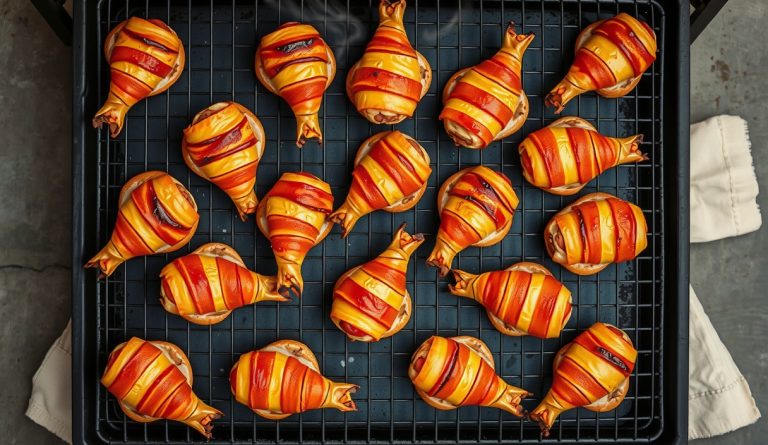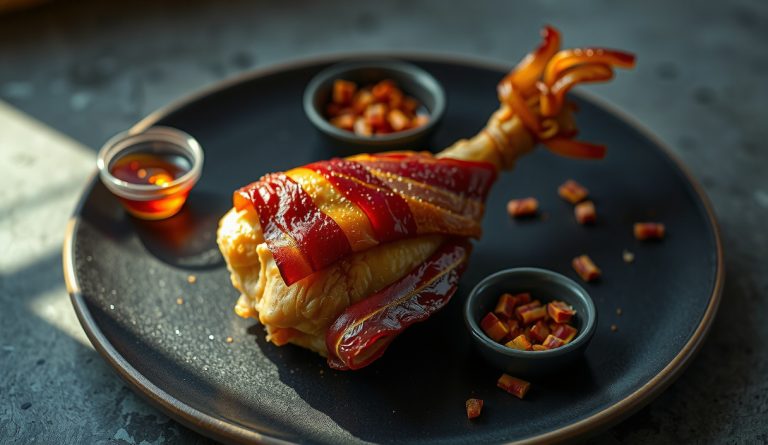
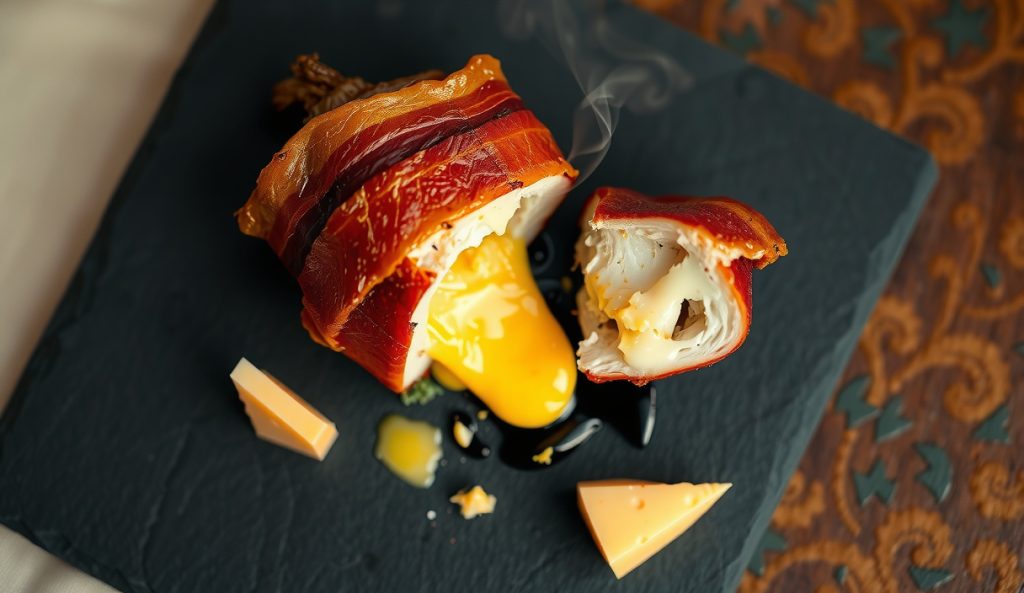
Stuffing a half-ounce cube of pepper-jack or Gruyère into the cavity of a bacon-wrapped quail before it enters the smoker is a technique borrowed from ballotine cookery. The payoff is theatrical and delicious: split the bird at the table and molten, savory cheese — enriched with the quail’s own released juices — runs onto the plate. Beyond drama, the cheese serves a mechanical function: as it melts, the fat continuously lubricates the interior protein matrix from the inside out, providing practical insurance against the dryness that small game birds are notorious for.
What changes when you add cheese to the cavity?
The single modification is placing a half-ounce (14-gram) cube of pepper-jack or Gruyère inside the quail’s cavity before wrapping the bird in bacon. At a 275°F smoker chamber temperature, the cheese reaches its melt point at approximately the 25-minute mark, as the internal cavity temperature climbs into the 130–140°F range. The molten cheese then emulsifies with the proteins and moisture released by the quail meat as it finishes cooking, forming a unified sauce sealed inside the cavity.
Cheese selection is critical to the outcome. Choose a semi-hard, low-moisture variety — pepper-jack or Gruyère both perform reliably at these temperatures. Avoid fresh mozzarella, burrata, or any high-moisture cheese: the free water in those varieties generates steam inside the sealed cavity, which hydrolyzes the surface proteins of the breast meat rather than enriching them, producing a soft, slightly mealy texture instead of the firm, juicy result the recipe targets. Pepper-jack contributes mild heat that complements the smoke character; Gruyère delivers a nuttier, more complex fat profile.
Size the cube conservatively. A half-ounce cube fits a standard four-ounce quail without distorting the cavity or breaking the bacon wrap during spiral shrinkage as the bacon tightens around the bird during cooking.
What stays exactly the same as the base recipe?
Every other parameter of the base recipe remains unchanged. Smoker temperature holds at 275°F. The target internal temperature stays at 160°F measured at the thickest breast point. The estimated cook time remains 35 to 45 minutes. The bacon wrap technique, external seasoning, smoke wood selection, and resting time all require no adjustment. The cheese cube is the only modification — nothing downstream of that addition needs to be recalibrated.
When is the cheese-stuffed variation the better choice?
This variation works best as a plated appetizer or first course at a dinner where the presentation moment — splitting the bird at the table — can be experienced individually by each diner. It also makes sense when cooking for guests who find plain smoked quail slightly lean, since the cheese fill pushes the perceived richness of the dish considerably without altering the cook protocol. Avoid this variation for buffet or passed-appetizer formats where birds will sit before being eaten: the cheese re-solidifies quickly once the quail is removed from heat, eliminating the molten-sauce effect that defines the dish.
Use the full method, equipment, and rub measurements from the original Smoked Bacon-Wrapped Quail.