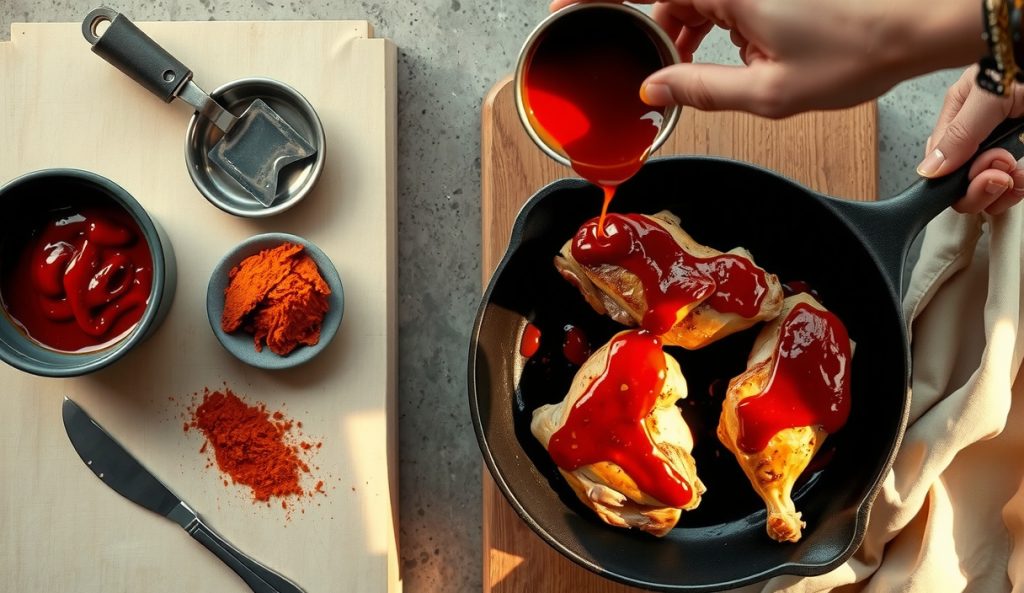
This Hot and Smoky Chipotle Variant exists for cooks who want the tamari-base gluten-free BBQ sauce to hit harder. The canonical recipe carries a mild smoke note from smoked paprika; this build stacks a second, qualitatively different smoke source on top — chipotle, derived from jalapeños dried and smoked over wood fire. The result is more aggressive, more dimensional, and genuinely hot rather than merely warm.
What changes in the Hot and Smoky Chipotle Variant?
Add 1 to 2 teaspoons of chipotle powder, or blend in one whole canned chipotle pepper in adobo sauce — always verify the adobo label for gluten-free status, as some brands add wheat-based thickeners. Chipotle’s smoke character comes from lignin pyrolysis compounds (guaiacol and syringol) absorbed during the drying process; these are chemically distinct from the phenolic volatiles in smoked paprika and register differently on the palate — woodier, earthier, with a longer finish.
Capsaicin, the active compound driving heat, is oil-soluble and binds readily to the rendered fat in chicken thighs and pork ribs. This is precisely why the chipotle variant performs better on fattier cuts than on lean proteins where the heat has nowhere to anchor. If using canned chipotle, blend the pepper smooth before adding so the heat distributes evenly rather than concentrating in pockets.
Start at one pepper or 1 teaspoon powder, taste after the first 10 minutes of simmering, and add more only then — capsaicin concentration does not decrease on reduction. Pulling back is not possible once it is in the pot, so incremental addition is the only correct approach.
What stays the same in this variant?
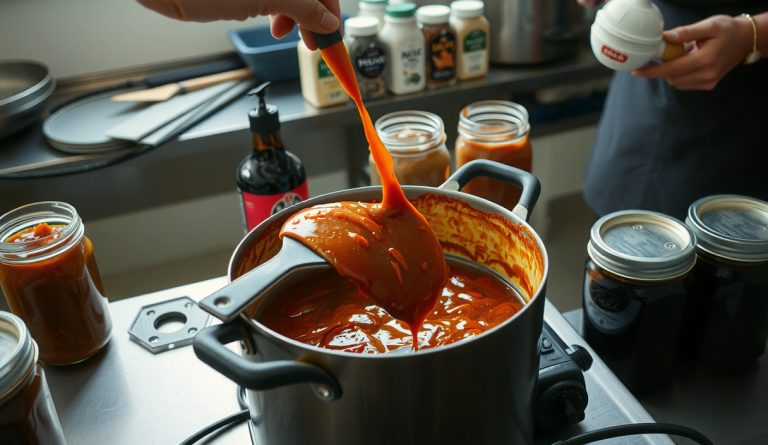
Every other ingredient, ratio, and technique from the canonical recipe remains unchanged. The tamari base, tomato paste volume, molasses quantity, apple cider vinegar, reduction time, and finishing steps are all identical. The structural identity of the sauce — thick, glossy, coat-a-spoon consistency — is not altered by the chipotle addition.
When is the Hot and Smoky Chipotle Variant the better choice?
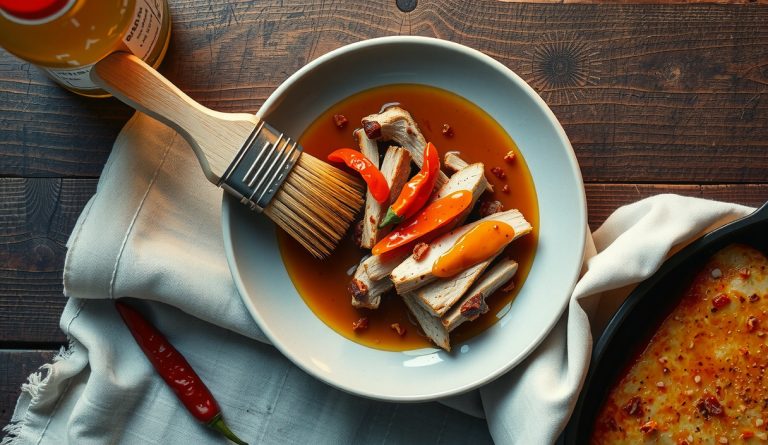
Choose this variant when the protein on the grill is fatty enough to carry heat — bone-in chicken thighs, St. Louis-cut ribs, or pork shoulder slices. The chipotle variant is also the better choice when serving guests who specifically want a sauce that reads as spicy rather than savory-sweet.
This variant is also the right call when the smoke from the cooker itself is light — gas grill, indoor broiler — and you want the sauce to supply that smoky dimension independently, without relying on the cooking environment to build it.
Use the full method, equipment, and rub measurements from the original Gluten-Free BBQ Sauce — Tamari Base.