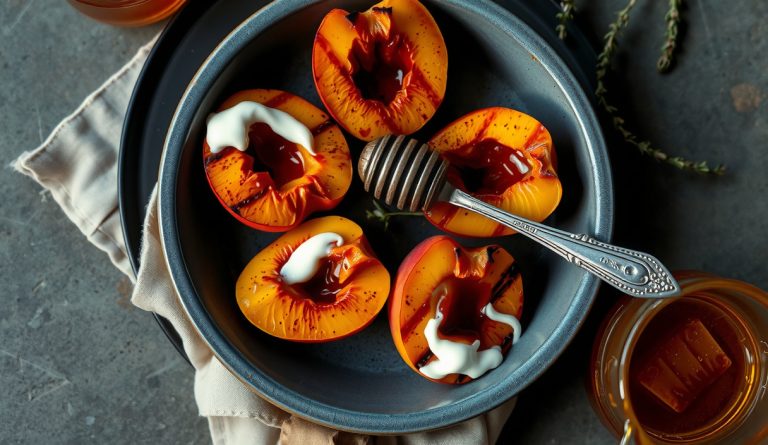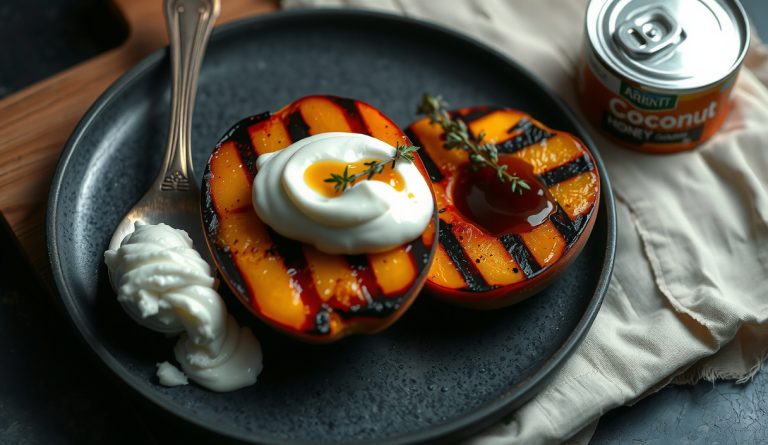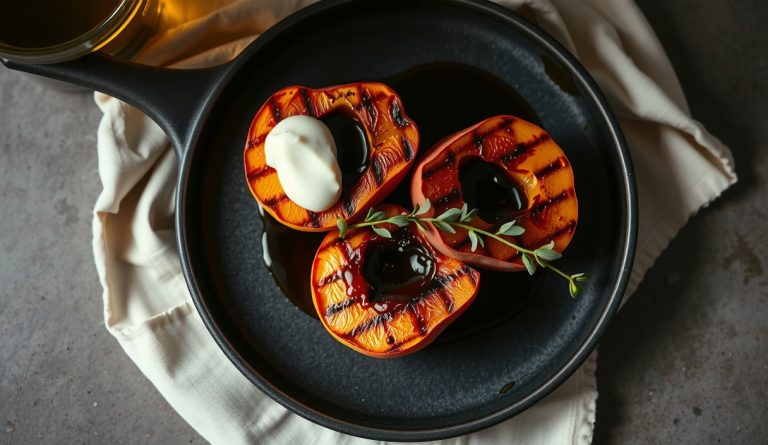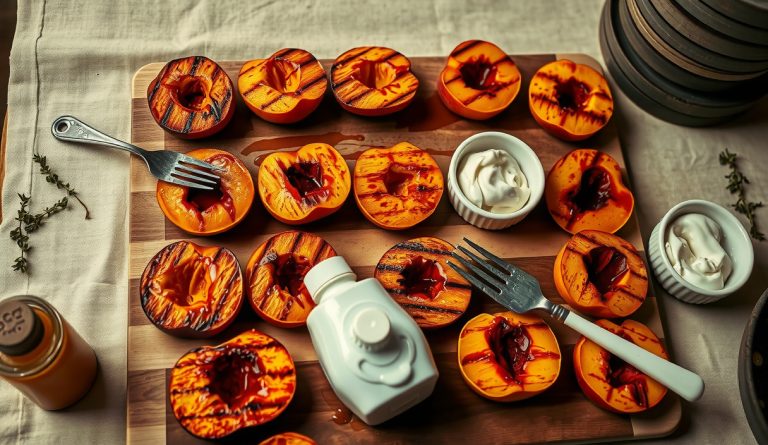
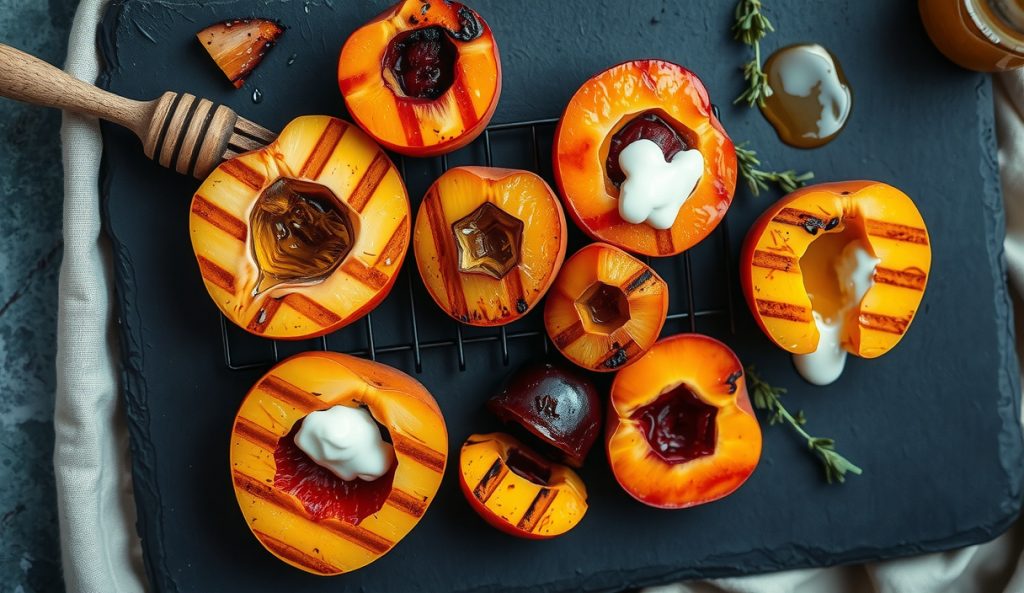
The technique behind Grilled Peaches with Honey-Yogurt and Fresh Thyme works because of where stone fruits sit on the sugar-concentration curve and how quickly their pectin network degrades under direct heat. Nectarines, apricots, and plums occupy the same general band as peaches, making all three viable on the grill using the same core approach. The differences are in timing and skin management — small adjustments with large consequences if ignored.
What changes when you swap in a different stone fruit?
Nectarines are the most direct substitution: thinner skin, comparable sugar content, and nearly identical pectin structure to peaches mean nectarines can be used one-for-one with no timing change.
Apricots are significantly smaller, which compresses the window between ideal caramelization and full pectin collapse — the point at which the fruit loses structural integrity and turns to mash. Reduce grill time to two minutes per side maximum and watch closely; the smaller thermal mass means the interior temperature climbs faster than it does in a peach half.
Plums present a different constraint: their thicker skin slows the transfer of radiant heat to the flesh and contains a higher concentration of phenolic compounds that develop an extraordinary tartness when the skin chars slightly. Leave plum skin on and place the cut face down without exception — the skin acts as an insulating layer that prevents the flesh from overcooking before the cut surface caramelizes. Caramelization onset still occurs at roughly 160°C at the surface, but total grill time for plums can stretch to four minutes without collapse risk because the skin buffers heat transfer to the interior.
What stays the same across all stone fruit varieties?
The honey-yogurt base, thyme finish, and grill setup — clean grates, medium-high heat, light oil brush — apply equally to all four fruits. The flavor architecture of sweet-acidic-herbal against char is fruit-agnostic; no adjustments to the sauce or plating method are needed regardless of which stone fruit is on the grate.
When is the stone fruit variation the better choice?
Use this variation at peak stone fruit season when multiple varieties are at their best simultaneously, or when peaches are not yet ripe enough to hold up to direct heat. A mixed plate of nectarines, apricots, and plums alongside the canonical peach version creates genuine variety in texture and tartness without requiring a new recipe.
Use the full grilling setup, yogurt preparation, and plating method from the original Grilled Peaches with Honey-Yogurt and Fresh Thyme.