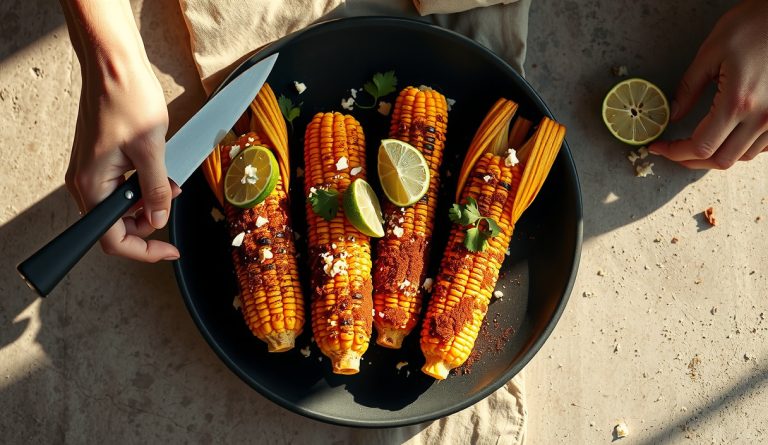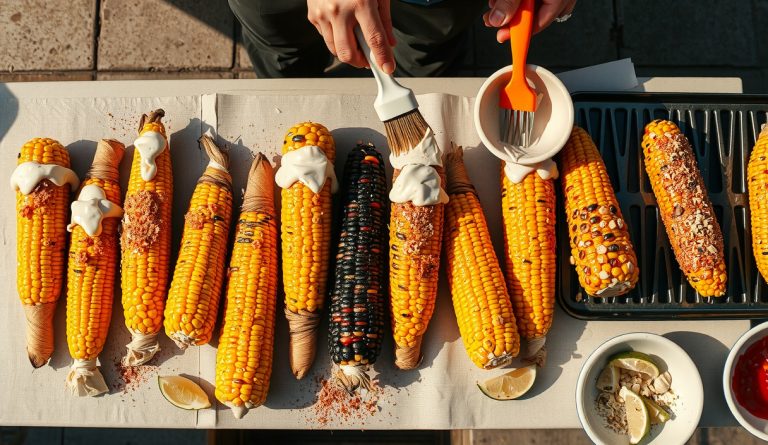
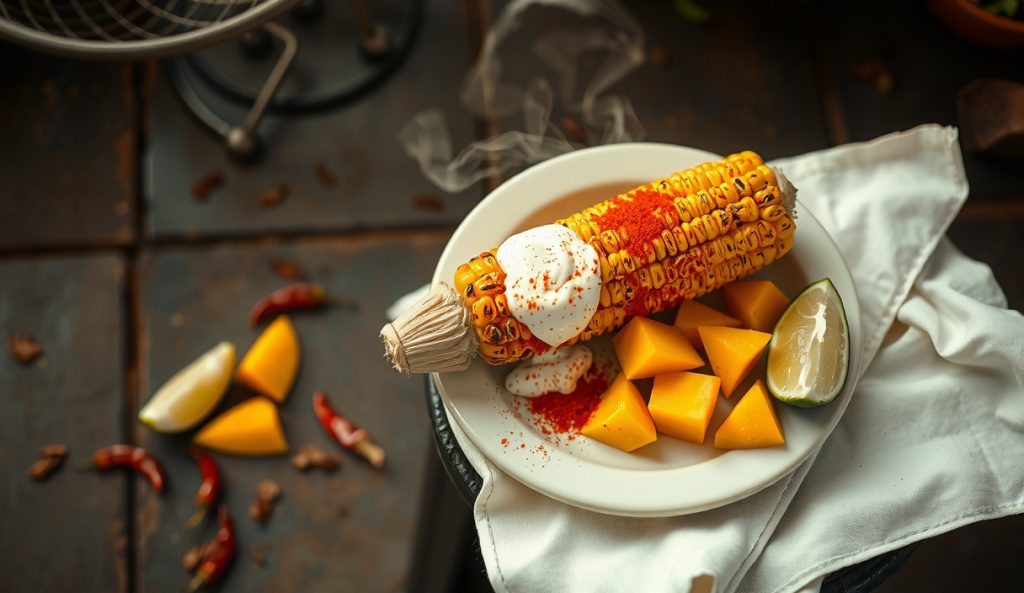
This is not an invented fusion riff. Elote topped with Tajín and served alongside fresh mango is a common presentation in coastal Mexican states — Sinaloa, Nayarit, and Veracruz in particular — where tropical fruit is cheap, abundant, and treated as a flavor-modulating condiment rather than a dessert component. If you have eaten street food near a beach market in western Mexico, you have likely encountered a version of this combination sold from a wheeled cart.
What changes in the Tajín and mango variant?
Replace the standard chili powder in the canonical recipe with Tajín Clásico at the same volumetric quantity — a straight one-for-one swap at the chili powder step. Tajín is a commercial blend of dried chili, dehydrated lime juice, and sea salt, formulated to deliver simultaneous TRPV1 capsaicin activation and citric acid stimulation in a single application. Both heat and sourness arrive together, which shifts the sensory sequencing compared to chili powder dusted over an already-limed cob. The ratio of chili to acid within Tajín is tighter and more consistent than building those elements separately, and the sea salt component means you can reduce any additional pinch-salting at the end.
Fan two to three thin slices of ripe mango alongside each cob on the serving plate or tray. The mango is not blended into the sauce — it is a companion element served on the plate. As you eat, the mango’s fructose and citric acid create a hedonic counterpoint: the sweetness briefly suppresses the perceived heat of the chili, and then the heat rebounds cleanly once the sugar clears. This spike-and-fall pattern is a well-documented feature of chili-fruit pairings. The warm surface of the corn also accelerates esterification between the corn’s free fatty acids and the mango’s citric acid when the two are in contact on the plate, contributing a faint brightness to the overall aroma.
What stays the same from the canonical elote recipe?
The mayo-crema base, the grilling method and char level, the cotija application, and the lime finish remain unchanged from the canonical recipe. The mango is strictly a plate accompaniment and the Tajín is a one-for-one swap at the chili powder step — no other structural change to the build is required. Use the full grilling method, mayo-crema ratios, and topping sequence from the original Grilled Corn Mexican Street-Style Elote.
When is the Tajín and mango variant the better choice?
This variant outperforms the canonical elote when you want a brighter, sweeter-leaning presentation. It excels at summer cookouts with fruit already on the table, menus with tropical or coastal Mexican framing, or situations where guests find straight chili powder slightly one-dimensional and want more sensory complexity without adding heat. The mango also functions as a built-in palate reset between bites of a richly sauced cob, making the variant particularly well-suited to multi-course outdoor meals.