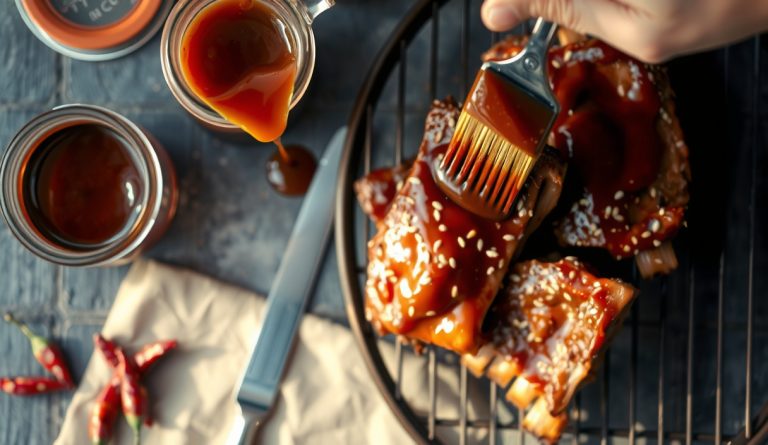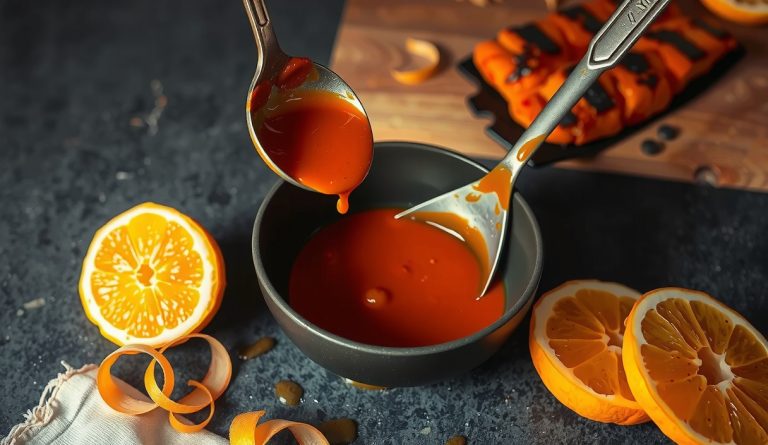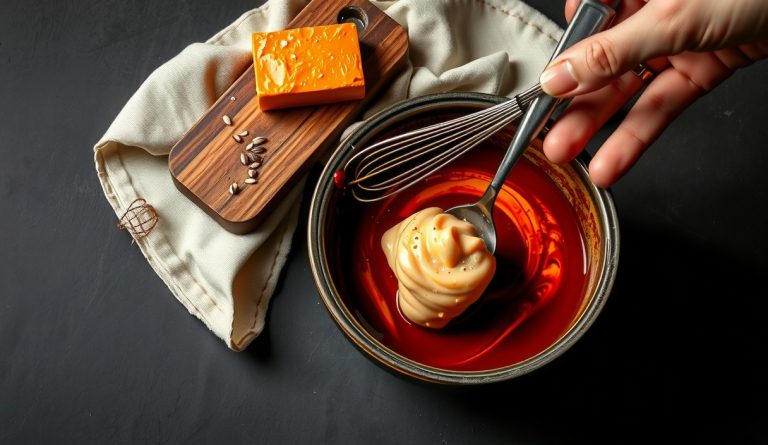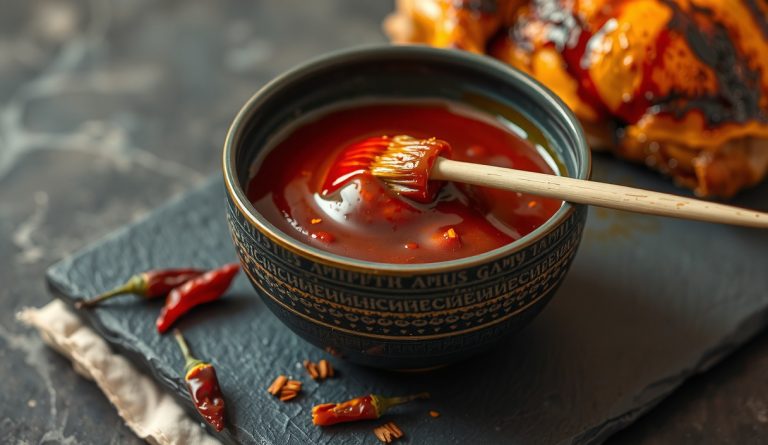
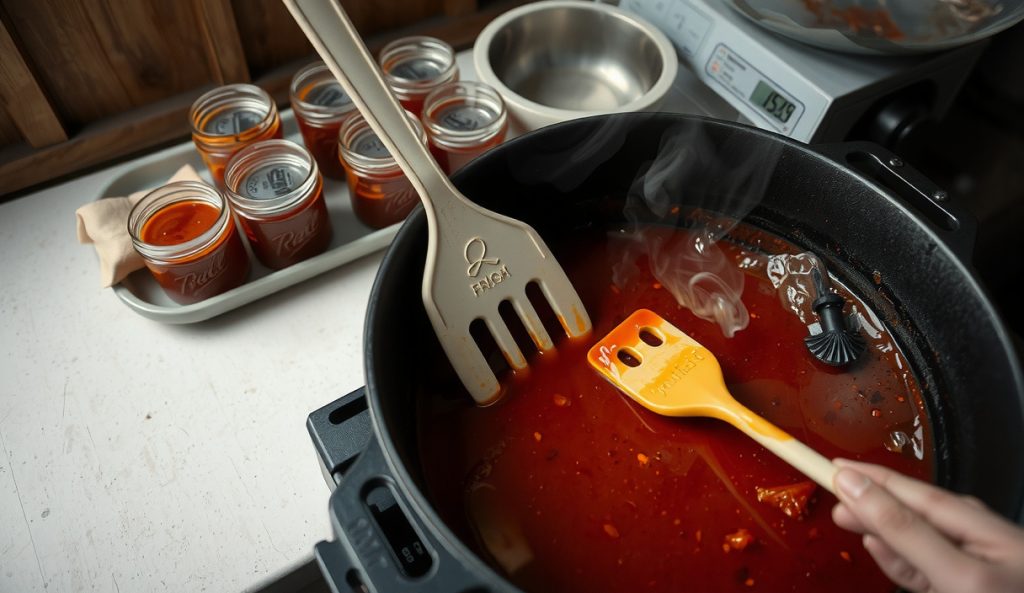
Scaling most BBQ sauces introduces predictable failure modes: sugars that caramelize too aggressively at large volumes, emulsions that break under extended heat, and aromatics that become disproportionately dominant. Korean Gochujang BBQ Sauce avoids most of those problems because its sweetness comes primarily from gochujang paste and a modest additional sweetener rather than a high-concentration sugar syrup, and its emulsification is loose enough to tolerate volume and time variation well.
Up to 8x batch size, every ingredient scales directly, the same temperatures apply, and the result is identical to a single batch. Beyond 8x, the physics of heat transfer and evaporation change reduction behavior in ways that require adjustment — not to the formula, but to your patience and timing expectations.
What changes when you scale Korean Gochujang BBQ Sauce above 8x?
Above 8x volume, thermal inertia becomes the controlling variable. Thermal mass scales with volume, while evaporative surface area scales roughly with the square root of volume for a cylindrical vessel. The practical result: the sauce heats more slowly, reaches the 90–95°C reduction ceiling later, and then evaporates more slowly per unit of sauce because less of the total liquid surface is exposed relative to total volume. At 16x scale, expect reduction time to increase by 40–60% beyond a linear extrapolation from the single-batch time.
Do not compensate by raising the heat. Exceeding 95°C risks scorching the gochujang and soy solids on the vessel bottom before the center of the batch reaches target consistency. Instead, use a wider, shallower vessel to maximize the surface-area-to-volume ratio, hold the same 90–95°C temperature ceiling, and allow the additional time. Stir more frequently at large volumes — the higher sugar concentration near the bottom of a deep vessel will caramelize faster than the surface. Sesame oil still goes in off-heat regardless of batch size and scales linearly with the rest of the recipe.
What stays the same at every batch size?
All ingredient ratios scale linearly with no threshold at which the formula itself requires adjustment. The 90–95°C temperature ceiling, the off-heat sesame oil addition, and the target sauce consistency — glossy, coating a spoon without running — are identical whether you are making one batch or twenty. The formula is stable; only the timing changes.
When is the production scale guide the right reference?
This guidance is the correct reference for catering operations, competition cooks running multiple protein categories simultaneously, or restaurant prep where sauce is produced two to three times per week in bulk. If you are making more than 8x the single recipe in one cook, read this before you start. Knowing that the final 30 minutes of reduction may realistically take 45–55 minutes at large scale prevents the temptation to crank the heat and ruin a large, expensive batch.
Use the full method, equipment, and base measurements from the original Korean Gochujang BBQ Sauce.