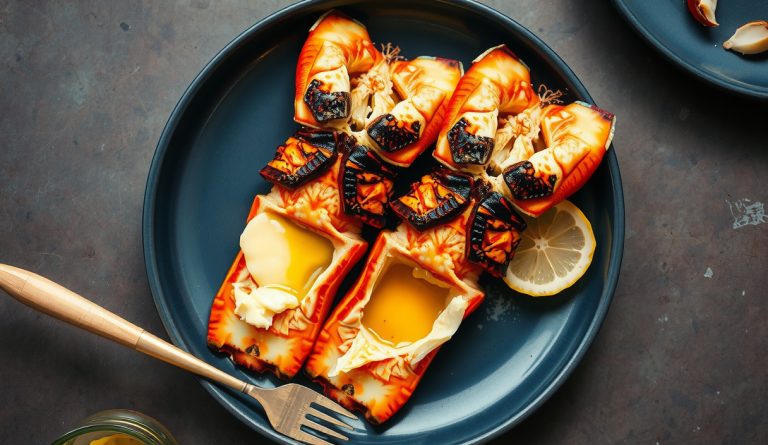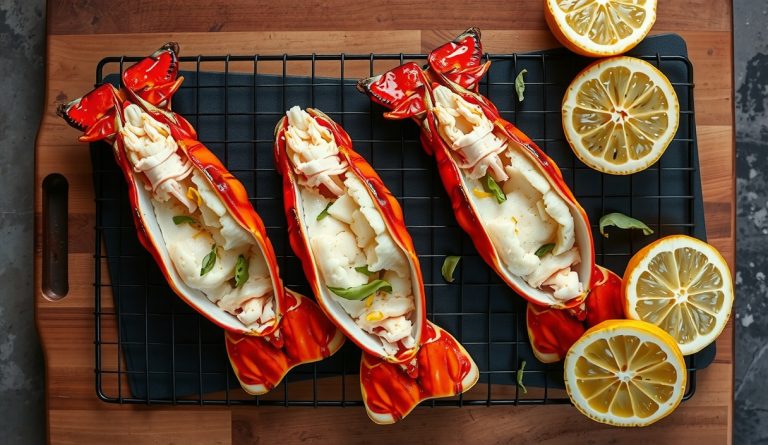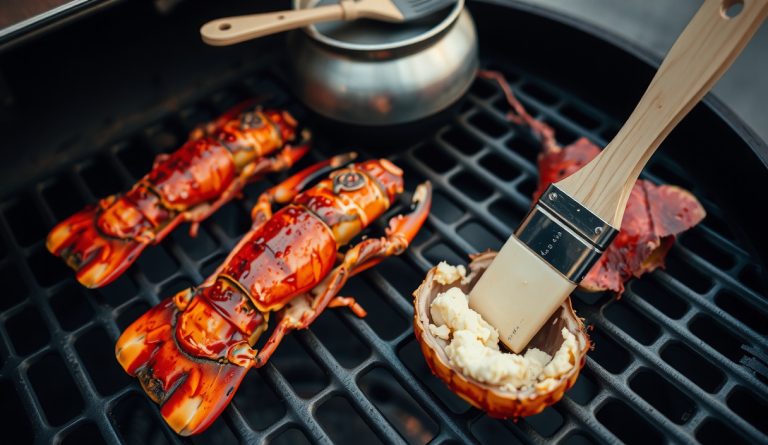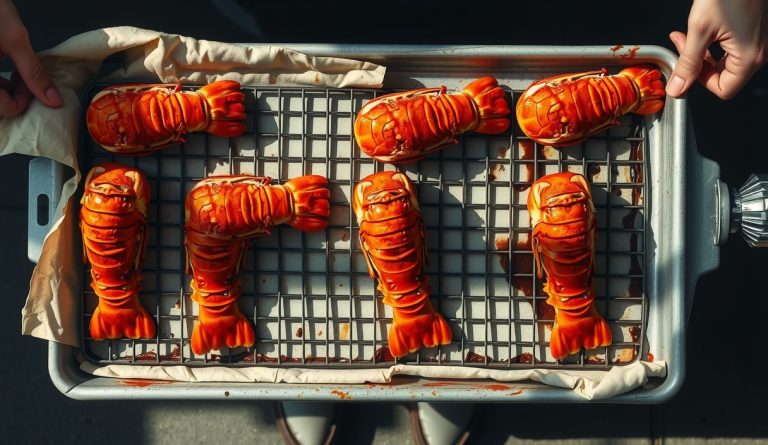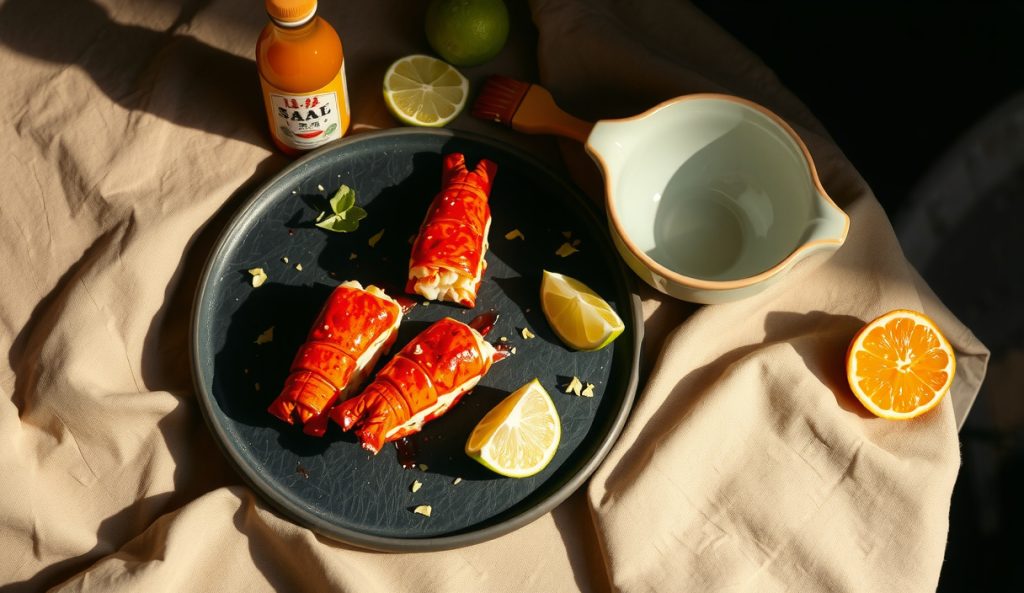
This Thai Chili-Lime variation reorients the butter baste of the canonical smoked lobster recipe around Southeast Asian flavors: sambal oelek for capsaicin heat, lime zest for aromatic citrus, and a finishing drizzle of fish sauce for savory depth. The underlying fat-based baste structure works identically to the original — butter remains the emulsifying vehicle; only the flavor compounds it carries are different. The result is one of the most assertive ways to serve smoked lobster without obscuring the smoke itself.
What changes in the Thai Chili-Lime variation?
Replace the smoked paprika with 1 teaspoon of sambal oelek and the zest of one lime, both incorporated into the finished brown butter. Add 2 teaspoons of fish sauce to the baste off heat just before applying. Fish sauce’s glutamates mute under prolonged high heat, and its volatile aromatic esters turn acrid above 200°F — off-heat incorporation preserves both the umami depth and the bright fermented aroma that define this baste.
The sequencing of sensory effects is worth understanding precisely. Smoke phenolics bind to olfactory receptors almost immediately on inhalation — they register first. Capsaicin from the sambal operates through a different pathway entirely: it activates TRPV1 ion channels in the trigeminal nerve, and this chemical-mechanical heat sensation has a slightly delayed onset compared to volatile aroma compounds. The practical result is that smoke reads first, chile heat arrives mid-palate, and the fish sauce’s umami lingers longest — a genuinely layered progression rather than all three sensations hitting simultaneously.
What stays the same from the original smoked lobster method?
The 225°F cook temperature, butterfly prep, basting schedule, and 140°F internal target are all unchanged from the canonical recipe. The fat-soluble flavor compounds in sambal and lime zest distribute through the butter and onto the lobster flesh in exactly the same way paprika’s do, so no adjustment to cadence is needed. No changes to smoke wood selection or cook duration are necessary.
When is the Thai Chili-Lime baste the better choice?
This baste is the right call when smoked lobster is anchoring a Southeast Asian-inflected menu — alongside coconut rice, green papaya salad, or Thai-spiced vegetables — or when guests actively want pronounced chile heat. The Thai Chili-Lime variation also works well as a contrast element in a multi-protein spread where other items lean toward classic American smoke flavors; the sambal and lime zest provide genuine counterpoint rather than redundancy.
Use the full method, equipment list, and butter quantities from the original Smoked Lobster Tails with Butter-Paprika Baste.