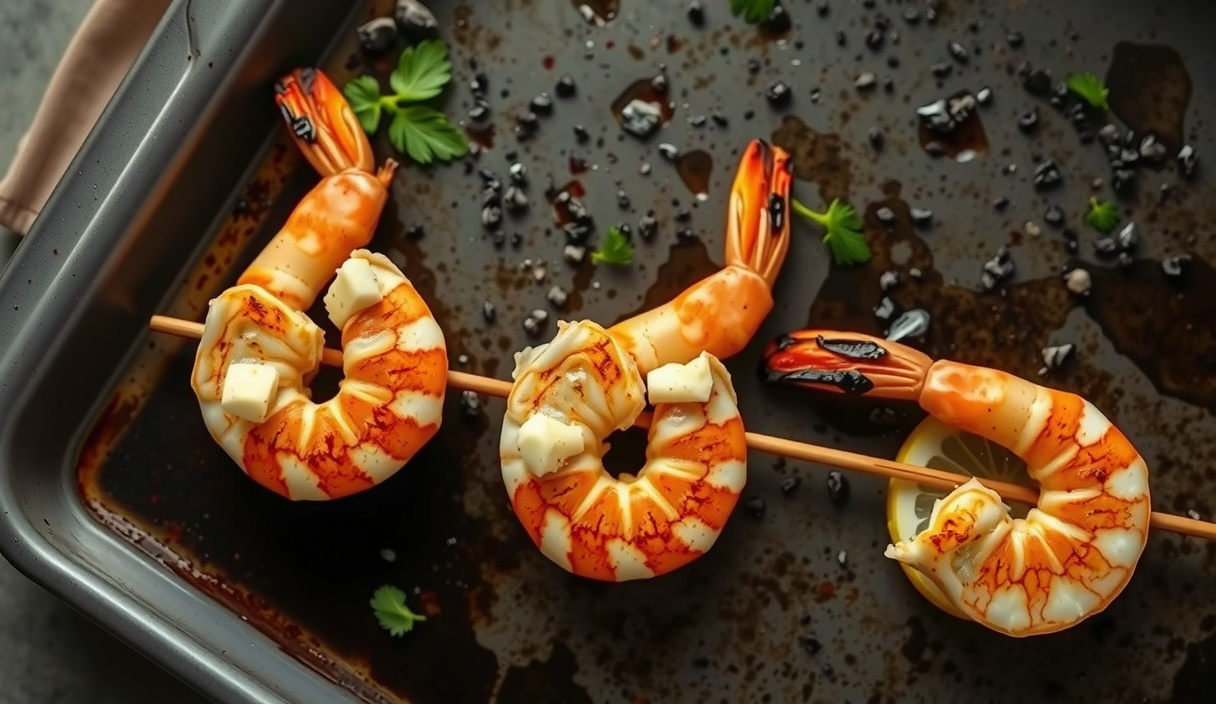
Grilled Cajun Shrimp Skewers
Jumbo shrimp hit the 140°F sweet spot in exactly 2 minutes per side over a 500°F direct grill. A smoked-paprika Cajun rub builds a proper Maillard crust in the time it takes the interior to reach peak juiciness — fast, loud, and precision-engineered for the backyard pitmaster.
Equipment
- 1 Charcoal or gas grill Must reach 500–550°F grate temperature at the direct zone; preheat with lid closed for at least 15 minutes
- 8 Flat metal skewers Flat or double-pronged stainless steel; prevents shrimp from spinning when flipped
- 1 Infrared grill thermometer Optional but highly recommended for confirming grate temperature
- 1 Instant-read thermometer Verify shrimp internal temp hits 140°F; pull immediately, carryover will handle the rest
- several Paper towels For thoroughly patting shrimp dry before rubbing — critical step
- 1 Large mixing bowl
- 1 pair Tongs Long-handled, for flipping skewers safely over high heat
Ingredients
Shrimp
- 2 lbs jumbo shrimp, 16/20 or 13/15 count Peeled and deveined, tail on; patted completely dry with paper towels
- 2 tablespoons avocado oil or light olive oil For tossing shrimp after rubbing; high smoke point critical
Cajun Dry Rub
- 2 teaspoons smoked paprika Not sweet or hot — smoked specifically; higher reactive carbonyl density for browning
- 1 teaspoon kosher salt
- 1 teaspoon garlic powder
- ¾ teaspoon dried thyme Provides thymol and carvacrol volatiles for retronasal aroma
- ¾ teaspoon dried oregano
- ½ teaspoon onion powder
- ½ teaspoon freshly ground black pepper Piperine amplifies perception of all other aromatics
- ½ teaspoon cayenne pepper Adjust to heat preference; activates TRPV1 thermoreceptors for chemesthetic heat
- ¼ teaspoon dried thyme Second hit of thyme for herb-forward depth; combine with first addition
For Serving
- 2 lemons, cut into wedges For finishing; squeeze over hot shrimp to volatilize limonene aromatics
- 2 tablespoons fresh flat-leaf parsley, roughly chopped Optional garnish

Instructions
Prepare the Shrimp and Rub
- Combine all Cajun dry rub ingredients in a small bowl and whisk until uniform. Set aside.2 teaspoons smoked paprika, 1 teaspoon kosher salt, 1 teaspoon garlic powder, 3/4 teaspoon dried thyme, 3/4 teaspoon dried oregano, 1/2 teaspoon onion powder, 1/2 teaspoon freshly ground black pepper, 1/2 teaspoon cayenne pepper, 1/4 teaspoon dried thyme
- Pat the shrimp completely dry with paper towels — work in two passes. This is the most important prep step. Any surface moisture will flash to steam on the grill and delay Maillard browning by 30–45 seconds, pushing the interior past 145°F before a crust forms.
- Add the dried shrimp to a large bowl. Sprinkle the Cajun rub over the shrimp and toss thoroughly until each piece is evenly coated on all sides. Drizzle in the avocado oil and toss again — the oil should form a thin, even sheen on every surface.2 tablespoons avocado oil or light olive oil, 2 teaspoons smoked paprika, 1 teaspoon kosher salt, 1 teaspoon garlic powder, 3/4 teaspoon dried thyme, 3/4 teaspoon dried oregano, 1/2 teaspoon onion powder, 1/2 teaspoon freshly ground black pepper, 1/2 teaspoon cayenne pepper, 1/4 teaspoon dried thyme
- Thread shrimp onto flat metal skewers, piercing each shrimp in two places — through the thick tail end and through the body just below the head joint. This keeps shrimp flat and prevents spinning when you flip. Leave at least 1/2 inch of space between each shrimp on the skewer. Aim for 4–5 shrimp per skewer.
Fire the Grill
- Preheat your grill on high with the lid closed for 15 minutes. Target grate temperature at the direct zone: 500–550°F. Verify with an infrared thermometer. If using charcoal, build a full chimney of lit coals and arrange for a two-zone fire — full coals on one side, nothing on the other.
- Using tongs, wipe the grate with a paper towel lightly soaked in avocado oil in two firm passes. A clean, oiled grate minimizes protein adhesion and allows the shrimp to release naturally after the surface proteins have set.2 tablespoons avocado oil or light olive oil
Grill the Shrimp
- Place skewers on the direct heat zone perpendicular to the grill grates. Do not move them. Close the lid and cook for exactly 2 minutes. You should hear a sustained sizzle immediately — if it is quiet, the grill is not hot enough.
- Open the lid and attempt to lift one skewer with tongs. If it releases cleanly, the shrimp are ready to flip. If they pull back with resistance, close the lid for 15 more seconds and try again — never force them. The Maillard crust is still bonding to the metal.
- Flip all skewers in one confident motion. Cook the second side for 2 minutes with the lid closed. The shrimp are done when the flesh is opaque all the way through and the exterior shows deep reddish-mahogany char marks. Spot-check with an instant-read thermometer: target 140°F internal. Pull at 140°F — carryover will bring them to a safe 145°F off the heat.
- Transfer skewers to a platter and rest for 90 seconds on the skewer before sliding shrimp off. This brief rest allows surface moisture to redistribute into the muscle tissue.
Serve
- Slide shrimp off skewers onto the platter. Squeeze fresh lemon wedges generously over the hot shrimp — the heat volatilizes the limonene in the juice for an intense aromatic punch. Scatter chopped parsley over the top and serve immediately.2 lemons, cut into wedges, 2 tablespoons fresh flat-leaf parsley, roughly chopped
Notes
Why 140°F and not 145°F? The USDA guideline for shrimp is 145°F, which is measured at the moment of removal. However, carryover conduction continues after the shrimp leaves the grill — in a jumbo shrimp, this adds 3–5°F over 90 seconds of rest. Pulling at 140°F delivers a final resting temperature of 143–145°F, which is fully safe and dramatically juicier than pulling at 145°F and resting to 148–150°F, where actin network contraction is irreversible and water-holding capacity has collapsed.
The Maillard window on shrimp: Surface water activity (aw) must drop below approximately 0.7 for the Maillard cascade to ignite efficiently. On a 500°F grate, a properly dried, oiled shrimp surface desiccates in the first 30–40 seconds, opening the browning window for the remaining 80 seconds of the first side. Any residual moisture (from wet shrimp, a cold grate, or over-marinating in acid) extends that desiccation time past the safe cook window.
Smoked paprika specifics: Smoked paprika carries a higher density of carbonyl compounds relative to sweet paprika due to its smoke-drying process. These additional carbonyls directly accelerate Strecker degradation during the Maillard reaction, producing more potent pyrazine and furanone aroma compounds at lower surface temperatures. This is why Cajun-rubbed shrimp with smoked paprika smell dramatically more complex than the same rub made with sweet paprika.
Skewer geometry note: Flat metal skewers vs. round: flat skewers engage a larger cross-section of the shrimp, conducting more heat from the skewer into the muscle tissue. This inside-out heat delivery combined with outside-in grate heat creates a converging thermal front that reaches the center faster — roughly 10–15 seconds faster than round skewers of the same diameter. That is the difference between a confident 2-minute flip and an uncertain one.
Nutrition
Calories: 210kcalCarbohydrates: 3gProtein: 31gFat: 8gSaturated Fat: 1gCholesterol: 240mgSodium: 780mgFiber: 1g
Tried this recipe?Let us know how it was!