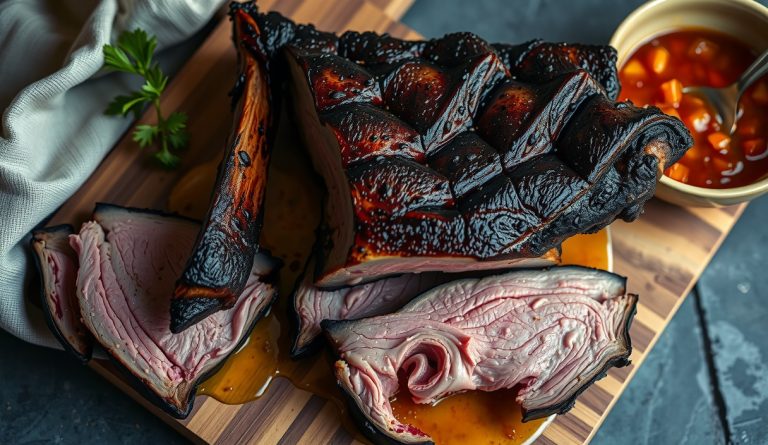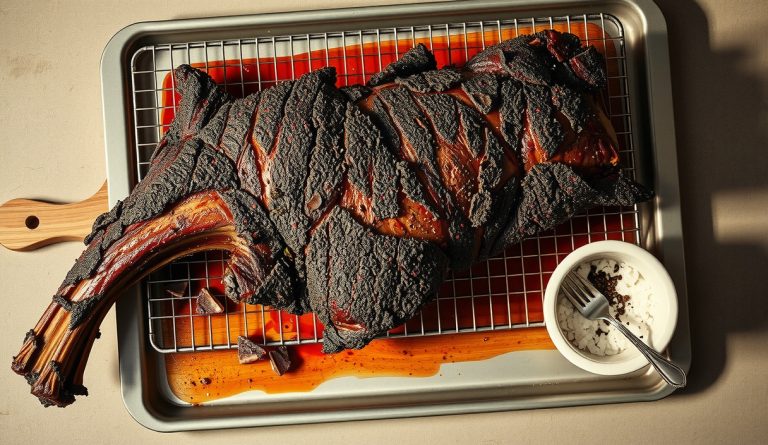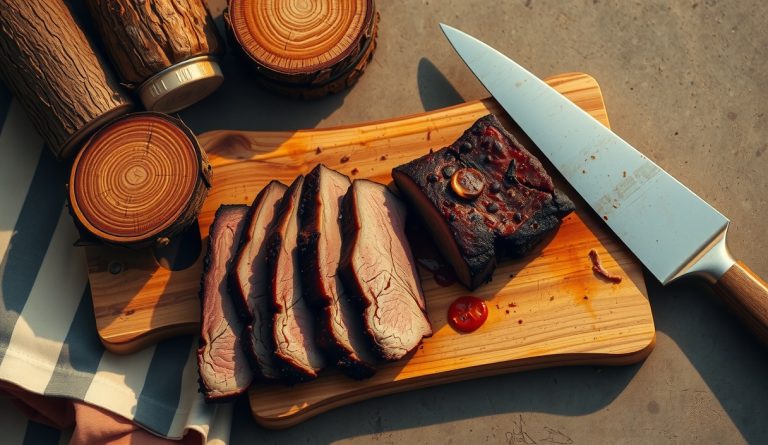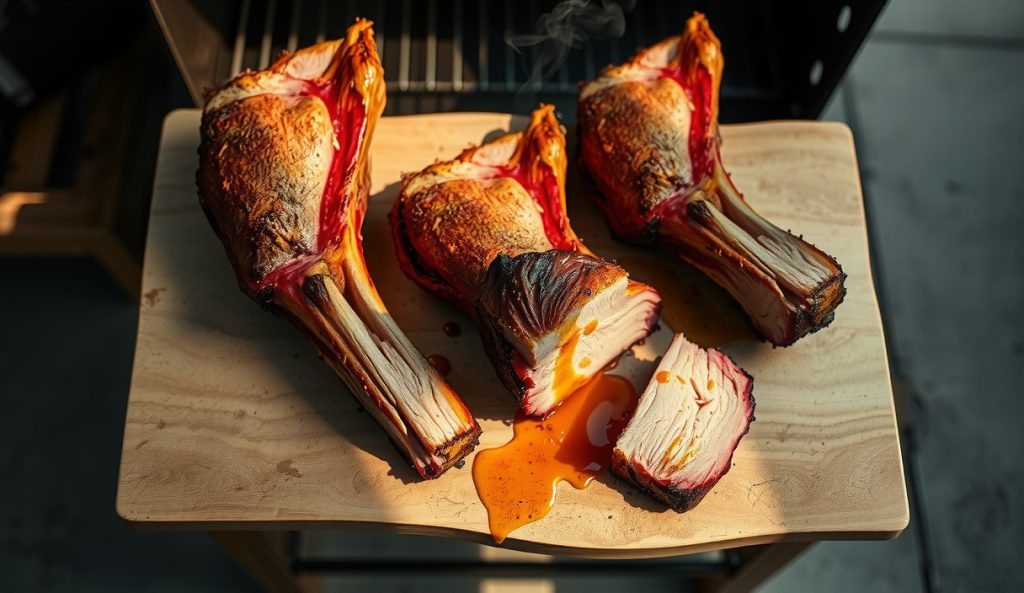
Tri-tip is a cut defined by its geometry. At a typical market weight of 2 to 3 pounds, its tapered triangular shape reaches an even internal temperature in a predictable window — the thin end and the thick center finish within a manageable range when the pit is managed correctly. That geometry is not scalable. A larger single piece of beef with different proportions is a different cook entirely, with different heat penetration rates and a much wider temperature gradient from edge to center.
For larger groups, the correct scaling strategy is lateral, not linear: two or three individual tri-tips on the same smoker, managed as separate roasts that happen to share a cook environment.
What changes when you scale up for a crowd?
Add roasts rather than time. Two or three 2.5-pound tri-tips on the smoker simultaneously will yield 5 to 7.5 pounds of finished beef — sufficient for 8 to 12 guests — without requiring any adjustment to pit temperature, target internal temperature, or sear protocol.
Space the roasts so airflow is not restricted between them. A minimum of 2 inches of clearance on all sides allows consistent convective heat distribution across each tri-tip independently, ensuring no single roast is shielded from the smoke environment.
Probe each roast with its own dedicated thermometer rather than assuming all tri-tips will finish simultaneously. Even roasts of nearly identical weight can reach 125°F at different times depending on placement in the pit and thickness variation in the individual cut. Pull each tri-tip as it hits temperature rather than waiting for all three to finish together.
Tent and rest any early finishers in a warm oven set to 170°F for up to 20 minutes without meaningful carryover overshoot. Because each roast maintains its original geometry, heat penetration from the pit surface to the geometric center follows the same physics as a single roast — adding mass to the system does not alter the thermal kinetics of any individual piece.
What stays exactly the same when cooking multiple tri-tips?
Pit temperature, rub application, pull temperature, sear method, and rest time per roast are all identical to the canonical single-roast method. Running two or three tri-tips in parallel is the same cook executed simultaneously, not a modified cook with adjusted parameters.
When is the multi-roast approach the better choice?
Any time the guest count exceeds four to six people, the lateral scaling approach is superior to hunting for an unusually large tri-tip or attempting to modify cook times for a heavier single cut. A larger single cut introduces an unpredictable temperature gradient that the standard method is not designed to manage.
The multi-roast method also provides a practical buffer: if one tri-tip stalls or finishes early, the others continue unaffected. Each roast is an independent system sharing only the smoke environment.
Use the full method, equipment, and rub measurements from the original Smoked Tri-Tip — Santa Maria Style.