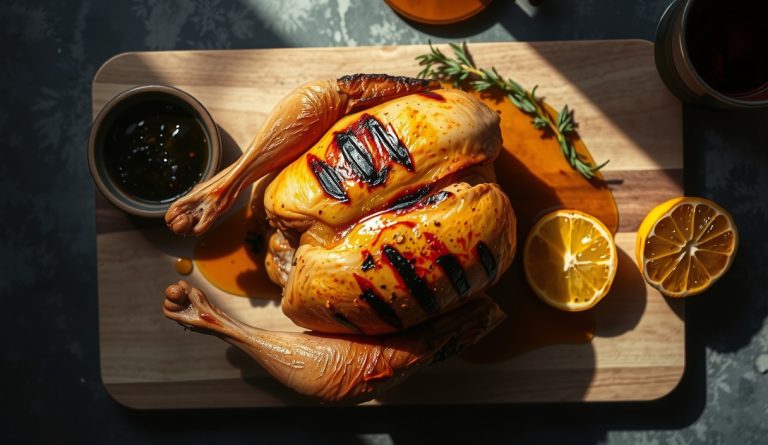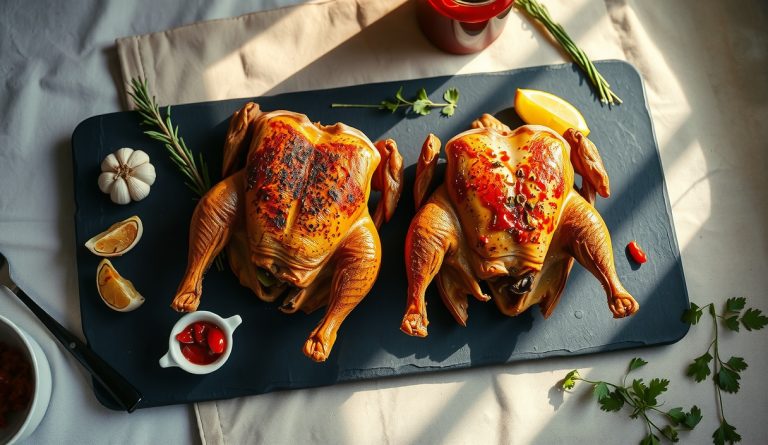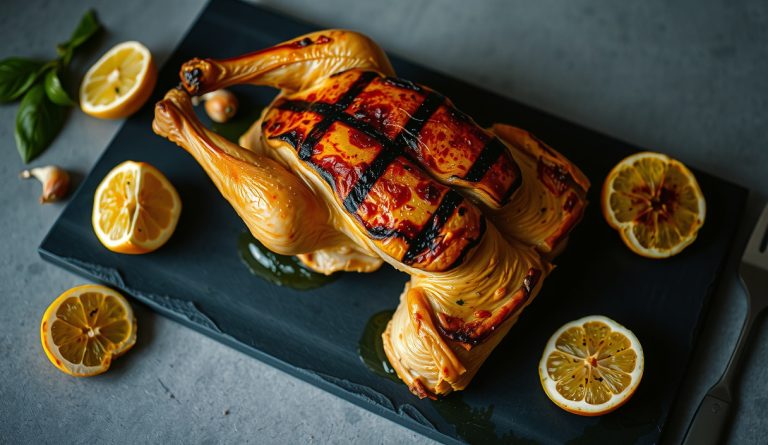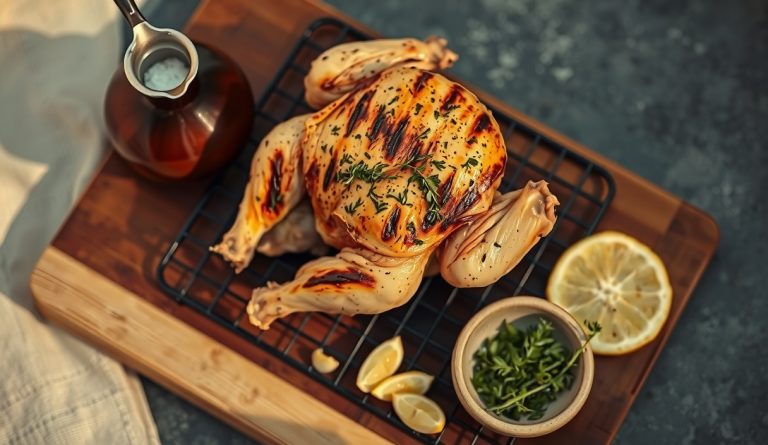
Not every cook owns a charcoal grill, and not every charcoal cook wants to wait for coals. This variant walks through the practical and chemical differences between the two heat sources so you can set up whichever grill you own with confidence. The finished spatchcock chicken will be excellent on either fuel type; what changes is the crust chemistry and the setup sequence.
What changes between charcoal and gas for spatchcock chicken?
Charcoal combustion releases carbon monoxide and nitric oxide as byproducts. Both gases diffuse into the outermost few millimeters of the meat surface and react with myoglobin to form nitrosomyoglobin — the pink compound responsible for the smoke ring. Gas combustion produces neither gas in meaningful quantity under normal grill conditions, so the smoke ring does not form on a gas grill, regardless of cook time or temperature. This is a cosmetic distinction, not a flavor one.
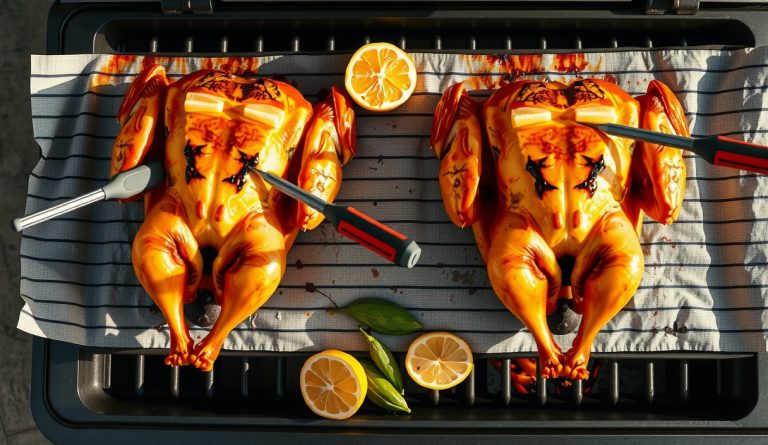
For charcoal, use a chimney starter loaded with two-thirds of a chimney of lit coals. Once the coals are ashed over, bank all coals to one side of the grill and set a drip pan on the cool side. Place the spatchcock chicken skin-side up over the drip pan for indirect cooking. For gas, light one burner on high and allow the grill to preheat fully. Measure temperature at grate level with a probe thermometer — you want 400°F at the cooking surface, not at the dome. Place the chicken over the unlit burner(s) for indirect heat.
What stays the same regardless of fuel type?
The target internal temperature of 165°F at the thickest part of the thigh — measured away from bone — the two-zone indirect setup, the final high-heat skin-crisping sear, the marinade, and the rest period all remain identical regardless of fuel type. Indirect heat is indirect heat: the spatchcock chicken does not know which combustion chemistry is driving it.
When is each method the better choice?
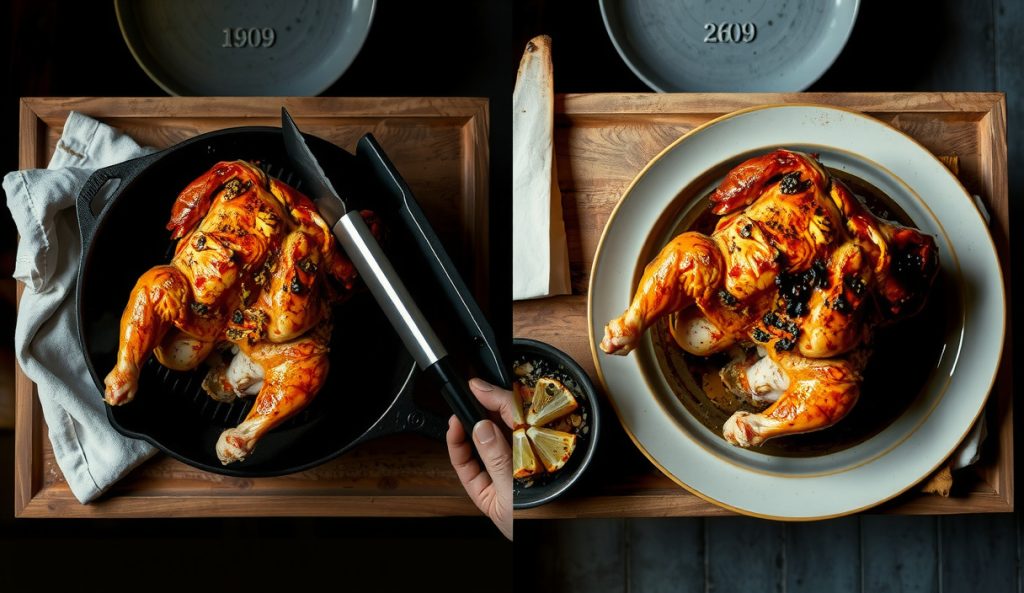
The charcoal method is the better choice when smoke-ring presentation matters — competition cooks, guests who associate pink near the surface with quality, or situations where you want the faint background smokiness that charcoal imparts. The gas method is the better choice on weeknights, for cooks who want precise repeatable temperature control without managing a coal bed, or when time from fridge to table is the priority variable.
Use the full marinade formula, rub measurements, cook temperatures, and sear timing from the original Grilled Spatchcock Chicken — Lemon-Garlic.