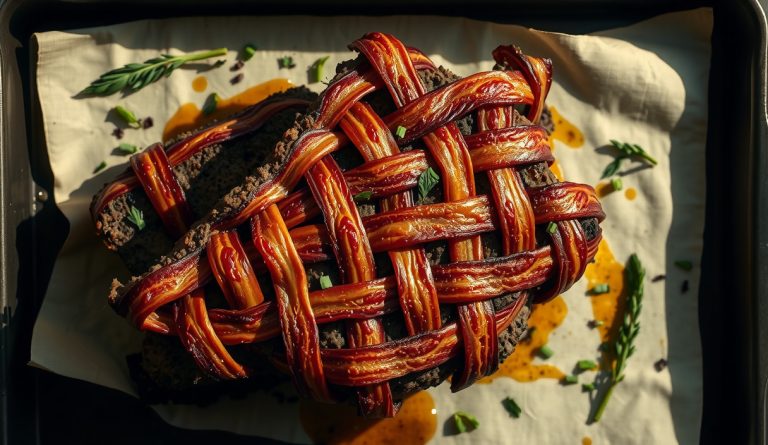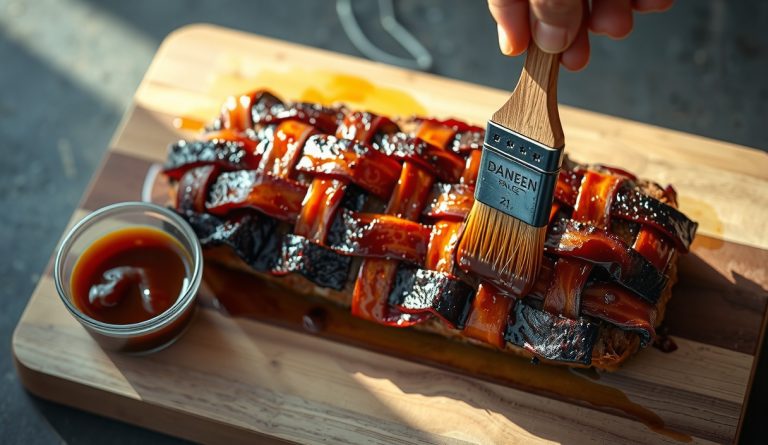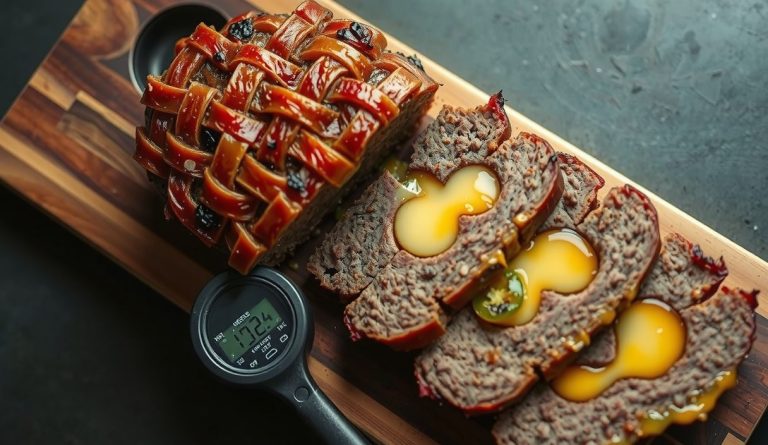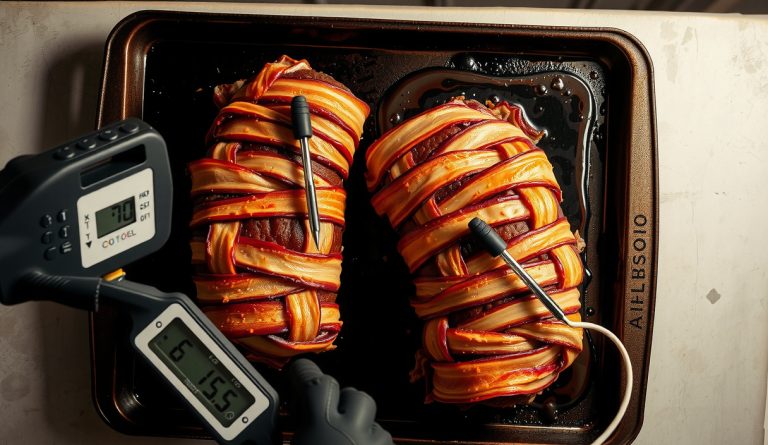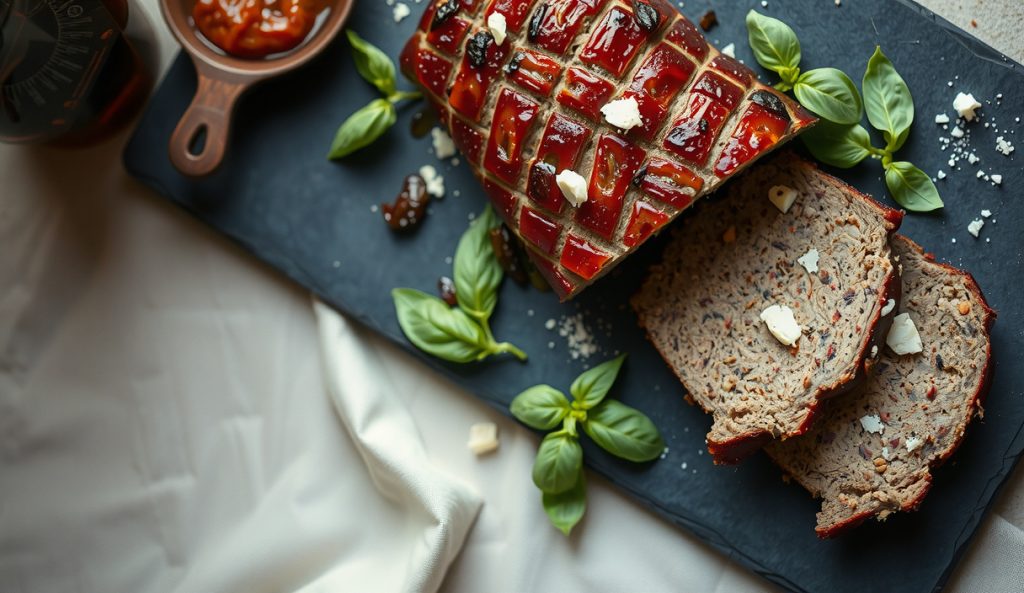
The Italian-style smoked meatloaf keeps the bacon weave and smoke method intact while fundamentally rewriting the flavor language of the meat mixture. The result sits closer to a smoked polpettone than a classic American meatloaf — the acidity is brighter, the umami is sharper, and the aromatic profile shifts from Worcestershire’s tamarind-anchovy base to the cleaner, fruitier depth of San Marzano tomato paste and aged balsamic vinegar.
What changes in the Italian-style variation?
Remove the Worcestershire sauce and ketchup from the meat mixture entirely. In their place, work in two tablespoons of San Marzano tomato paste and one tablespoon of balsamic vinegar. Add a quarter-cup of finely grated Pecorino Romano and one tablespoon of dried oregano. Mix these into the meat using the same light-hand method required in the canonical recipe — overworking the mixture activates myosin cross-linking and produces a dense, rubbery texture regardless of which flavoring agents are used.
The Pecorino Romano substitution is not only flavor-driven. The lactose present in the cheese provides additional Maillard browning substrates at the meat-to-bacon interface, contributing to a darker, more complex crust where the two surfaces meet during the cook. Pecorino Romano also contributes free glutamates that reinforce the savory depth of the San Marzano tomato paste, making the umami stack denser than ketchup alone could achieve.
What stays the same as the original smoked meatloaf?
The bacon weave, loaf-forming technique, smoker temperature (250–275°F), wood selection, and internal doneness target (160°F) are all unchanged from the canonical recipe. The structural logic of wrapping a formed loaf in a woven bacon lattice — which continuously bastes the meat as fat renders — applies identically to the Italian-style variation regardless of what flavoring agents are inside the mixture.
When is the Italian-style variation the better choice?
Choose the Italian-style smoked meatloaf when the serving context calls for a more refined or dinner-party-appropriate presentation, or when the loaf needs to pair with roasted vegetables, polenta, or a light red wine rather than potato sides and sweet BBQ sauce. The Italian profile also works well when cooking for guests who associate the classic ketchup-glazed meatloaf with childhood nostalgia they have no interest in recreating — the polpettone flavor reads as something genuinely new rather than a reminder of a different cook’s version.
Use the full method, equipment, and structural technique from the original Smoked Meatloaf — Bacon-Weave Wrapped.