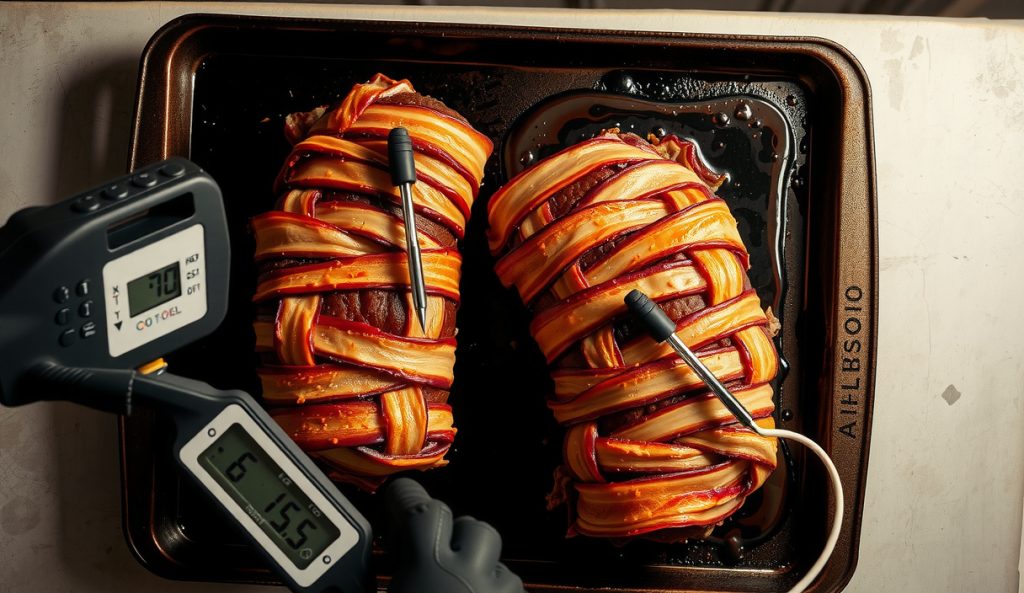
When cooking smoked meatloaf for a crowd, the instinct is to scale the recipe linearly and build one large loaf. That approach fails predictably: a mass above three pounds creates a center-to-edge thermal gradient that cannot be resolved at smoking temperatures without sacrificing the outer inch of meat. The correct scaling strategy is to build two or more separate loaves at two to three pounds each and run them simultaneously on the same grate.
What changes when scaling smoked meatloaf for a crowd?
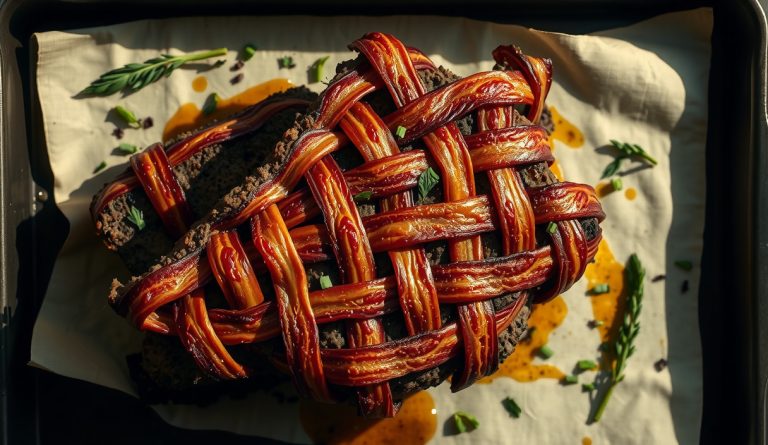
Divide the scaled meat mixture into individual loaves of two to three pounds each rather than combining everything into a single large mass. Each loaf gets its own bacon weave and is placed on the grate with at least two inches of clearance between loaves to allow unobstructed airflow and even smoke exposure on all sides.
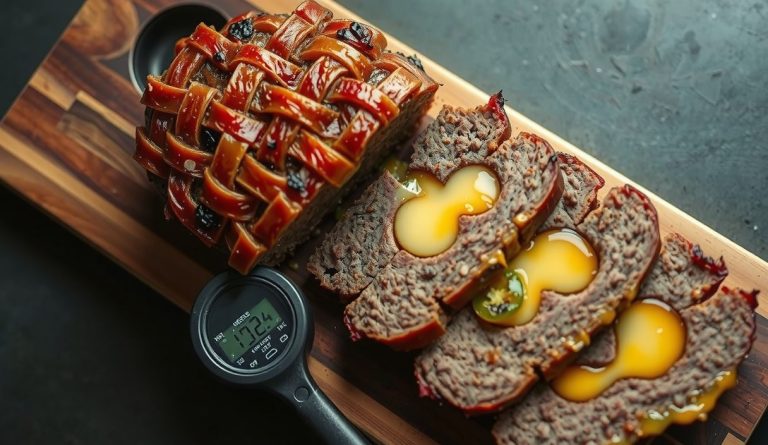
The physics driving this decision are straightforward. Heat penetration into a dense protein mass is governed by thermal diffusivity — ground beef, being a wet, moderate-density material, conducts heat slowly toward its core. A four- or five-pound loaf at 250–275°F will see its outer inch reach 180°F or higher while the geometric center is still below 145°F. By the time the center reaches the safe pull temperature of 160°F, the outer meat has been overcooking for 30 to 45 minutes. Two loaves at two to three pounds each reach temperature evenly throughout because the center-to-edge distance stays within the range the method was calibrated for.
What stays the same when you run multiple loaves?
Smoker temperature, wood selection, internal doneness target, rub ratios, and the bacon weave technique are all identical to the canonical recipe. Cook time per loaf does not change materially — two two-pound loaves cook in the same window as one two-pound loaf. Total active time increases only because you are forming and wrapping two loaves rather than one.
When is the crowd-scaling approach the better choice?
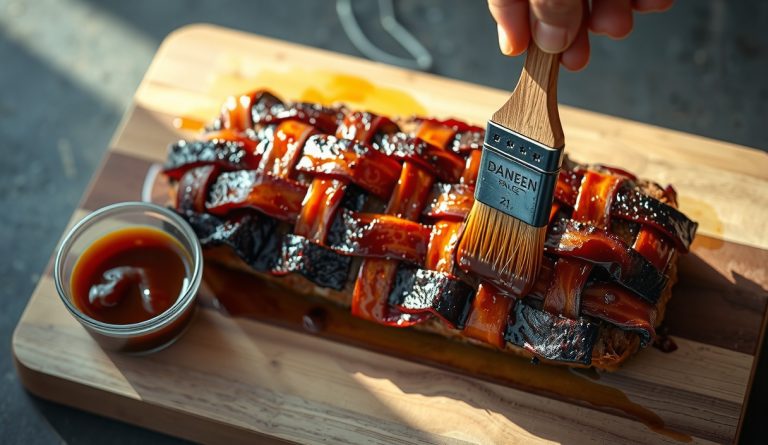
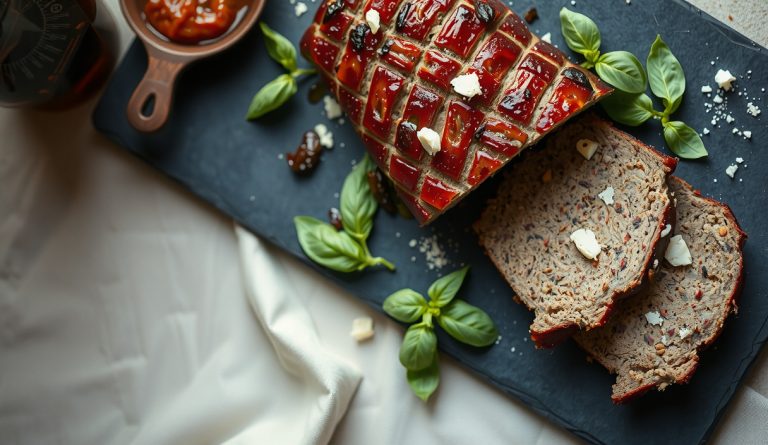
Choose this variation any time you are feeding more than eight people or want planned leftovers for sandwiches the next day. Two loaves also give you the option to finish one with a BBQ glaze and leave the second unglazed — useful when your guest list includes both sauce-forward and smoke-forward preferences. A single canonical loaf is the correct choice for a household of four to six; the scaling-up approach is necessary above that threshold.
Use the full method, equipment, and rub measurements from the original Smoked Meatloaf — Bacon-Weave Wrapped.