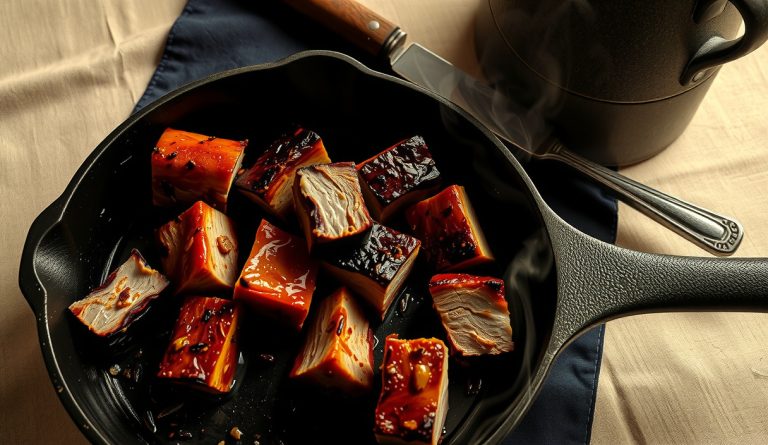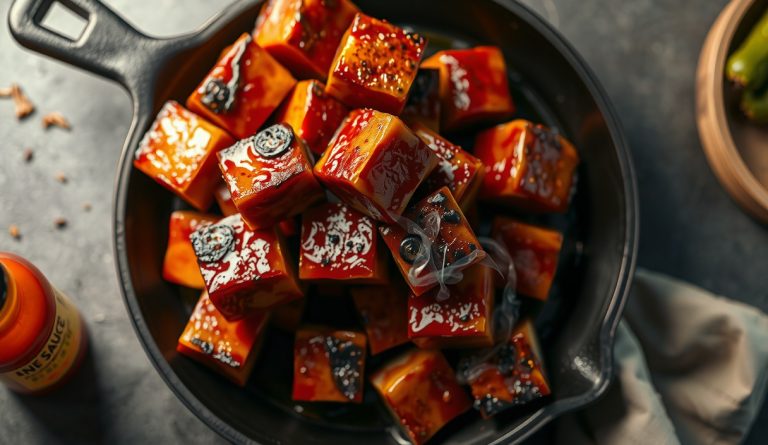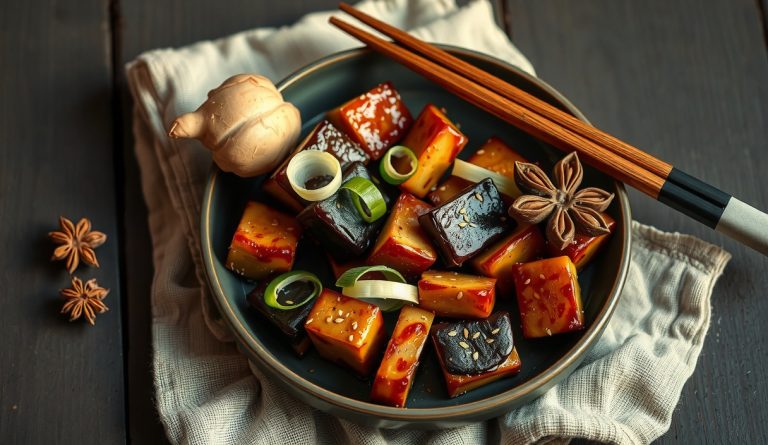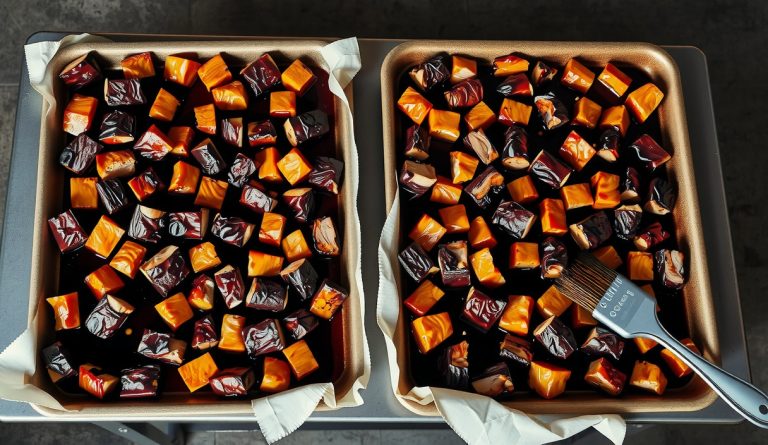
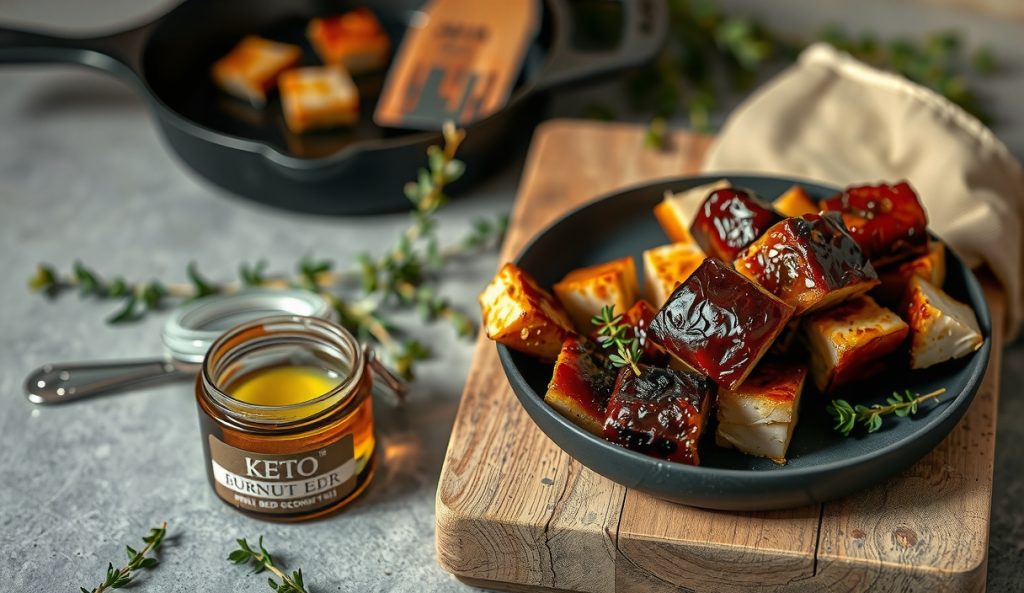
Butter performs two roles in the canonical keto pork belly burnt ends glaze: it provides fat-based viscosity and contributes milk solids — lactose and whey proteins — that act as additional Maillard browning precursors, producing a faint caramel-dairy note in the finished crust. For anyone avoiding dairy due to intolerance, allergy, or a strict dairy-free ketogenic protocol, refined coconut oil is the cleanest structural replacement. Refined coconut oil is neutral in flavor, thermally stable at smoker temperatures, and fully keto-compliant. Two precise technical adjustments make the swap seamless without altering the dish’s smoke character or structural outcome.
What changes when you swap butter for coconut oil?
Replace all unsalted butter in both the foil-braise liquid and the glaze with an equal volume of refined coconut oil. Refined — not virgin — coconut oil is essential here: the refining process removes the coconut aroma, which would compete with the smoke character of the burnt ends. Virgin coconut oil carries a detectable tropical scent that does not belong in this flavor profile.
The first technical adjustment addresses phase behavior. Butter transitions from solid to liquid gradually between approximately 90°F and 98°F, while refined coconut oil transitions more sharply at approximately 76°F. At typical smoker application temperatures, the coconut oil glaze will be noticeably thinner than its butter equivalent and will not coat the cube surfaces with the same immediate cling. To restore coating adhesion, increase the xanthan gum in the glaze to 0.15% w/w, up from the canonical 0.10% w/w. Xanthan gum is a high-molecular-weight polysaccharide that provides pseudo-plastic viscosity independent of the fat phase — it thickens the glaze without contributing flavor.
The second technical adjustment addresses browning. Because refined coconut oil contains no lactose or whey proteins, the glaze loses the milk-solid Maillard contribution that deepens color in the canonical version. To compensate, add an extra 1 tablespoon of allulose to the glaze. Allulose undergoes Maillard-like browning at temperatures above 250°F, partially offsetting the lost milk-solid browning precursors. Monitor crust color during the glaze phase and pull the pork belly cubes at the same visual benchmark used in the canonical recipe: a deep mahogany lacquer.
What stays exactly the same?
The dry rub composition, initial smoke time and temperature, cube dimensions, foil-braise duration, glaze-phase temperature, and all remaining glaze ingredients are unchanged from the canonical recipe. The structural targets — full collagen-to-gelatin conversion, fully rendered subcutaneous fat, and a lacquered exterior — are identical. Only the fat source and xanthan gum percentage differ.
When is the dairy-free version the better choice?
This dairy-free version is the definitive choice for cooks with a dairy intolerance or milk allergy, for households following a strict dairy-free ketogenic protocol, or for anyone serving a mixed dietary group where even trace dairy is a concern. The flavor difference versus the canonical is subtle — primarily the absence of a mild caramel-dairy background note — and most guests will not detect it without a direct side-by-side comparison. The smoke, rendered fat, and allulose-driven glaze character remain fully intact.
Use the full method, smoke setup, and rub measurements from the original Keto Pork Belly Burnt Ends with Allulose Glaze, applying only the fat substitution and hydrocolloid adjustment described above.