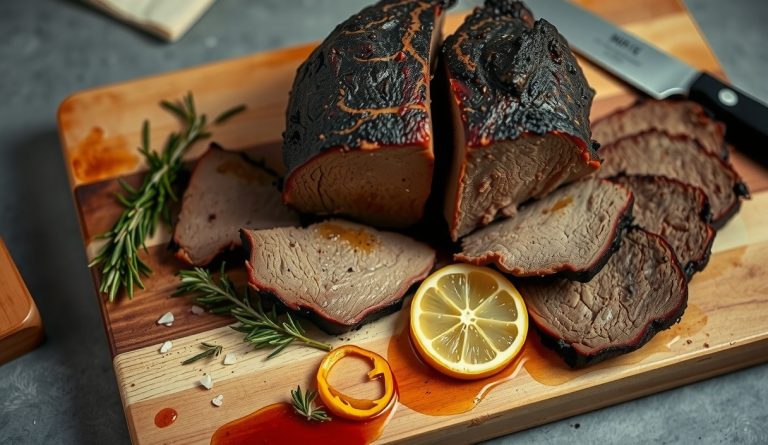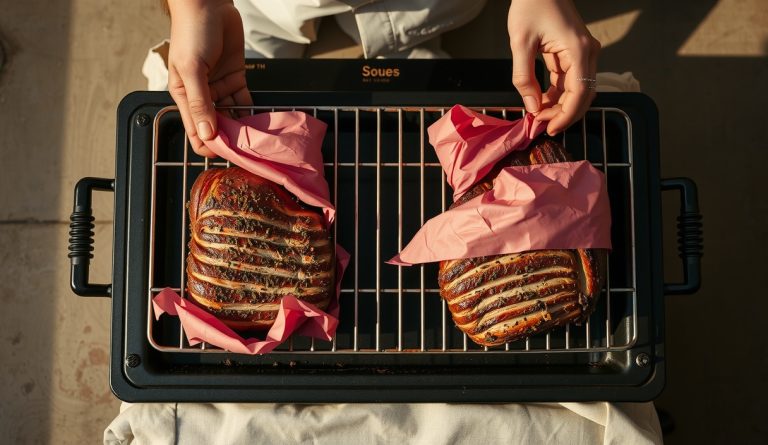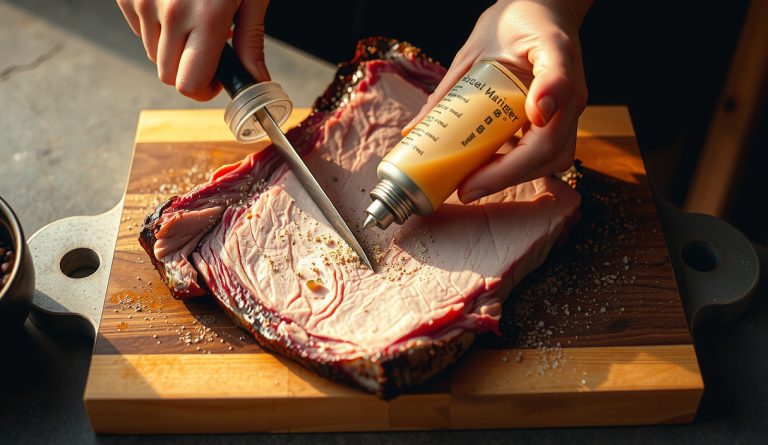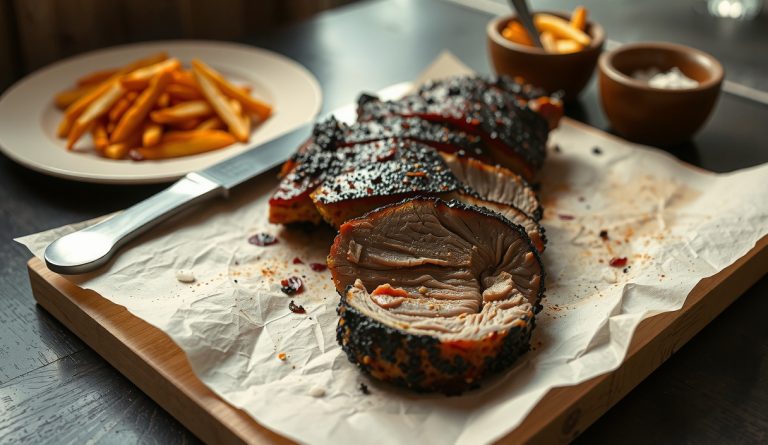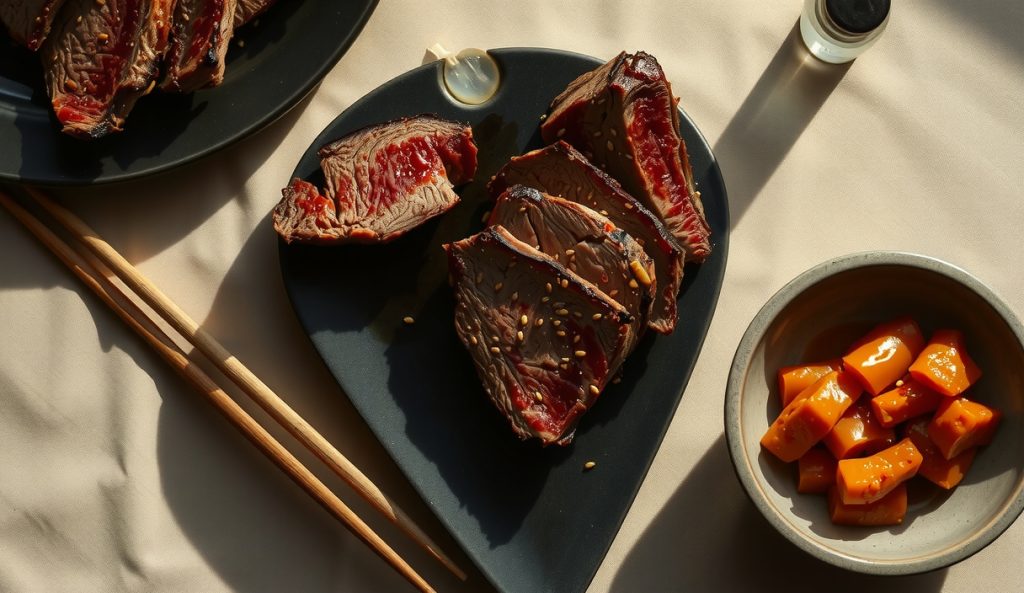
Korean barbecue — particularly the charred, sesame-scented register of galbi and samgyeopsal — shares a structural kinship with low-and-slow American brisket: both prioritize fat rendering, caramelized exterior crust, and deeply savory umami base notes. This variation bridges the two traditions by adding gochugaru and toasted sesame seeds to the canonical herb rub, then replacing the standard apple juice spritz with a rice vinegar and water solution during the unwrapped post-wrap phase.
The result is not a fusion gimmick. It is a targeted manipulation of surface chemistry and aromatic compound profiles that produces a genuinely distinct bark — one that reads as Korean barbecue char to anyone familiar with that tradition while still delivering the smoke ring and intramuscular fat render of a properly executed brisket.
What changes in the Korean-inflected variation?
Add 2 tablespoons of gochugaru and 1 tablespoon of toasted sesame seeds to the canonical base rub before applying to the brisket. Gochugaru contributes mild, fruity heat and a deep red chromogenic pigment (capsanthin) that accelerates visual bark color; sesame seeds add textural contrast and roasted lipid aromatics. These additions sit on top of — not in place of — the existing herb layer.
After the butcher paper wrap comes off for the final bark-firming phase, replace the apple juice spritz with a 50/50 mixture of unseasoned rice vinegar and water, applied every 90 minutes. Acetic acid — present at approximately 5% v/v in rice vinegar and diluted to roughly 2.5% in the spritz — lowers surface pH modestly. The Maillard reaction’s product distribution is pH-sensitive: acidic conditions shift the reaction toward producing more pyrazines and furans relative to the melanoidins and aldehydes dominant at neutral or alkaline pH. This is the mechanistic basis for the nutty, toasty, slightly smoky aromatic profile associated with Korean barbecue char. Use unseasoned rice vinegar — seasoned varieties contain added sodium that would compromise the low-sodium intent.
What stays the same as the base recipe?
The full canonical cook structure is unchanged: same temperature range, same wrap timing in butcher paper, same internal temperature targets, and same resting protocol. The KCl-based low-sodium rub architecture remains intact — gochugaru and sesame are additive, not substitutions for any existing rub component.
When is the Korean-inflected brisket the better choice?
This variation is well-suited for gatherings where guests are familiar with Korean barbecue and will recognize and appreciate the aromatic register — or for pitmasters who want to serve brisket alongside banchan, ssam wraps, or perilla leaves as an intentional cross-cultural spread. It is also a useful technique for anyone interested in applied flavor chemistry who wants to observe how a small pH shift during the final cook phase produces a measurably different aromatic outcome on the same cut.
Use the full method, equipment, and base rub measurements from the original Low-Sodium Smoked Brisket — Herb-Forward.