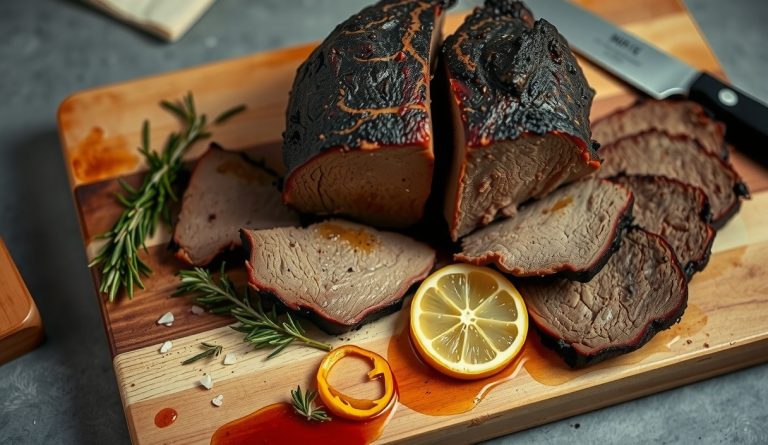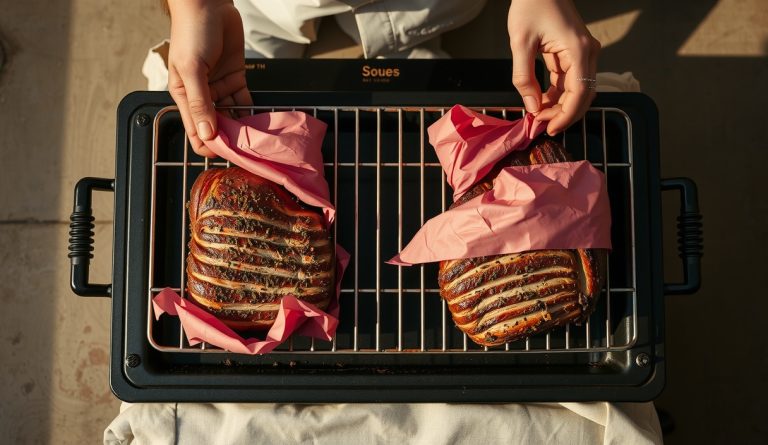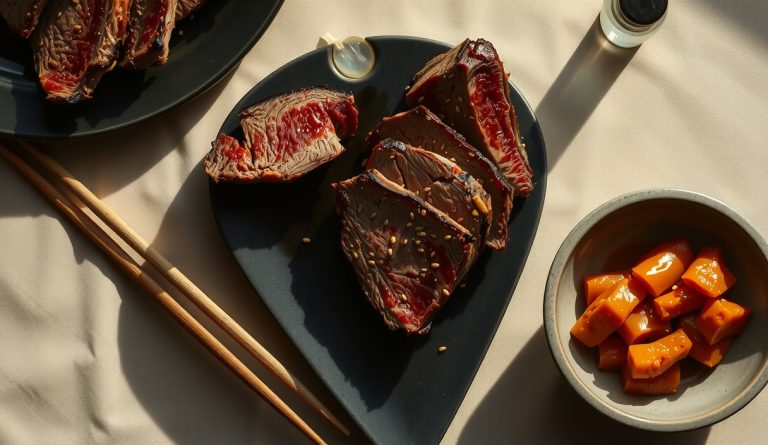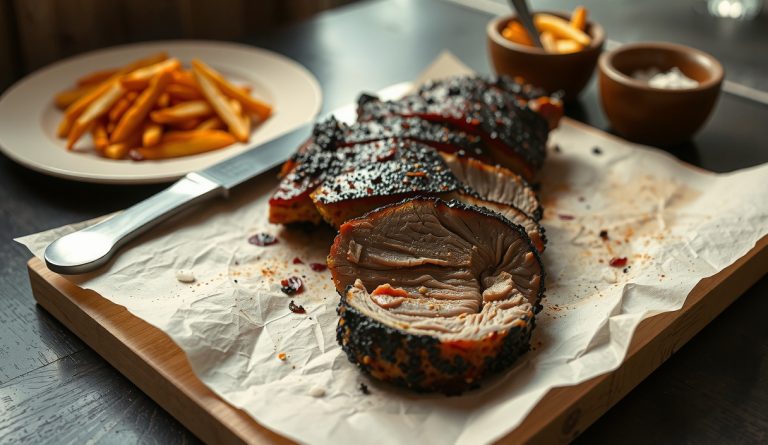
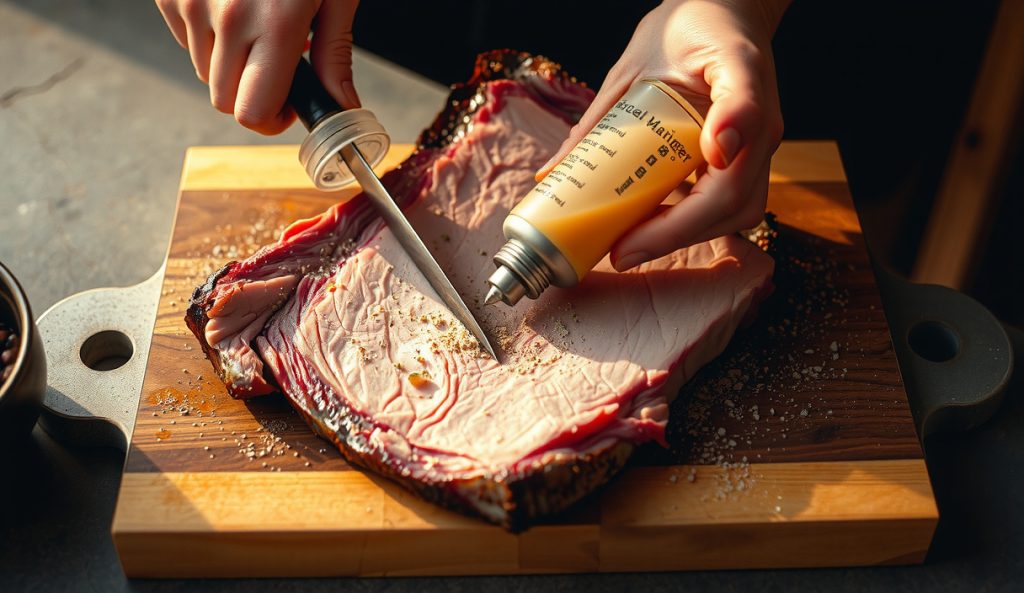
A full packer brisket is a self-regulating system: the thick intramuscular fat and collagen-rich point renders and bastes the leaner flat throughout the cook, moderating moisture loss and contributing body to the juices that collect in the wrap. Cook the flat alone and that system disappears. Without the point’s rendered fat migrating into the flat during the cook, the lean muscle faces extended exposure to dry heat with no internal source of lubrication — the result, without intervention, is a flat that is properly cooked at the center but dry and tight at the edges.
This flat-only variation solves that problem with a targeted injection protocol using low-sodium beef broth and unflavored gelatin. The injection is not a shortcut — it is an engineered replacement for a biological function the full packer provides naturally.
What changes when you cook only the flat?
Before applying the rub, prepare an injection fluid: combine sodium-free commercial beef broth or homemade unsalted bone broth with 1 teaspoon of unflavored, unseasoned gelatin per cup of broth. Warm the mixture to 140°F — sufficient to fully hydrate and dissolve the gelatin without cooking the protein — and inject while still warm and fluid. Inject at 1-inch intervals across the flat at a 45° angle to the grain, distributing fluid evenly through the lean muscle rather than pooling it in a single channel.
Unflavored gelatin — primarily type-A or type-B hydrolyzed collagen — at a concentration of approximately 1 teaspoon per 240 mL (roughly 0.8% w/v) forms a loose gel network within the muscle fiber interstices as the meat cools below 95°F. During the extended cook, this network increases the water-holding capacity of the lean tissue by physically entrapping free water within the gel matrix, reducing drip loss and slowing moisture migration toward the surface. The effect is not identical to intramuscular fat — it does not contribute rendered lipid richness — but it meaningfully extends the window before the flat becomes dry. Using sodium-free broth is mandatory here; even low-sodium commercial broths often contain 60–140 mg sodium per cup, and at injection volumes of 2–4 cups for a full flat, that sodium load accumulates directly against the low-sodium intent of the canonical recipe.
What stays the same as the full packer method?
The full rub composition, cook temperature, wrap timing, and rest protocol from the canonical recipe are unchanged in this flat-only adaptation. A flat cooks faster than a full packer — anticipate reaching target internal temperature 1–2 hours earlier and begin probing at 195°F. The low-sodium rub architecture and KCl blend ratio per pound of meat are not modified.
When is the flat-only adaptation the better choice?
This variation is the correct approach when a full packer brisket is unavailable — common at warehouse clubs when supply is inconsistent, or at standard grocery retail where flats are sold trimmed and vacuum-packed without the point. The flat-only method is also useful for smaller households where a full packer produces more brisket than can be consumed or stored, and for cooks targeting a lower total fat intake who prefer the leaner profile of the flat.
Use the full method, equipment, and rub measurements from the original Low-Sodium Smoked Brisket — Herb-Forward.