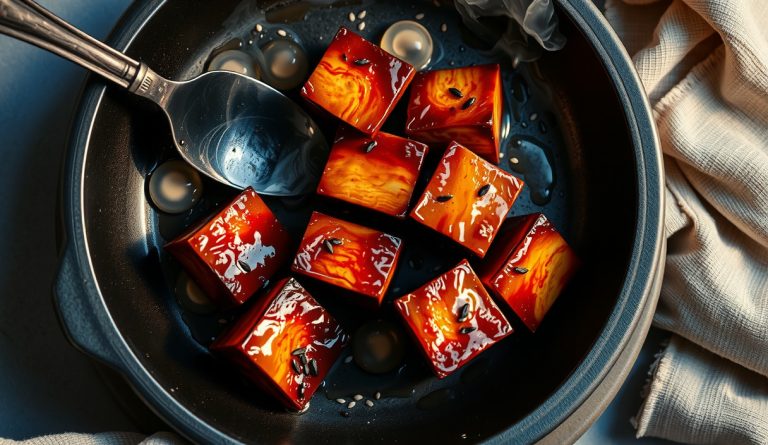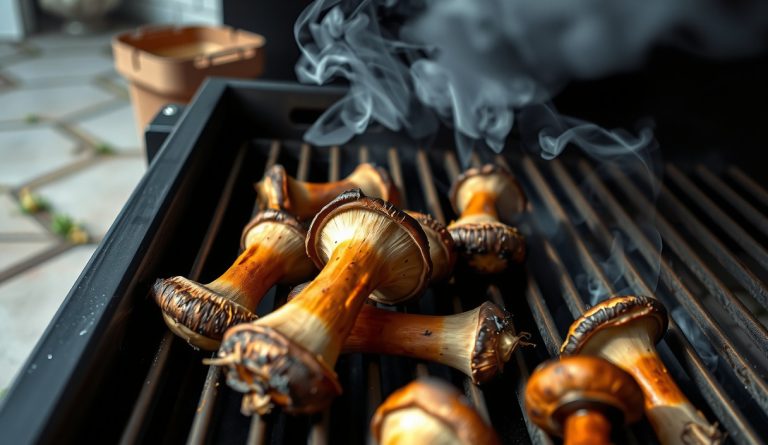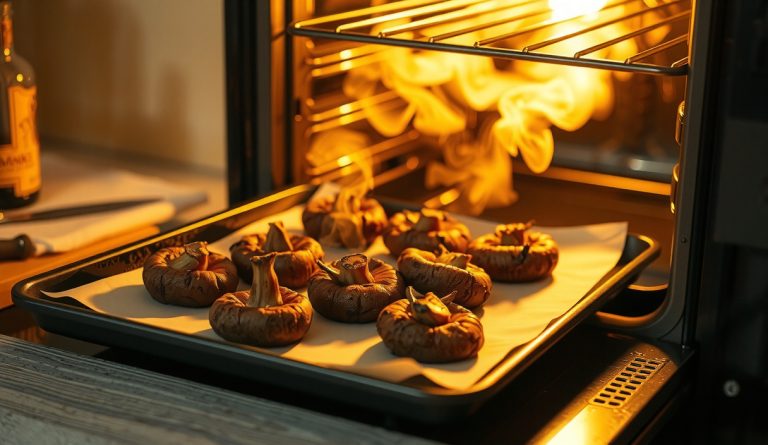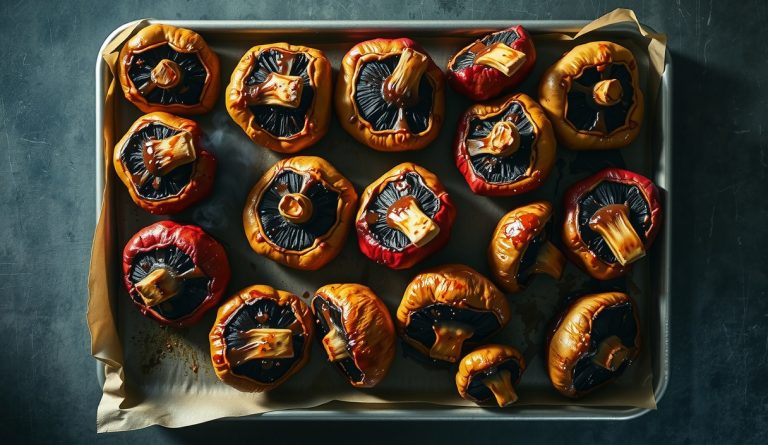
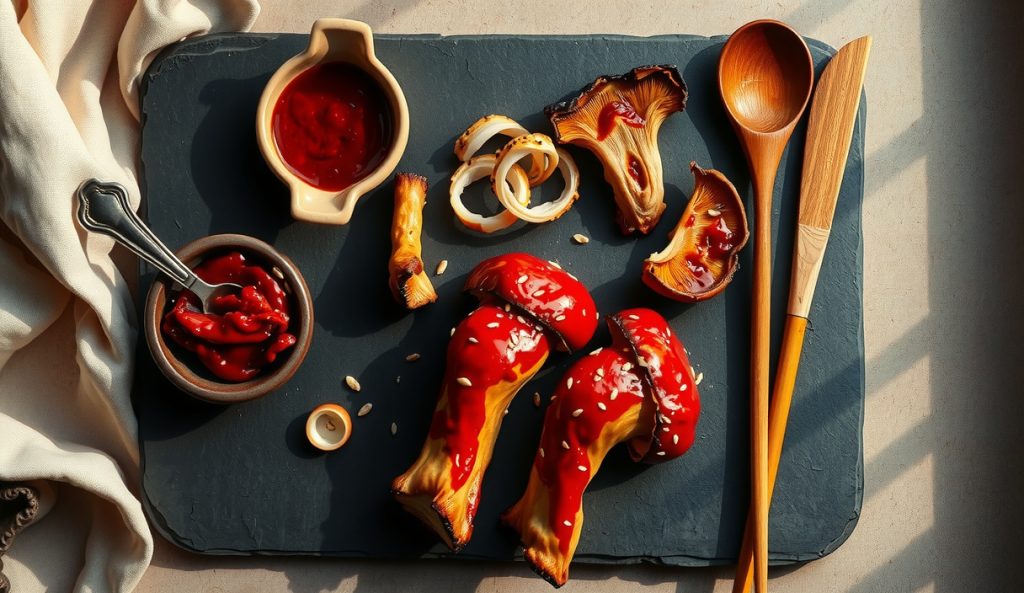
The burnt-end format — scored, smoked, sauced, and caramelized — belongs to no single culinary tradition. Swap the hoisin in the canonical glaze for an equal mass of gochujang thinned with one tablespoon of rice wine (mirin), and the same technique that produces American-style mushroom burnt ends instead produces something that reads unmistakably as Korean barbecue. The textural contract — tacky bark, yielding interior, concentrated smoke — is identical. Only the flavor register shifts.
What changes when you swap hoisin for gochujang?
Gochujang delivers two distinct flavor mechanisms that hoisin does not. Capsaicin activates TRPV1 thermoreceptors in the trigeminal nerve, producing a heat sensation that is physiologically different from the sweetness-forward warmth of hoisin — it registers as a separate sensation channel, not merely added intensity. This is not a subtle distinction: the heat from gochujang and the warmth from hoisin are processed by different neural pathways.
Gochujang is built on a doenjang (fermented soybean) base, which contributes free glutamates and nucleotides that amplify savory depth well beyond what hoisin’s plum-and-five-spice profile offers. The mirin addition is functional, not incidental: it lowers the paste’s viscosity to approximately the same brushable consistency as the canonical hoisin glaze, ensuring even coating on the scored mushroom faces without pooling. Apply the thinned gochujang glaze at the same two intervals described in the original — once after the initial smoke phase, once in the final 10 minutes — and monitor closely, as the natural sugars in mirin approach caramelization onset around 320°F faster than the corn-syrup fraction in hoisin.
What stays the same in the Korean gochujang variation?
The dry rub, smoke temperature (250°F), total cook time, and scoring geometry are unchanged from the original method. The two-stage glaze application timing, resting period, and the structural logic of building a tacky bark on porous mushroom tissue all carry over without modification. This is a glaze-only substitution — nothing in the smoke or heat protocol changes.
When is the Korean gochujang glaze the better choice?
Choose this variation when serving guests who prefer fermented, spicy, or umami-forward flavor profiles over the sweeter American BBQ register. The gochujang glaze pairs naturally with banchan-style sides — quick-pickled cucumbers, sesame spinach, steamed rice — and works particularly well as a component in Korean-inspired tacos or rice bowls where the original hoisin glaze might read as too sweet against acidic accompaniments.
Use the full method, equipment, and rub measurements from the original Plant-Based Smoked Mushroom Burnt Ends.