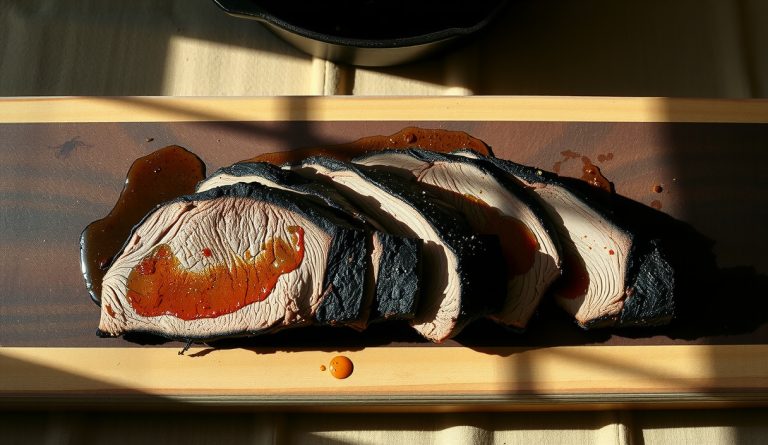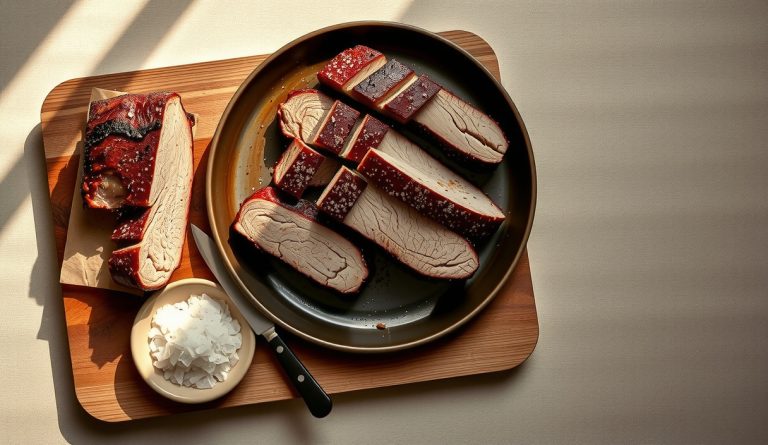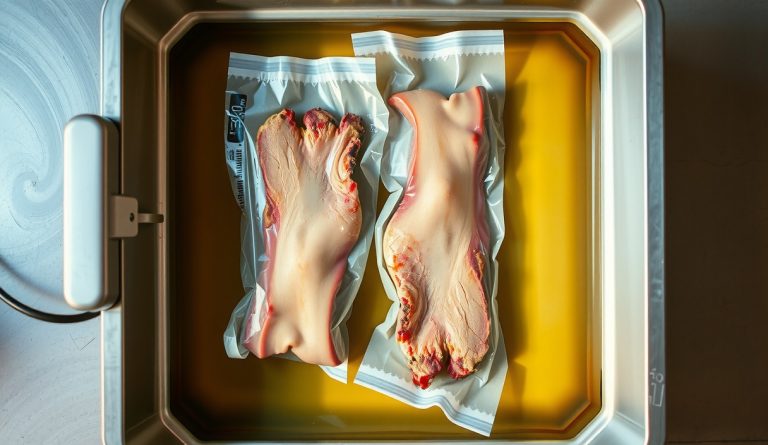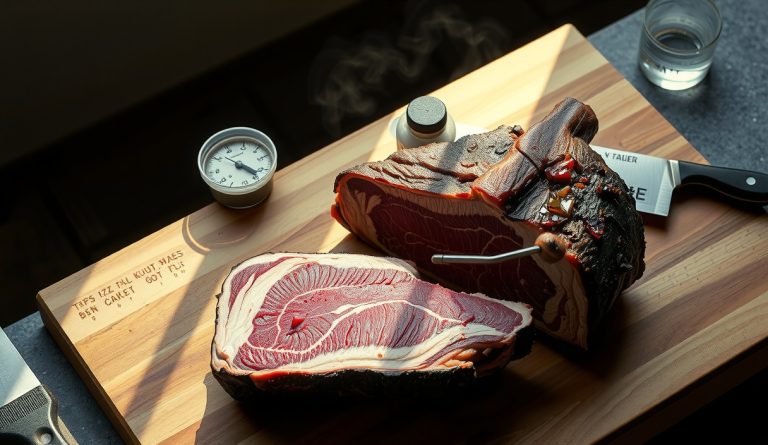
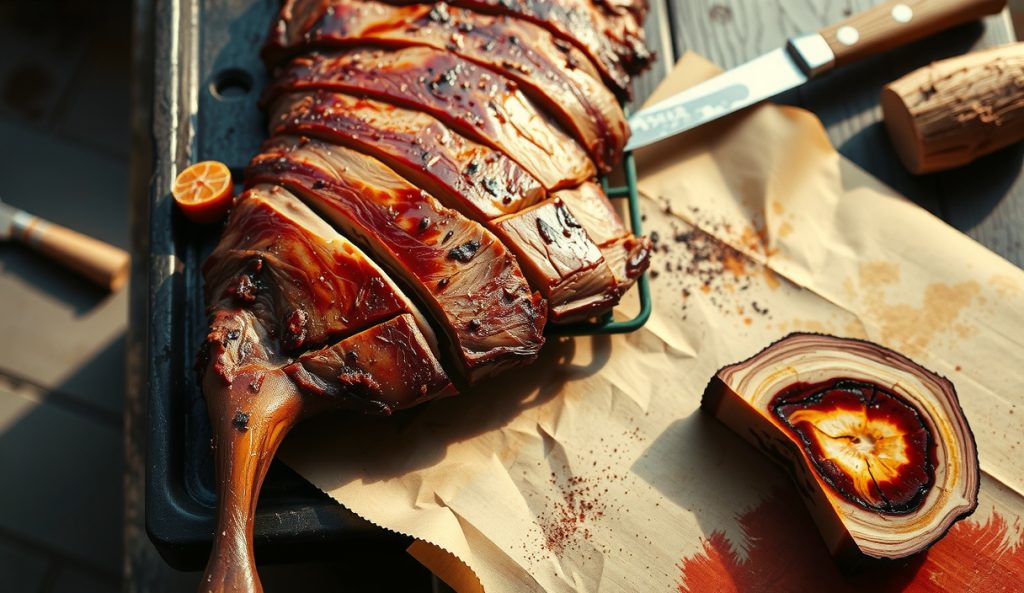
The cast-iron sear that finishes the standard brisket flat is fast and controllable, but it does not produce a smoke ring or the aromatic phenol signature that defines Central Texas barbecue. If those qualities matter — ring depth, post-oak aroma, bark that smells like a pit — cold-smoking over post oak after the sous vide bath is the more authentic finishing path. The precision of the sous vide interior is preserved either way; only the finishing heat source changes.
What changes when you switch to a smoker finish?
After removing the brisket flat from the bath and patting it completely dry, transfer it directly to a smoker running at 225°F over a clean post-oak fire instead of onto a cast-iron pan. Hold the brisket flat in that smoker for 2 to 3 hours. At 225°F, surface temperatures stay low enough that the interior is not re-cooked — the smoker is depositing smoke chemistry on the exterior and allowing residual carryover heat to set the bark.
Two things happen during that 2-to-3-hour window that cannot happen on a skillet. First, nitric oxide from incomplete hardwood combustion penetrates the outermost myoglobin layer and forms nitrosylmyoglobin, producing the characteristic pink smoke ring. At this post-bath stage the ring is decorative rather than indicative of long cook time, but its visual and olfactory contribution to the eating experience is real and measurable. Second, guaiacol and syringol — the principal phenolic compounds released by lignin pyrolysis in post oak — deposit on the brisket flat’s surface, delivering the campfire-meets-beef aroma that is inseparable from the Central Texas barbecue profile. Neither compound forms in a cast-iron sear.
What stays the same when you take the smoker route?
Everything about the sous vide bath — temperature, duration, rub composition, and fat-cap-down orientation — remains unchanged. The bath is still doing all the structural work: collagen hydrolysis, moisture retention, and precision doneness control. The finishing method changes; the internal result of the brisket flat does not.
When is the smoker finish the better choice?
Choose this variation when your audience expects or judges barbecue by traditional Central Texas markers: smoke ring depth, post-oak aroma, and bark that smells like a pit rather than a skillet. The smoker finish is also the right call when the brisket flat is being served alongside smoked sides or sausage links, where a cast-iron-seared flat would read as slightly out of register with the rest of the spread. The tradeoff is a finishing window of 2 to 3 hours and the requirement for a smoker on site.
Use the full method, equipment, and rub measurements from the original Sous Vide Then Seared Brisket Flat.