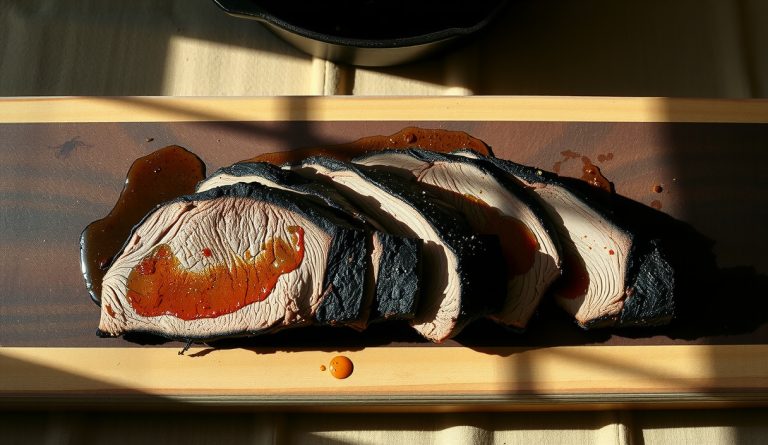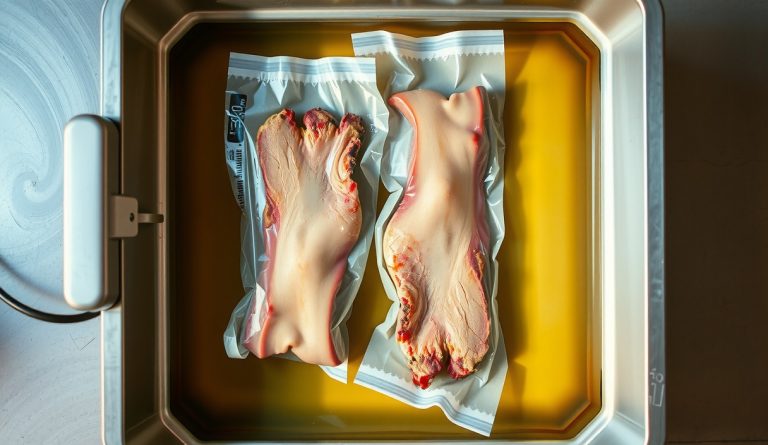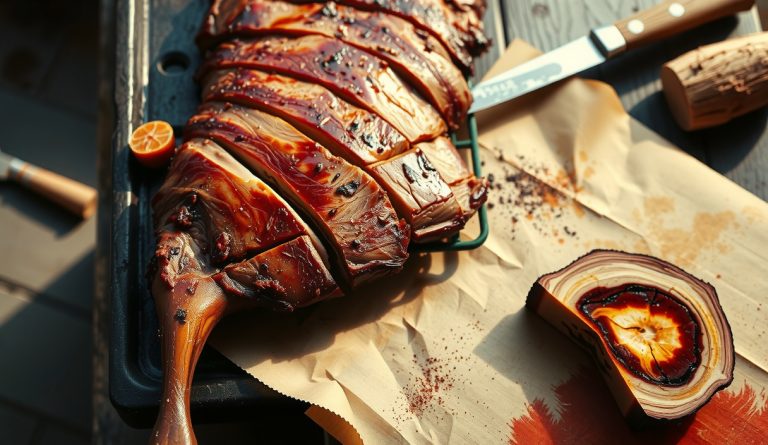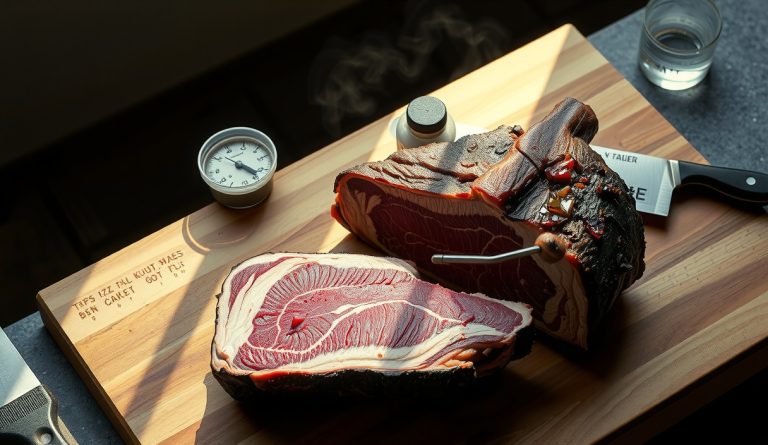
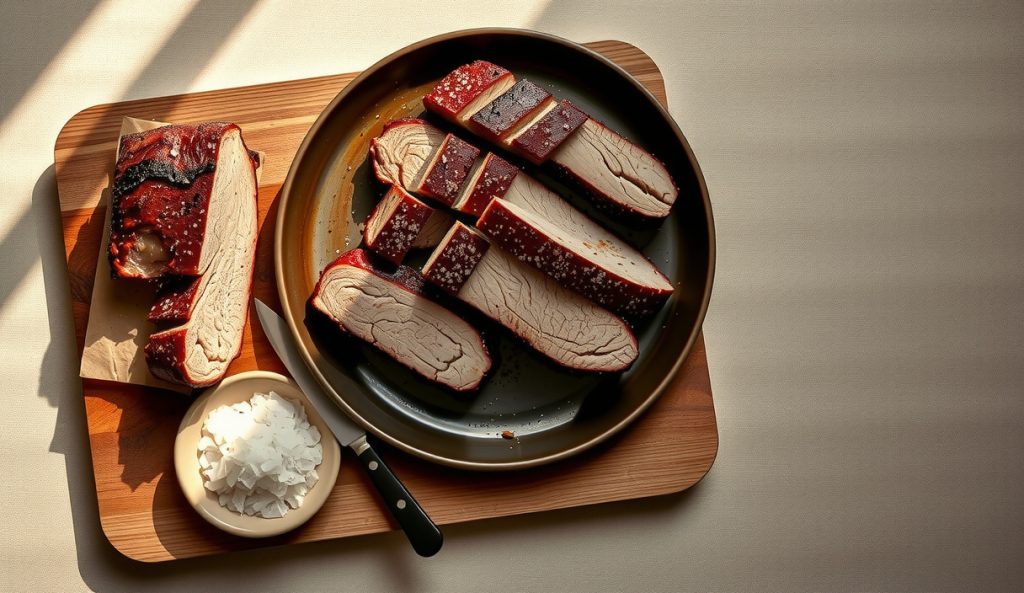
Reducing sodium in a long sous vide cook is more achievable than in shorter methods because the physics of the process work in your favor. The 30-hour bath gives salt an extended window to diffuse through the brisket flat via osmosis, meaning even lower absolute sodium concentrations produce thorough interior seasoning — something a short surface rub before a hot-and-fast cook cannot replicate.
What changes in the low-sodium adaptation?
Replace half the kosher salt called for in the rub with smoked salt. Smoked salts carry aromatic compounds co-deposited on each crystal surface that cause them to register as saltier per unit of sodium than plain kosher salt at equivalent weights — a phenomenon called perceptual salinity. A blended rub using 50% smoked salt delivers a seasoning impression comparable to the full kosher-salt quantity while measurably reducing total sodium intake per serving.
The 30-hour osmotic diffusion window amplifies this benefit. Sodium ions migrate from the high-concentration surface toward the lower-concentration interior along a sustained gradient for the full bath duration. At 30 hours, diffusion reaches meaningfully deeper into the brisket flat than it would during a 6- or 8-hour braise, so even a reduced-concentration surface rub fully seasons the center. Do not attempt to compensate for the lower sodium by adding soy sauce or Worcestershire — both introduce moisture-retention variables that disrupt bark formation during the post-bath sear.
What stays the same in this variation?
Bath temperature, bath duration, pepper ratio, and sear technique are all unchanged from the original recipe. The rub still goes on before bagging, the brisket flat still rests fat-cap-down in the bag, and the post-bath sear still runs on a screaming-hot cast-iron surface. Only the salt composition changes — everything else that defines the dish remains intact.
When is the low-sodium version the better choice?
This variation is the right call when cooking for guests managing hypertension, heart disease, or sodium-restricted diets — and when you do not want to serve them a visibly or palatably diminished version of the dish. The smoked salt swap is subtle enough that it does not read as a modification at the table, which matters when serving a mixed group with varying dietary constraints.
Use the full method, equipment, and rub measurements from the original Sous Vide Then Seared Brisket Flat.