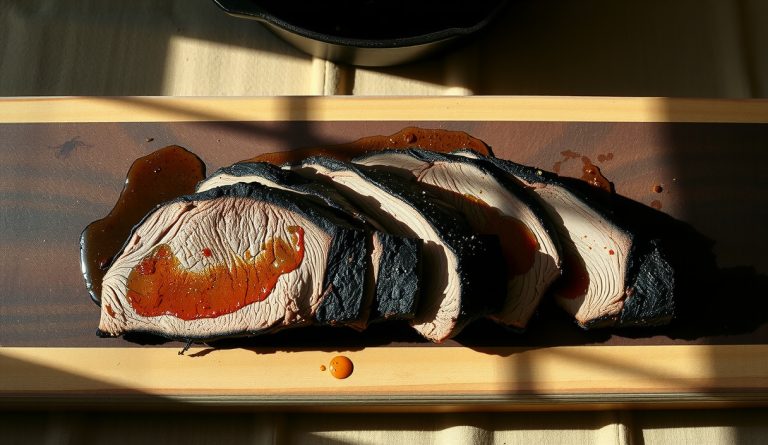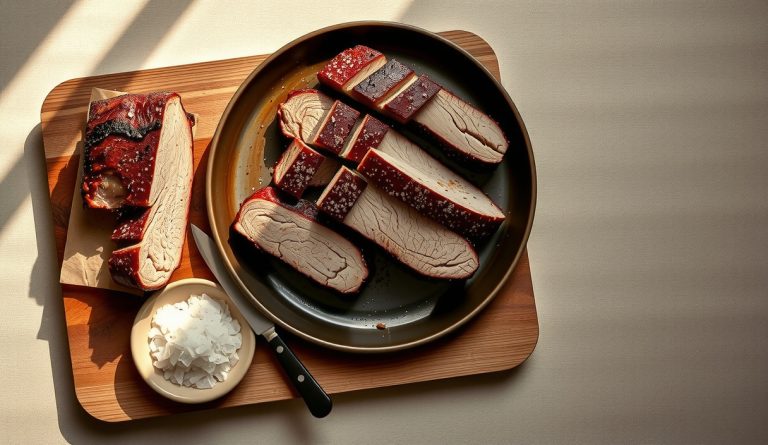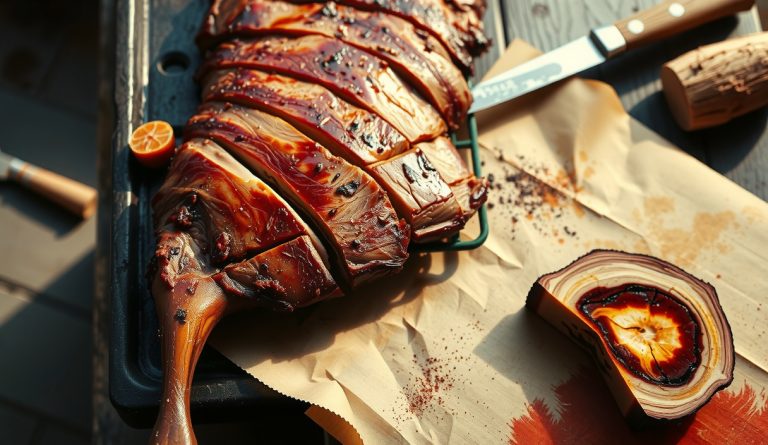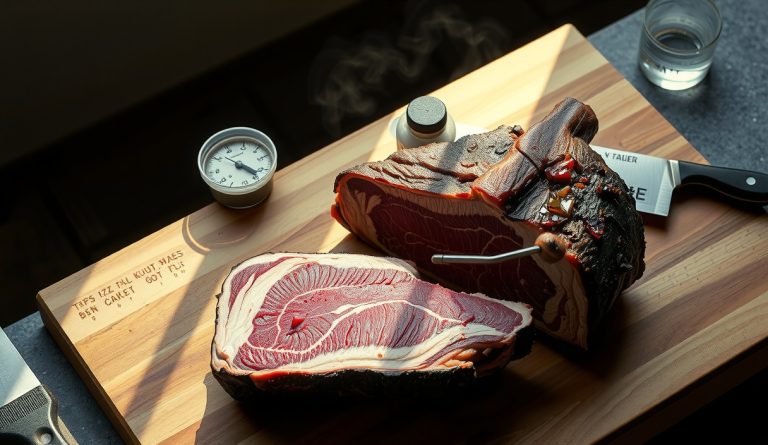
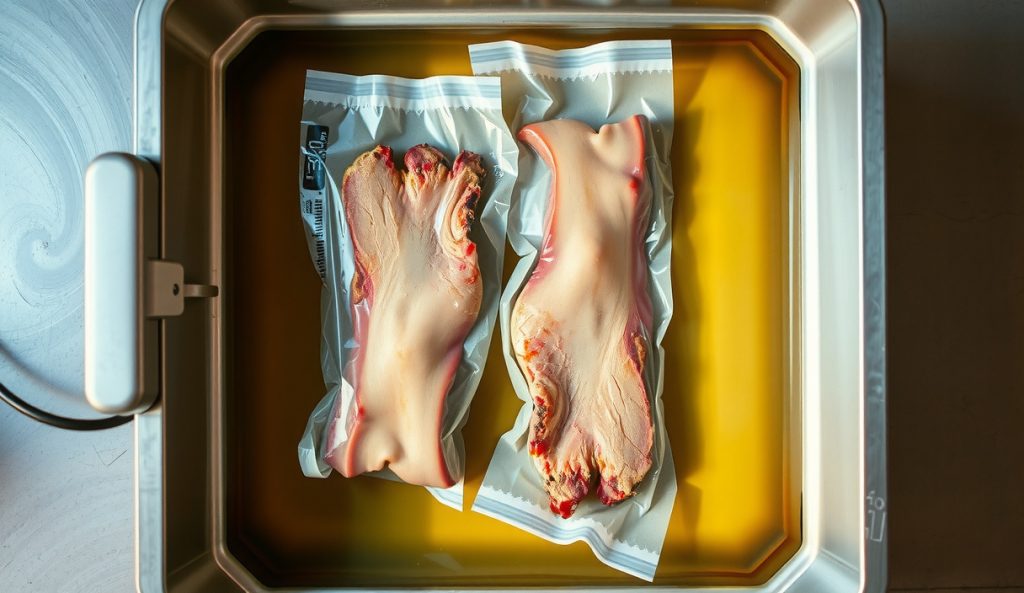
One of the practical advantages of sous vide over oven or smoker cooking is that batch scaling does not require recalculating time or temperature. The bath governs doneness through thermal equilibrium, not radiant or convective heat that diminishes with crowding. For large events — brisket service for 20, 30, or more guests — you can multiply piece count freely, with one important constraint to manage.
What changes when you scale up sous vide brisket?
Time and temperature do not change when you add pieces to the bath. Two 5 lb brisket flats require the same 30-hour cook window as a single flat because collagen hydrolysis kinetics are governed by the bath temperature, not the aggregate mass of protein submerged in it. Each bag reaches thermal equilibrium with the bath independently; one bag cannot thermally shadow another as long as water is circulating freely around every surface of every bag.
That circulation requirement is the single variable that demands active management at scale. A vacuum-sealed bag naturally flattens and can press flush against an adjacent bag, creating a stagnant water pocket between them. In that pocket, convective heat transfer stalls and the surface of the bag facing the contact zone lags behind the rest of the flat in reaching bath temperature — extending the effective time required for full collagen hydrolysis in that zone. The fix is mechanical: use a rack, binder clips on the container rim, or sous vide bag weights to keep bags physically separated throughout the entire 30-hour cook. Every bag surface should have open, circulating water on all sides for the full duration.
What stays the same no matter how many flats you cook?
Bath temperature, hold time, rub ratios, and the post-bath sear sequence are all unchanged regardless of how many bags are in the water. Sear each brisket flat individually after pulling it from the bath. Do not attempt to hold finished flats together in a low oven for more than 20 minutes or the bark will soften and lose its textural contrast.
When is scaled sous vide brisket the better choice over a smoker?
Scaled sous vide brisket is the better choice whenever consistency across a high headcount matters more than smoke character. A smoker running six briskets overnight introduces temperature gradients, stall variability, and the statistical probability that one or two flats will finish drier or less tender than the rest. Sous vide at scale eliminates that doneness variability — every piece exits the bath at the same collagen-hydrolysis endpoint, and the only remaining variable is the sear, which takes the same 90 seconds per side regardless of how many flats are queued.
Use the full method, equipment, and rub measurements from the original Sous Vide Then Seared Brisket Flat.