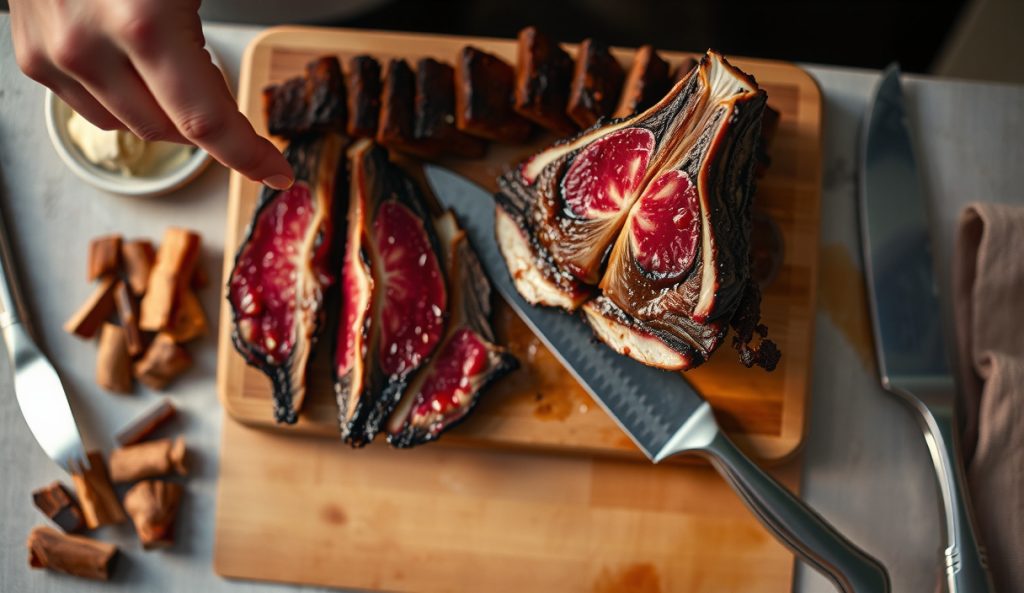
Post oak is the canonical smoke source for Central Texas-style beef, delivering a clean, medium-intensity phenolic signature that lets the meat’s collagen-rich fat speak. Beef cheeks — with their dense intramuscular fat and deep iron-forward flavor — are unusually receptive to wood variation, and shifting the combustion source is one of the most direct ways to reframe the entire dish.
This variant covers three meaningful departures from the post oak baseline: cherry wood, pecan wood, and binchotan charcoal for a Korean-inspired finish.
How does the choice of smoke wood change beef cheeks?
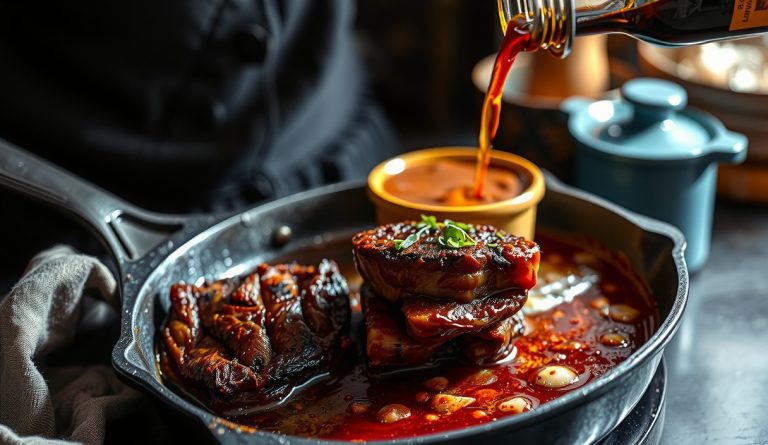
Cherry wood introduces a higher proportion of guaiacol and syringol esters — the phenolic compounds responsible for fruit-forward smoke in game meats — and produces a notably deeper mahogany surface color through the interaction of wood sugars with surface proteins during the Maillard phase. The sweetness cherry wood imparts is aromatic rather than confectionary, making it a refined departure from post oak without overwhelming the beef cheek’s intrinsic richness.
Pecan sits in smoke intensity between oak and hickory, contributing a nuttier, slightly earthier smoke character with enough backbone to complement the beef cheek’s iron and rendered-fat notes without overwhelming them. Pecan is the subtler upgrade for cooks who want more complexity than post oak but do not want to pivot the dish’s identity entirely.
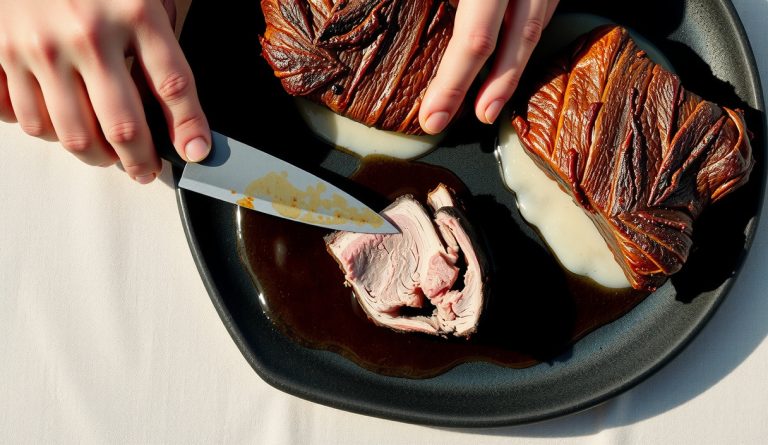
Binchotan charcoal — Japanese white charcoal — burns at high radiant heat with near-zero smoke output: no guaiacol, no wood-derived phenolics. A brief 3-to-5 minute finish over binchotan after the sous vide stage creates a clean, char-edged sear with no smoky overlay. This turns the beef cheek into a neutral, rich canvas for Korean ssam service: slice thin, wrap in perilla leaves, and serve with gochujang and pickled daikon.
What stays the same across all smoke profiles?
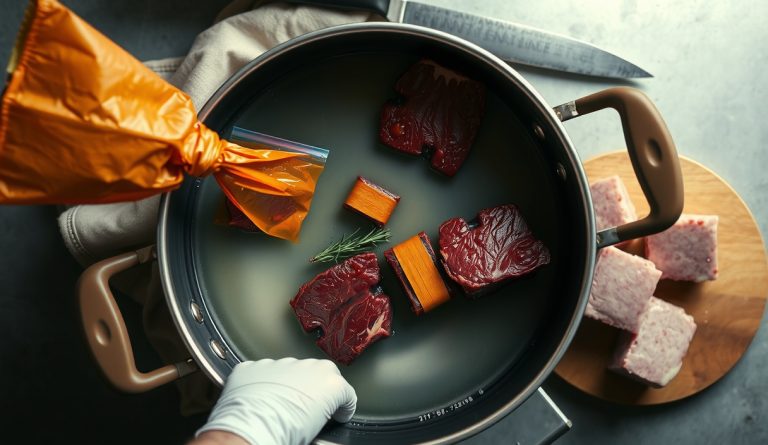
The sous vide parameters — 155°F for 36 hours — are unchanged across every wood profile. Collagen conversion to gelatin is a function of sustained heat, not smoke chemistry, so any combustion source layered on top of the same 155°F / 36-hour stage will yield the same silky interior texture. Rub composition and sear timing remain identical regardless of which smoke direction you choose.
When is a regional smoke profile the better choice?
Choose a regional wood profile when you want to anchor beef cheeks to a specific culinary tradition or when pairing with sauces, sides, or serving formats that carry their own dominant flavors. Cherry wood works particularly well for plated European-style presentations. Pecan suits a Southern Gulf Coast table. Binchotan is the right tool when building a Korean-inflected menu and you want the beef cheek to integrate rather than dominate.
Use the full method, equipment, and rub measurements from the original Sous Vide Smoked Beef Cheeks.