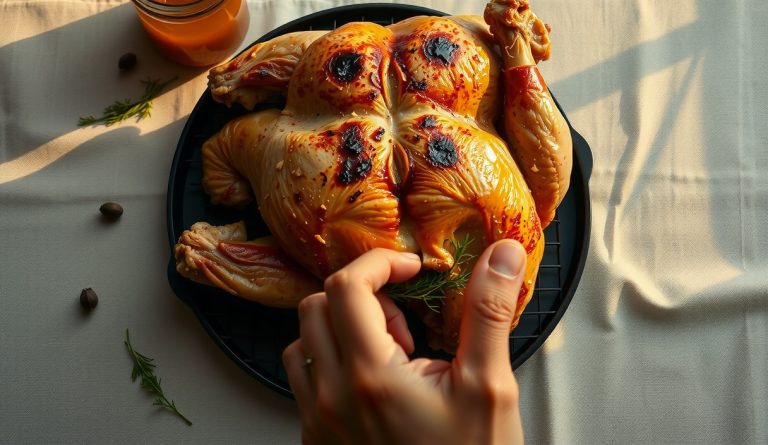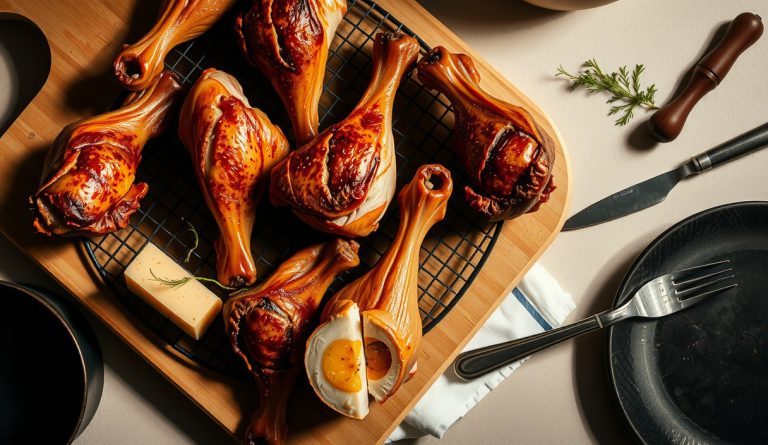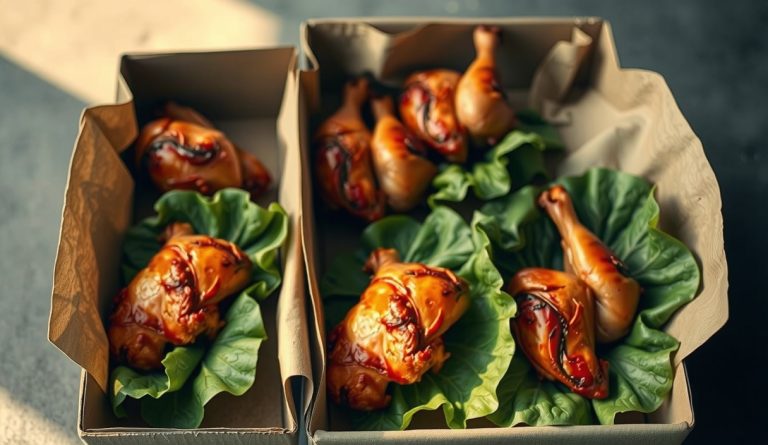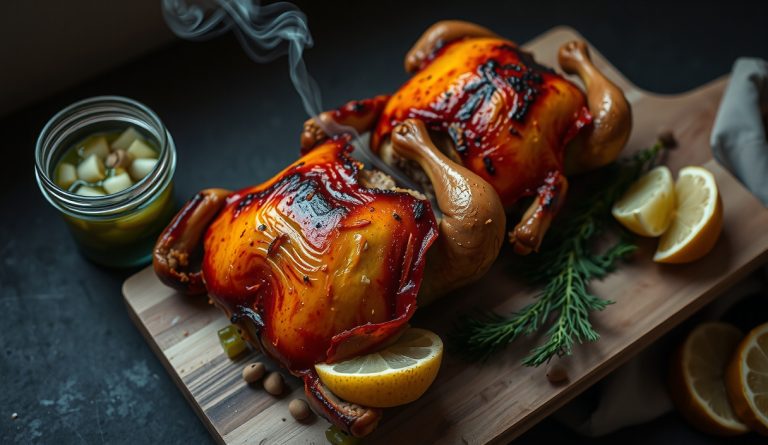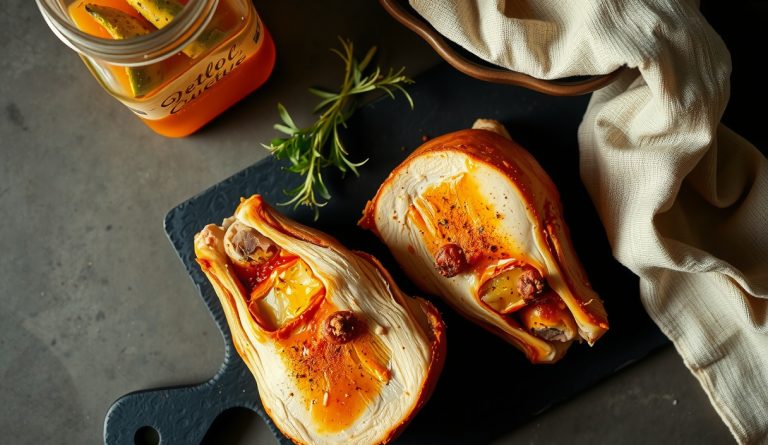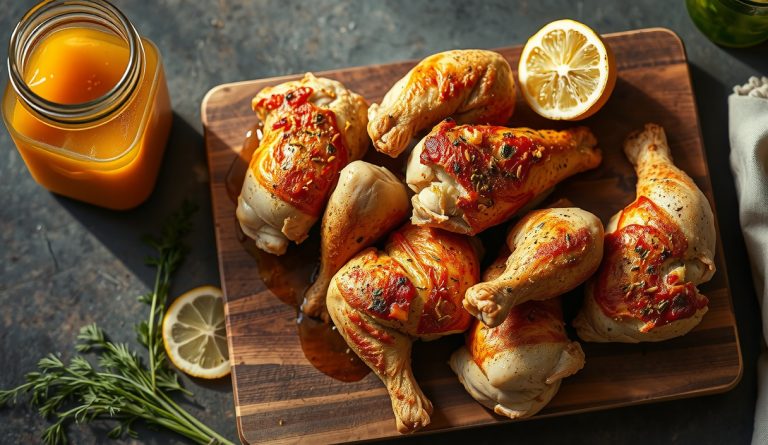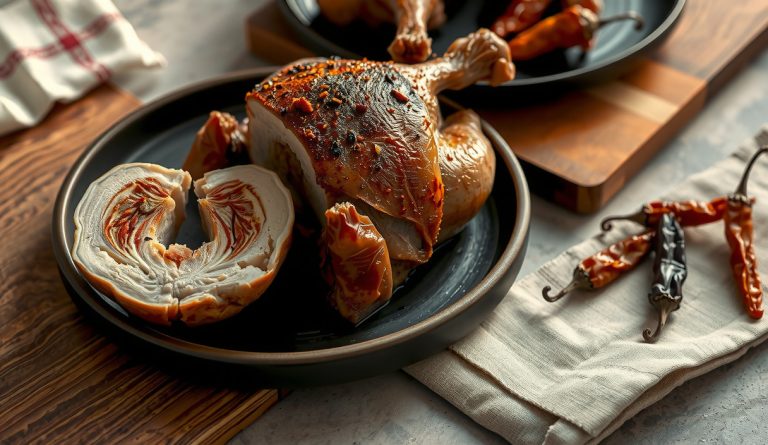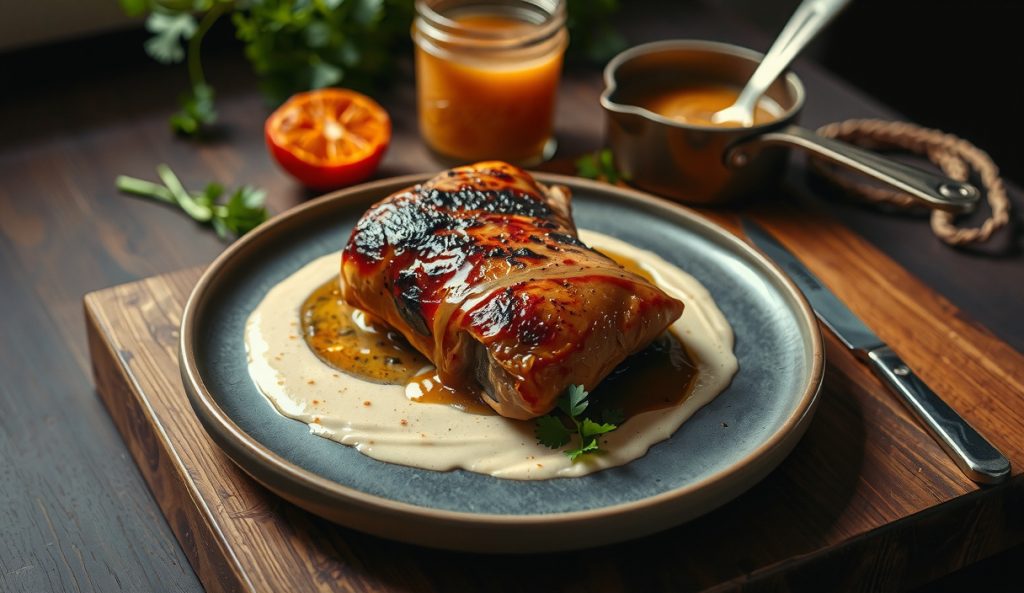
After the chicken comes out of the brine, the liquid remaining in the container is not wastewater. That spent brine carries chicken-derived gelatin, myoglobin, residual dill and garlic volatile compounds, and the full lactic acid profile built during fermentation. Discarding the spent brine is a measurable flavor loss. A 20-minute reduction followed by a cold butter mount converts it into a finishing sauce that ties the plate together and extends the fermented-brine character into every bite of carved meat.
What changes when you turn spent brine into a finishing sauce?
Strain the spent brine through a fine-mesh strainer to remove all solids, then pour it into a saucepan and reduce over medium heat until volume has dropped by approximately 75%. At that reduction level, the gelatin concentration — contributed by collagen that leached from the chicken during the brine soak — rises to the point where the sauce will coat a spoon and set lightly when cooled. The lactic acid also concentrates during reduction, reaching a sharpness that exceeds palatability on its own.
To resolve the concentrated acidity, remove the pan from heat and whisk in two tablespoons of cold unsalted butter in pieces. The butterfat phase physically encapsulates and buffers the concentrated acid, reducing perceived sourness without neutralizing it chemically — the tangy note remains present but is no longer aggressive. The gelatin already present in the reduced brine provides body that a butter sauce made from stock would require extended cooking to achieve; the brining process effectively pre-loads the liquid with collagen-derived thickening agent. Serve the sauce immediately — the emulsion is temporary and will break on reheating.
What stays the same in the canonical recipe?
The canonical cook is completely unaffected by this variation. The fermentation, brining, and smoking steps proceed exactly as written in the original recipe. This technique is a post-cook application of a byproduct that would otherwise be discarded — nothing upstream changes.
When is the brine finishing sauce the better choice?
This sauce is the right move when serving carved chicken at the table where a finishing element is expected, or when the bark has been compromised by resting conditions and a sauce can recover the presentation. It is also the most efficient use of a resource the canonical cook generates automatically — there is no additional shopping, no additional prep, and the 20-minute reduction takes less time than the resting period of the bird itself.
Use the full method, fermentation instructions, and cook parameters from the original Fermented Pickle Brine Smoked Chicken.