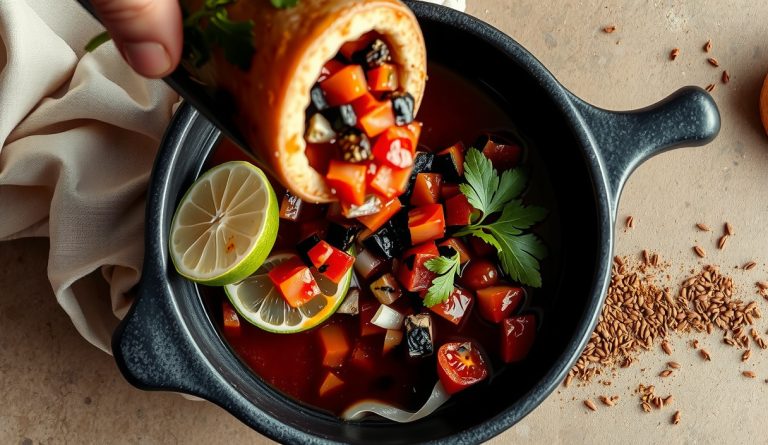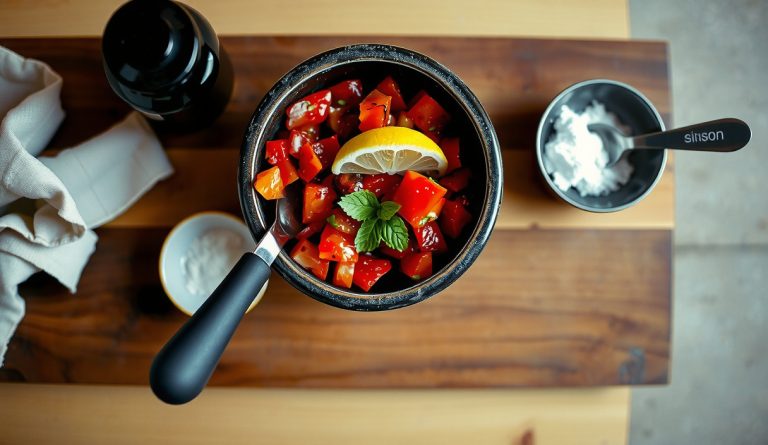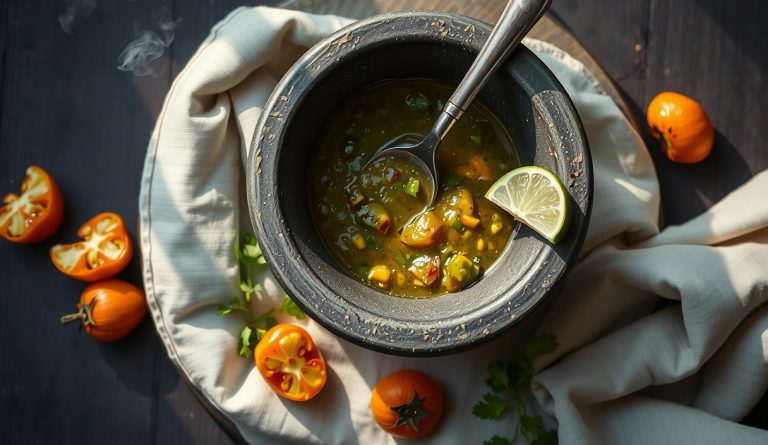
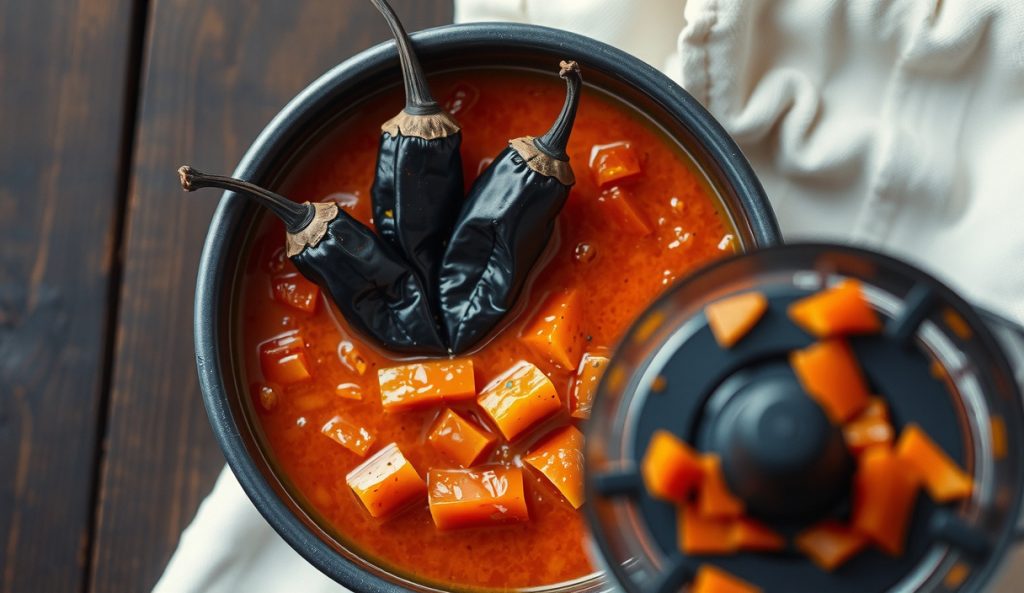
This árbol variation of Smoked Tomato Salsa Asada escalates the canonical jalapeño heat in a precise, controlled way. Chiles de árbol deliver a thin, high-frequency capsaicin burn that registers at the front of the palate and dissipates within seconds — a fundamentally different sensation from the slower, broader heat of chipotle or ancho. The process stays deliberately minimal: no additional cooking, no charring, no separate toasting of the dried chiles. The technique trusts the residual heat of the already-charred vegetables to do the extraction work.
What changes when you add árbol chiles?
After completing the full flame-char and smoke phases on the tomatoes and aromatics, add 4–6 dried chiles de árbol — stems removed, seeds left intact — directly to the blender along with the other charred vegetables before blending. Do not toast, smoke, or rehydrate the dried chiles separately. The seeds of árbol carry the highest concentration of capsaicin and are responsible for pushing the salsa into the 15,000–30,000 Scoville unit range; removing those seeds would reduce the finished heat by roughly 40%. The still-warm charred tomatoes supply sufficient thermal energy to bloom the árbol’s volatile aromatic compounds — primarily pyrazines and ester-linked carotenoids — during the blending process itself. Árbol also carries a high carotenoid load, which shifts the salsa’s final color from deep red-orange toward a brighter, more saturated red. Start with 4 chiles when guests have variable heat tolerance; 6 chiles produces a salsa that commands full attention.
What stays exactly the same?
Every step of the char and smoke process remains unchanged for the árbol variation. The jalapeños are still fully charred and included in the blend — the árbol adds a distinct, front-palate heat layer rather than replacing the jalapeño’s fruitier, mid-range capsaicin contribution. Blending sequence, seasoning ratios, and finishing with fresh cilantro are all identical to the canonical method.
When is the árbol variation the better choice?
The árbol variation is the right call for beef-forward plates — carne asada tacos, smoked brisket, or grilled skirt steak — where the protein is assertive enough to hold its own against an intensified salsa. The variation is also the preferred build for salsa competitions or restaurant batch production where visual impact matters alongside flavor: the carotenoid contribution from árbol noticeably intensifies the color of the finished salsa in a way that photographs well and reads as premium quality.
Use the full method, equipment, and rub measurements from the original Smoked Tomato Salsa Asada.