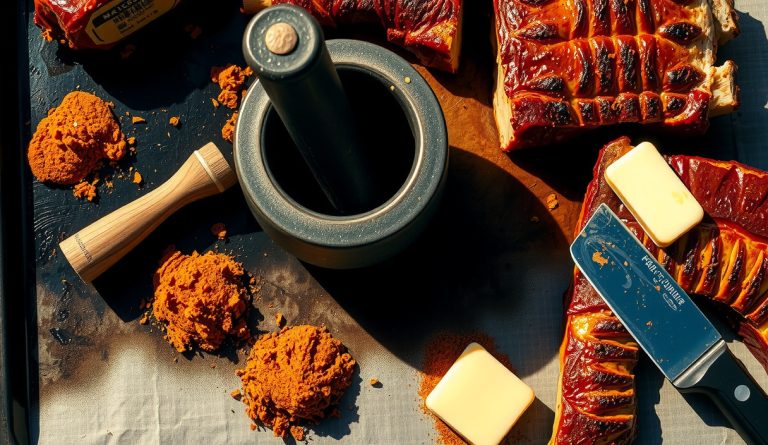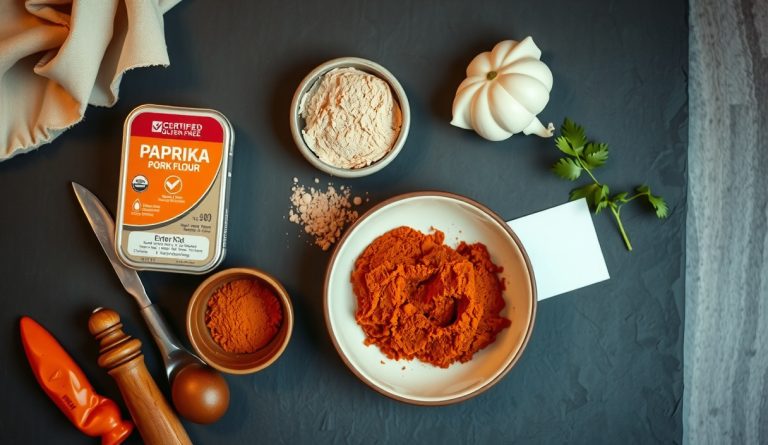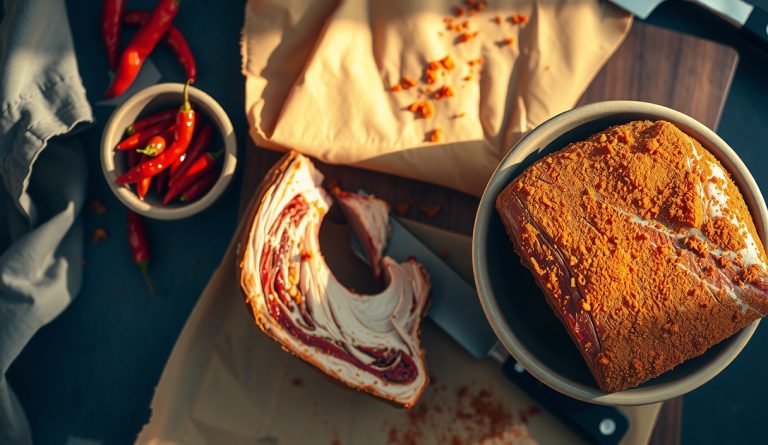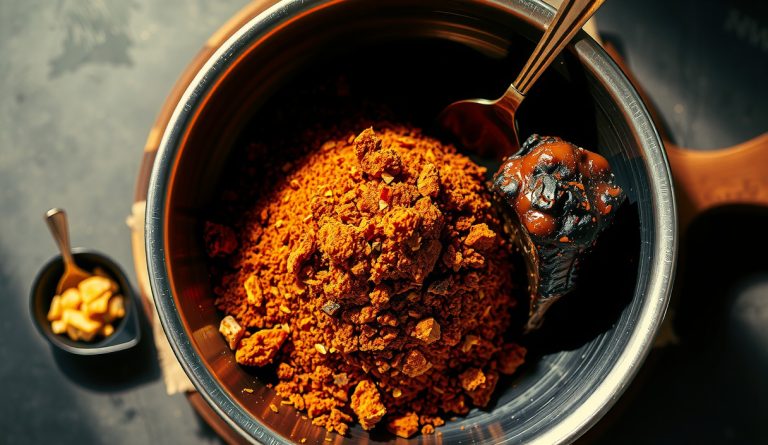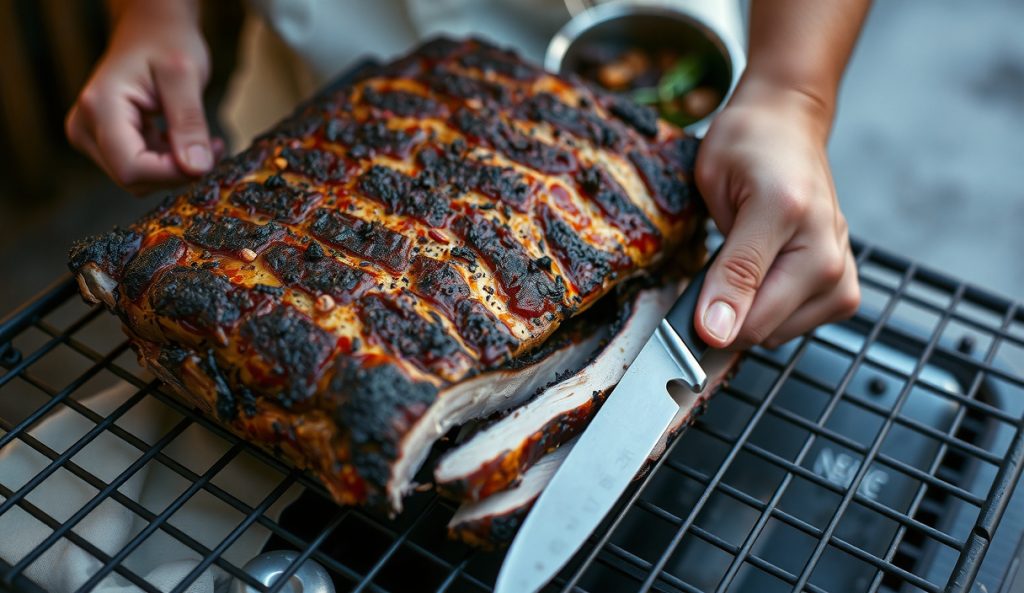
The canonical Memphis Pork Rub is tuned for ribs — a relatively thin cut with a short cook window and high surface-area-to-mass ratio. A Boston butt or picnic shoulder is a fundamentally different assignment: dense muscle groups, a thick fat cap, and a cook that runs two to three times as long at the same pit temperature. The rub needs to be recalibrated, not replaced.
What changes when you move from ribs to a whole-muscle shoulder?
Two formula values shift: salt rises to 18% of total formula weight, and brown sugar drops to 16%. Higher salt concentration raises the osmotic driving force, accelerating moisture migration through the shoulder’s thicker outer muscle layers and carrying soluble flavor compounds deeper into the meat over a 10–14 hour cook. At a rib-level salt percentage, seasoning does not penetrate more than roughly one centimeter below the surface before the exterior sets — an inadequate depth for a dense cut.
Brown sugar is reduced to 16% because Maillard browning and sugar caramelization onset occurs around 140–160°C at the surface, and a shoulder spends far more cumulative time in that temperature band than a rack of ribs does. Holding brown sugar at the rib-formula level on a long cook narrows the margin between deep mahogany bark and bitter char. The paprika and chili powder ratios remain unchanged because those ingredients contribute color and volatile aromatics, not structural bark chemistry.
What stays the same from the original Memphis Pork Rub?
The broader spice ratios — paprika, chili powder, black pepper, garlic — and the application method carry over without alteration. Coat the shoulder thoroughly, press gently so the rub adheres, and allow a 30–60 minute dry brine rest before the shoulder goes onto the pit. The flavor profile remains definitively Memphis: smoke-forward, moderately sweet, with a paprika base.
When is the whole-muscle shoulder version the better choice?
Any cook that runs longer than 6 hours — pulled pork, smoked shoulder for slicing, or competition whole-muscle classes — calls for this version over the canonical rib formula. The shoulder version outperforms on both interior seasoning depth and bark quality in long cooks. It is especially valuable on packers and picnics carrying a thick fat cap, where the canonical formula’s lower salt concentration cannot penetrate adequately before the cook ends.
Use the full ingredient baseline, mixing instructions, and equipment notes from the original Memphis Pork Rub — Paprika-Brown-Sugar Base.