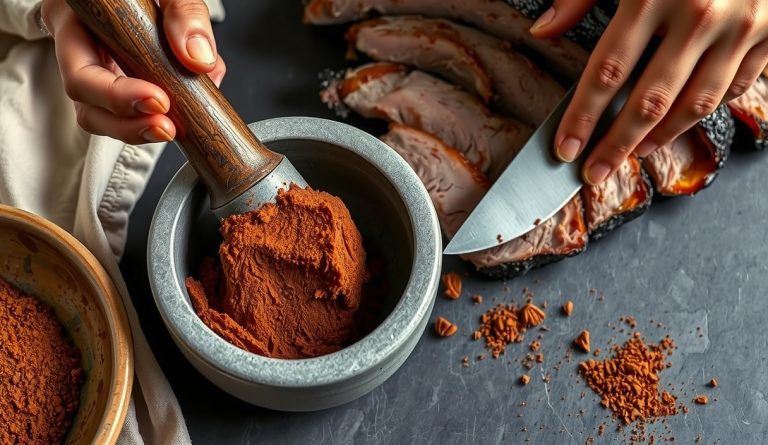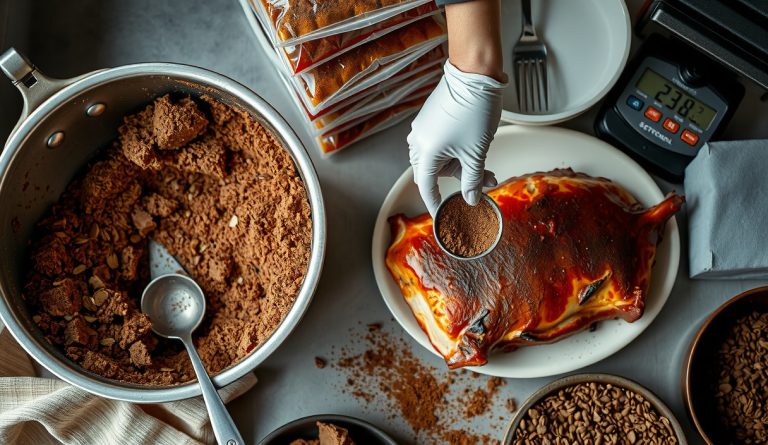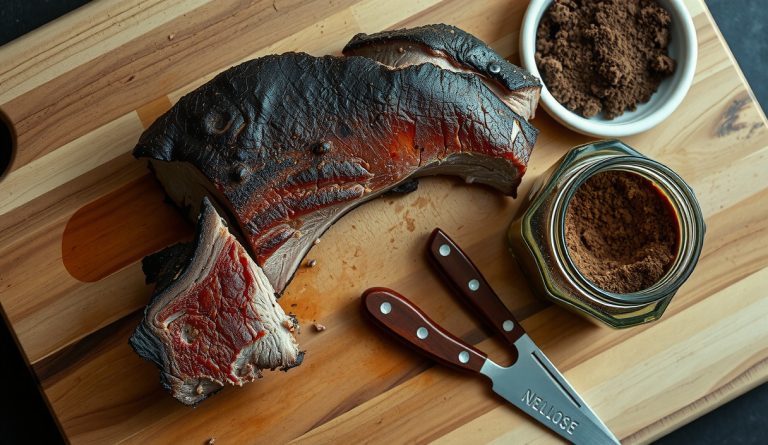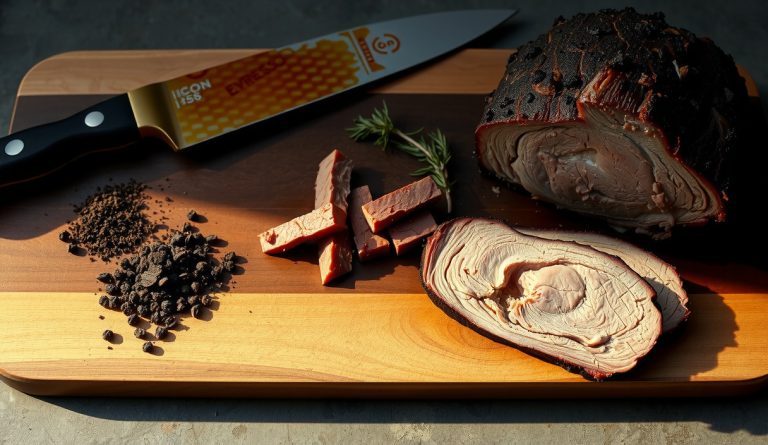
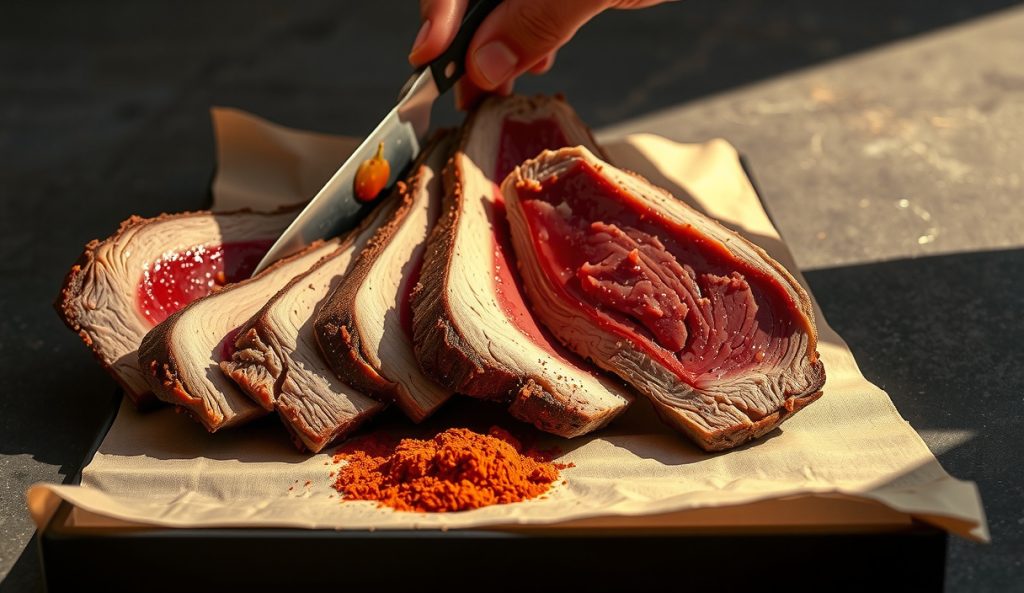
Competition judging happens in seconds. A rub that reads as complex but not punishing — layered heat that lingers rather than spikes — earns the scores that accumulate across a full turn-in. This variation targets that sensory window by replacing half the ancho chile with chipotle powder and leaving every other element in the formula intact.
What changes in the Competition Heat Build?
The substitution is precise: reduce ancho to half its original weight and replace that displaced weight with chipotle powder. Ancho delivers mild, dried-fruit heat and deep red color; chipotle contributes capsaicin alongside a dense smoked-pepper phenol profile — guaiacol and syringol compounds that mirror the phenols arriving from the wood itself.
When chipotle-sourced phenols stack on top of post-oak or hickory smoke phenols, the cumulative perception is a richer, longer smoke character rather than a discrete chile flavor. The heat level rises into a range most trained judges score as assertive rather than aggressive.
The brown sugar stays at its canonical weight — do not reduce it. Brown sugar contributes both fructose and glucose, and those reducing sugars accelerate Maillard browning at pitmaster-range surface temperatures. Fructose in particular begins condensation reactions with amino acids around 230–250°F surface temperature, generating the rapid bark formation that gives a competition brisket its lacquered exterior before the crust dries out and cracks. Cutting sugar to chase a cleaner flavor profile trades crust quality for a marginal palatability gain that judges rarely reward.
What stays the same in the Competition Heat Build?
Everything else in the formula holds: espresso fraction, cocoa fraction, salt ratio, garlic, and the full smoked paprika weight. Cooker setpoint, wrap timing, and resting protocol are unchanged from the canonical build. The Competition Heat Build is a single-ingredient swap at half-substitution — not a reformulation.
When is the Competition Heat Build the better choice?
Use this build any time the audience consists of experienced barbecue eaters — competition judges, enthusiast guests, or anyone who has tasted enough brisket to expect complexity above the baseline. The amplified smoke-phenol synergy distinguishes this crust from standard coffee-rub entries.
The Competition Heat Build is a poor fit for audiences sensitive to heat or for children’s tables, where the ancho-only version reads as warmer and more approachable.
Use the full method, equipment, and base rub measurements from the original Coffee-Cocoa Brisket Rub.