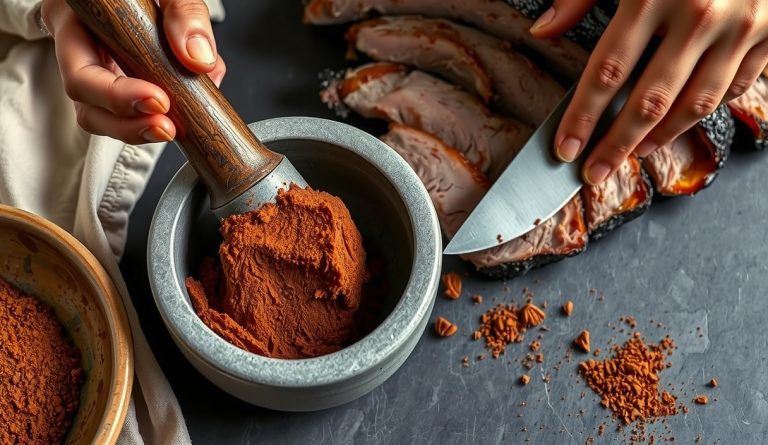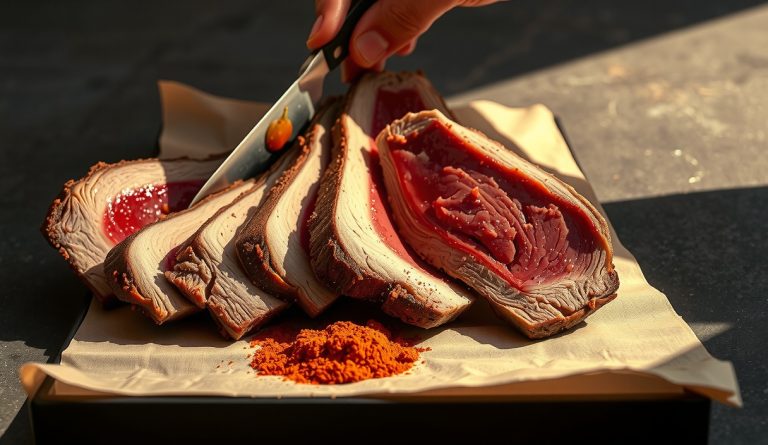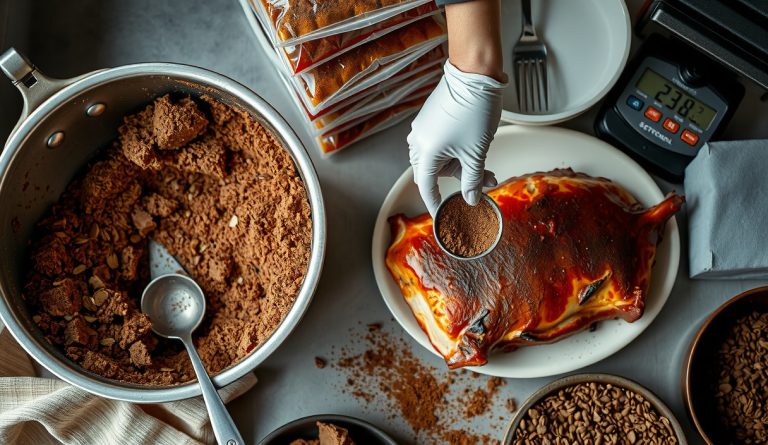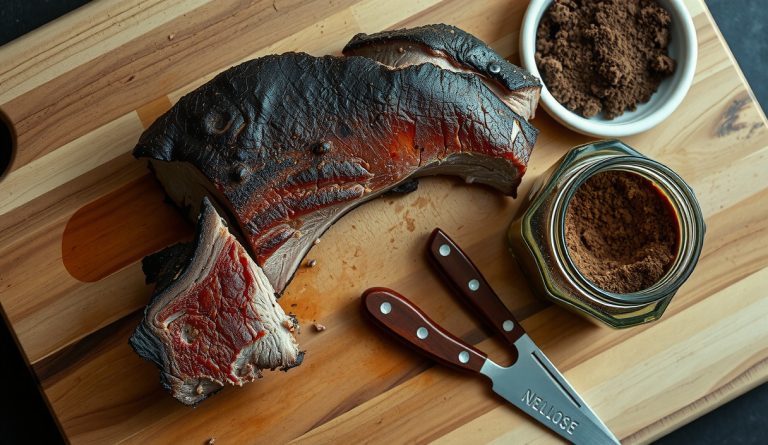
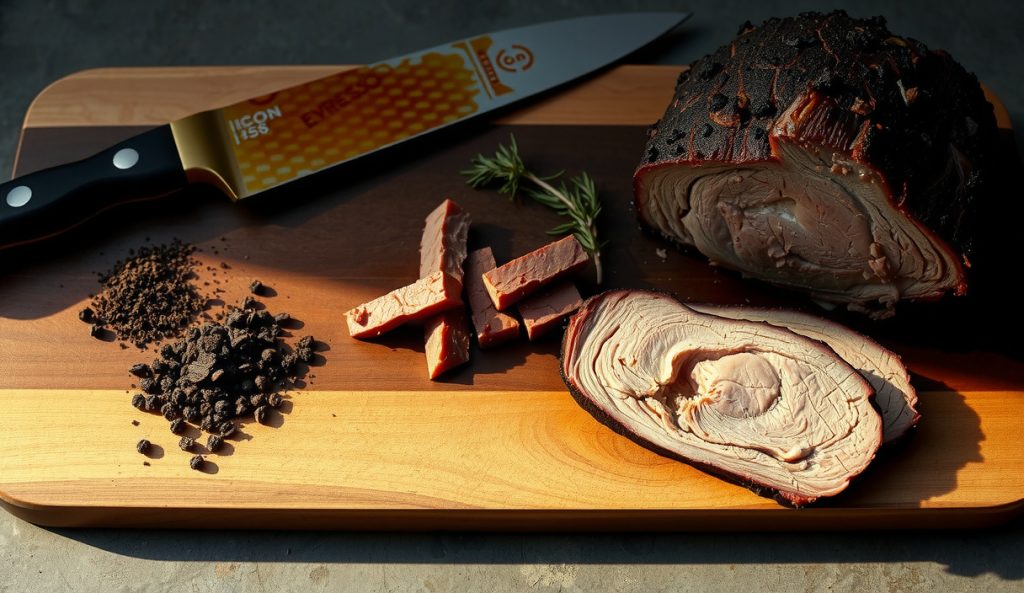
Central Texas barbecue culture is built on restraint. The canonical salt-and-pepper crust exists to create bark and frame the beef, not to flavor it. This variation moves the coffee-cocoa formula closer to that tradition by stripping out the cocoa, ancho, and smoked paprika entirely and rebuilding the blend around three primary ingredients: espresso, coarse black pepper, and kosher salt. The result is still a Maillard-engineered rub, still pyrazine-forward, but the dried-fruit sweetness and color depth of the full formula give way to a cleaner, more austere crust.
What changes when you strip the rub to its Texas-minimalist core?
The Texas-minimalist blend by weight is: espresso 35%, kosher salt 28%, coarse-ground black pepper 25%, fine garlic powder 12%. Every other ingredient — cocoa, ancho chile, smoked paprika — is removed completely. Coarse black pepper is not decorative in this formula: piperine compounds and the terpene fraction of black pepper (including sabinene and limonene) volatilize early in the cook and contribute aromatic complexity that partly compensates for the absence of cocoa-sourced furanones.
Those furanones — particularly 4-hydroxy-2,5-dimethyl-3(2H)-furanone — are responsible for the caramel and dried-fruit depth that makes the canonical coffee-cocoa rub identifiably different from a straight salt-and-pepper build. The Texas-minimalist formula removes that layer by design. The bark color will skew darker than a standard salt-and-pepper brisket but will lack the warm red-brown tones that cocoa and ancho produce.
What the Texas-minimalist rub retains is the full pyrazine contribution from the elevated espresso fraction. Alkylpyrazines from dark-roasted coffee still synergize with post-oak phenols during the smoke phase, and the 35% espresso proportion — higher than the canonical formula — pushes coffee-roast character to the front of the crust flavor profile.
What stays the same as the full coffee-cocoa method?
Cook temperature, wrap method, resting time, and wood selection carry over unchanged from the original coffee-cocoa protocol. The espresso’s Maillard function — accelerating surface browning via amino acid condensation — remains active at the same smoker setpoint. Bark formation timing should be comparable to the canonical coffee-cocoa version, because the mechanism driving crust development is the same.
When is the Texas-minimalist rub the better choice?
Choose the Texas-minimalist build when cooking for an audience that knows Central Texas brisket and will read the cocoa-ancho profile as non-traditional or overly complex. It is also the right call when the beef itself is the feature — a high-grade USDA Prime packer or a wagyu flat — and you want the rub to support the meat rather than compete with it.
The minimalist formula also pairs cleanly with fruit-wood smoke, where the canonical formula’s cocoa-phenol layer can feel crowded. In those contexts, the stripped-down espresso-pepper-salt build lets the wood smoke and the beef fat carry the flavor without interference.
Use the full method, equipment notes, and application instructions from the original Coffee-Cocoa Brisket Rub.