Gochujang is already a fermented product with a meaningful free glutamate load — that is a large part of why this sauce tastes more complex than a simple sweet-and-spicy chili glaze. Fermented soybean pastes like white miso and doenjang operate at a higher glutamate density than gochujang alone, and a single tablespoon added off-heat can shift the Korean Gochujang BBQ Sauce’s umami profile from notable to genuinely deep. The practical question is which paste to use, and for which protein.
This deep umami variation is a one-ingredient addition, not a reformulation. The sauce’s structure, spice level, and glaze behavior are unchanged. What changes is the finish: longer, meatier, and more persistent on the palate.
What exactly changes when you add miso or doenjang?
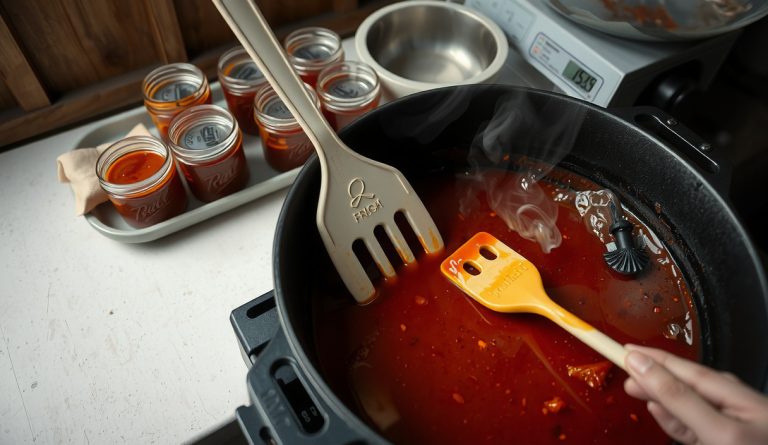
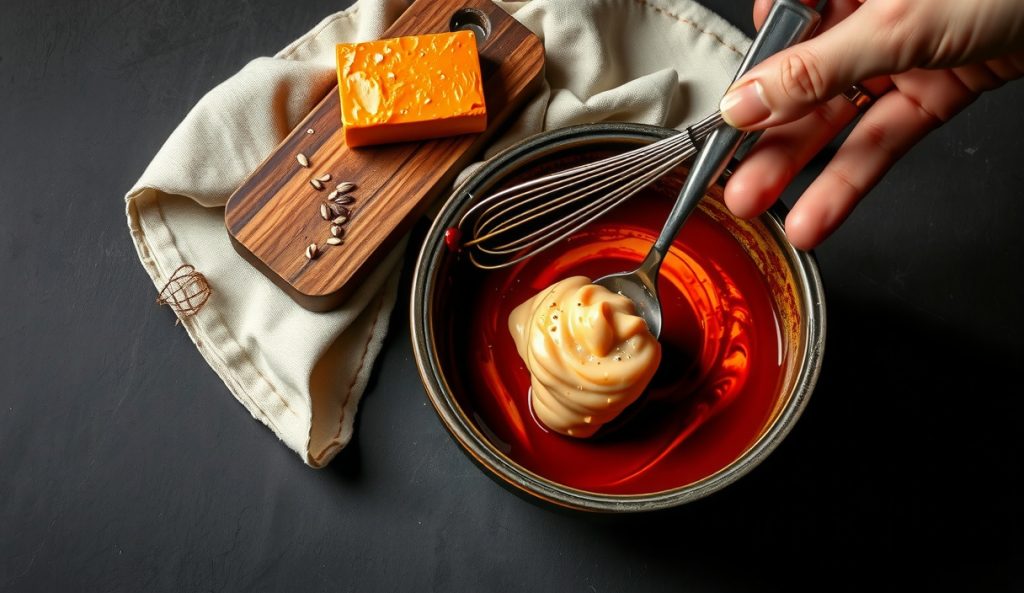
After removing the sauce from heat and stirring in the sesame oil, whisk in 1 tablespoon of white miso paste or 1 teaspoon of doenjang. The off-heat addition is intentional: both pastes contain heat-sensitive Maillard-reactive compounds and active enzyme fractions that degrade or generate off-flavors above 80°C (176°F). Adding them off-heat preserves their full aromatic and flavor contribution.
The mechanism differs between the two options. White miso contributes free glutamate alongside branched-chain flavor peptides — generated during the koji fermentation of rice and soybean — and 5′-nucleotide fractions, producing a broad, accessible umami that stacks synergistically with gochujang’s existing glutamate content. This combination produces perceived umami intensity well beyond the simple arithmetic sum of the two ingredients. Doenjang is fermented longer, without the rice or wheat koji substrate of miso, producing a funkier, more pungent paste with higher concentrations of volatile sulfur compounds and short-chain organic acids alongside its glutamate load. Doenjang is not subtle. Use doenjang on beef brisket, pork ribs, or any protein that can match its aggression. Use white miso when you want the umami lift without the pungency.
What stays exactly the same in the base recipe?
The gochujang base, soy sauce, rice vinegar, all aromatics, the reduction ceiling, and the sesame oil addition all remain exactly as written in the canonical recipe. This deep umami variation is purely an additive modification made at the very end of cooking — nothing in the core method changes.
When is the deep umami variation the better choice?
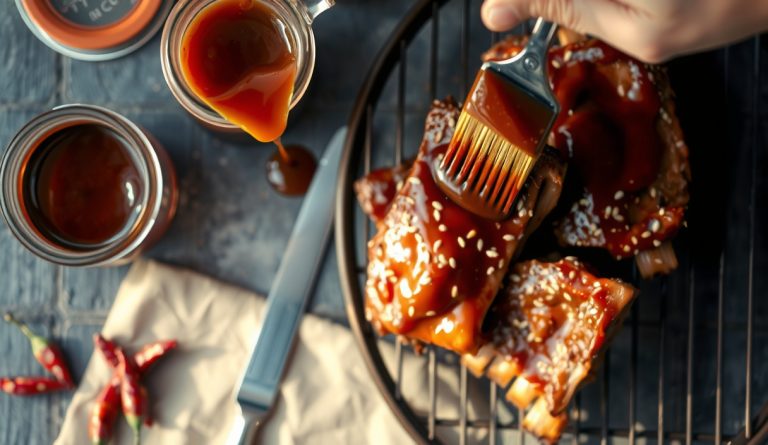
Choose the white miso version when cooking for a broad audience on approachable proteins like chicken or pork tenderloin, where added depth is welcome but fermented funk is not. Choose the doenjang version when cooking for enthusiasts who appreciate fermented complexity, and pair it with beef brisket, short ribs, or spare ribs — proteins with enough fat and connective tissue to stand up to a sauce that leads with its fermented character.
Use the full method, equipment, and base measurements from the original Korean Gochujang BBQ Sauce.