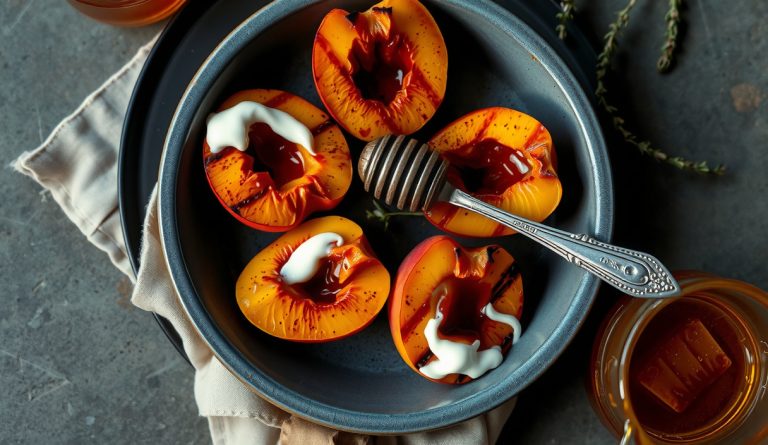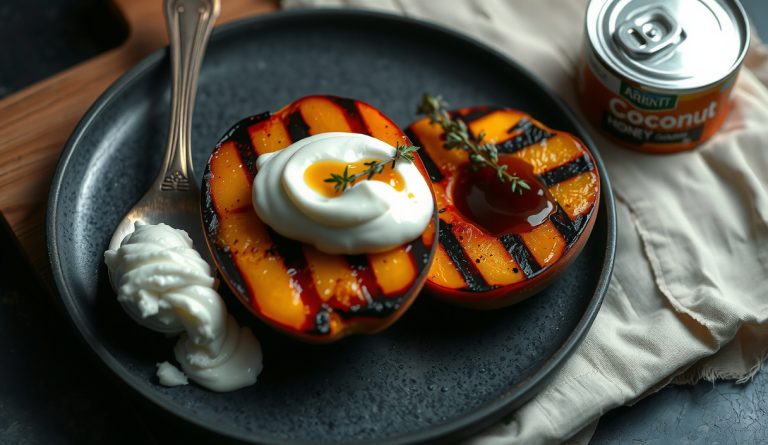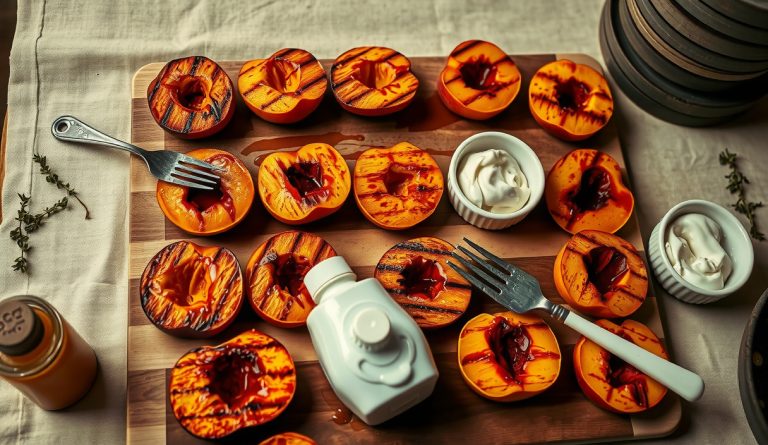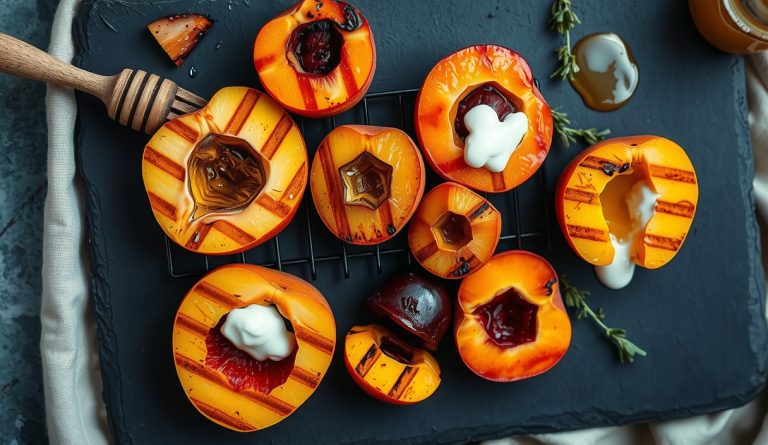
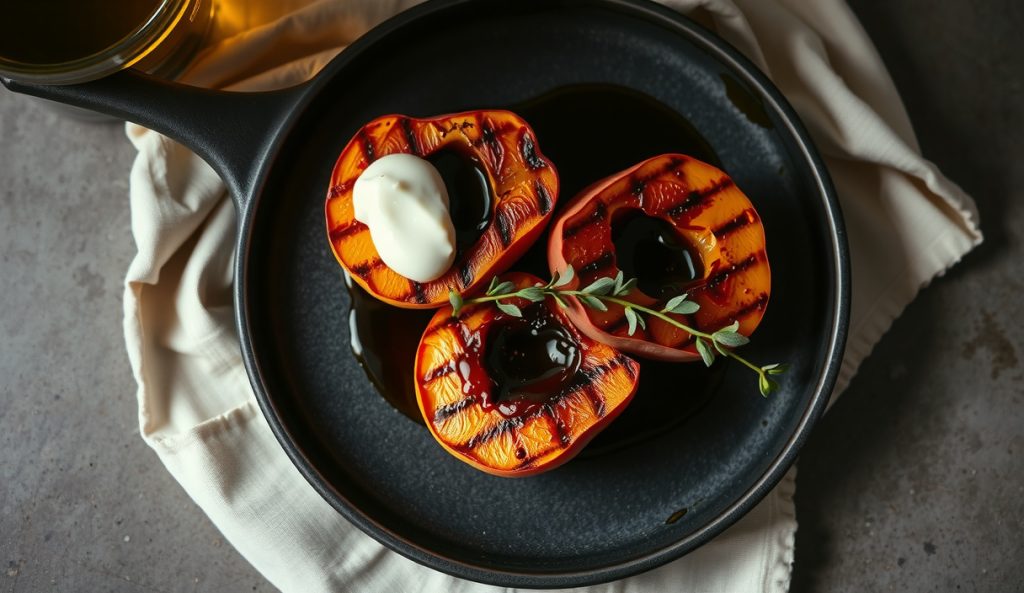
This savory variant of Grilled Peaches with Honey-Yogurt keeps the core technique and grilled fruit centerpiece intact while crossing firmly out of dessert territory. Two targeted ingredient swaps — aged balsamic vinegar for honey, fresh tarragon for thyme — each perform significant flavor work. Together they produce a composed plate that functions alongside a rich protein rather than as a sweet finish.
What changes in the savory version, and why?
Aged balsamic vinegar replaces honey as the drizzle. Honey’s role is primarily sweetness and viscosity; aged balsamic brings both residual sweetness from grape must reduction and its own Maillard resonance — the complex, slightly bitter depth that develops during long barrel-aging and overlaps tonally with the grill char on the peach surface. The higher acidity of aged balsamic sharpens the contrast against the yogurt more aggressively than honey does. Use a balsamic with visible viscosity; thin balsamic will run off the warm fruit before it can concentrate on the surface.
Fresh tarragon replaces thyme. Tarragon’s dominant aromatic compound is estragole, which delivers a clean anise note that pairs with stone fruit char in a way that thyme’s phenolic profile does not — the match is sweeter and more perfumed, without the savory-herbal edge thyme carries. Add a few grinds of black pepper to the finished plate. Piperine, the alkaloid responsible for black pepper’s heat, sensitizes TRPV1 receptors and modulates the perception of surrounding aromatic compounds, effectively amplifying tarragon’s estragole. The pepper does not read as spicy — it reads as depth.
What stays the same between the two versions?
The yogurt base, the grilling setup, and the fundamental balance of warm fruit against cool dairy remain intact. The structural contrast that makes the dish work — temperature differential between hot peach and cold yogurt, textural opposition between soft fruit and thick dairy — is unchanged regardless of whether the toppings steer sweet or savory.
When is the savory balsamic-tarragon version the better choice?
Use this version as a side or composed salad course alongside grilled pork loin, duck breast, or seared foie gras. Balsamic’s acidity and tarragon’s estragole-driven anise note cut through fat in a way that honey and thyme do not, making this version a functional palate component rather than a dessert course. The savory variant also works as a light starter at a summer dinner where the main course is already rich.
Use the full grilling method and yogurt preparation from the original Grilled Peaches with Honey-Yogurt and Fresh Thyme, substituting aged balsamic for honey and fresh tarragon for thyme as detailed above.