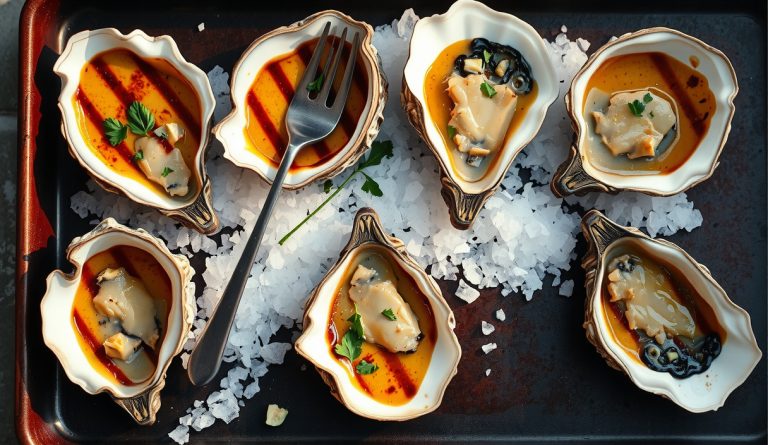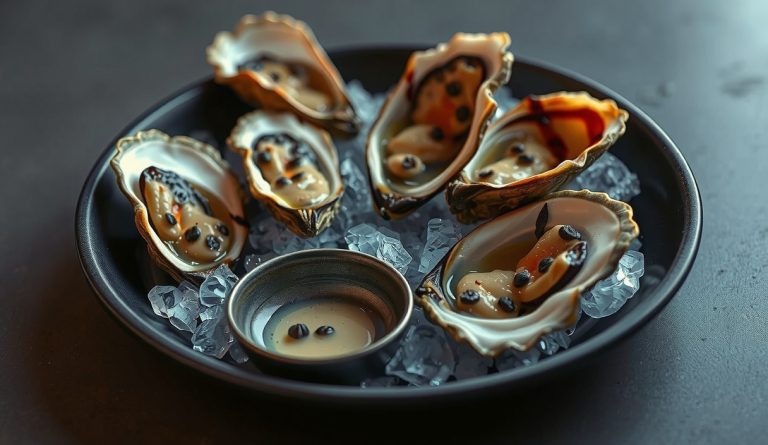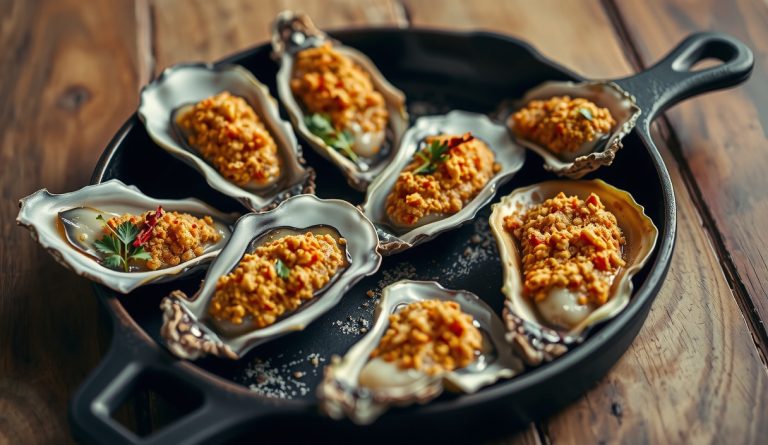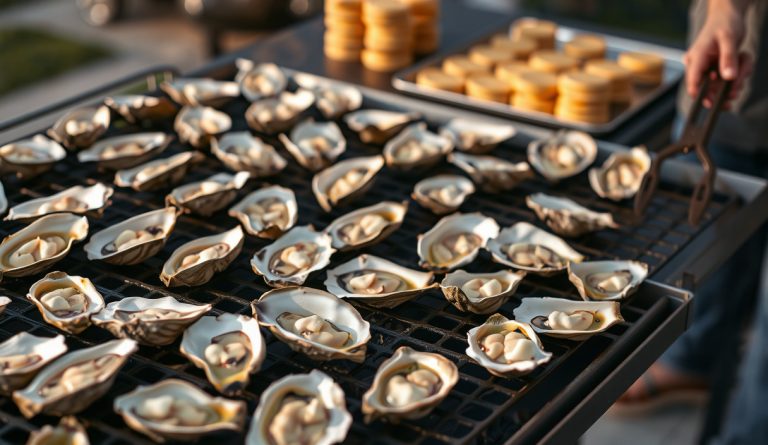
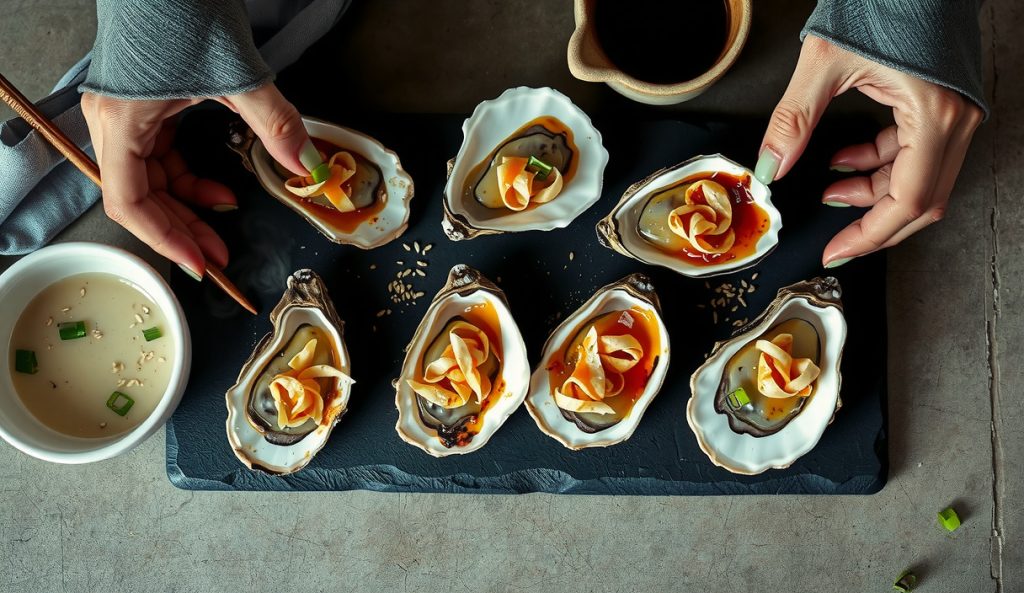
This Asian umami variation reorients the compound butter in the Grilled Oysters with Garlic-Parsley Butter recipe away from the French-Creole flavor axis and toward the clean, mineral-forward umami profile of Japanese and broader East Asian coastal cooking. Three targeted ingredient swaps — totaling less than two teaspoons of added volume — activate one of the most compelling flavor-science phenomena in compound butter cookery: synergistic umami multiplication at the T1R1/T1R3 receptor level.
What changes in the Asian umami riff?
Substitute the parsley with an equal volume of finely minced fresh ginger. Replace the lemon juice with 1 teaspoon of unseasoned rice vinegar. Stir half a teaspoon of white miso into the softened butter before compounding. Each swap is small in volume but precise in function.
The ginger swap shifts the herbaceous green note of parsley to a warm, slightly spicy rhizome character that complements shellfish without overwhelming the oyster’s natural brine. Rice vinegar is a milder acidulant than lemon juice, with a cleaner acetic profile that lifts the compound butter without dominating the finish the way citrus can.
The miso addition is where the chemistry becomes particularly interesting. White miso is dense with preformed glutamates and — depending on the depth of koji fermentation — inosinate and guanylate nucleotides. These compounds interact synergistically with the glutamates and nucleotides already present in the oyster’s own liquor at the T1R1/T1R3 umami receptor. The effect is not additive but multiplicative: the perceived savory intensity of the finished oyster significantly exceeds what either the miso or the oyster delivers independently. Half a teaspoon per batch is the correct dose; more risks making the compound butter salty and overriding the oyster rather than amplifying it.
What stays the same in this variation?
The butter base, the garlic, the grilling position, and the bubbling-butter doneness cue all remain unchanged from the original preparation. The structural logic of the compound butter — a fat vehicle that melts into and enriches the oyster liquor as the shell heats on the grill — is identical to the canonical recipe. Nothing in the core method requires adjustment.
When is the Asian umami riff the better choice?
Choose this variation when you want a grilled oyster that reads as distinctly different from the Western butter-and-herb template. The Asian umami riff is ideal for menus built around an East Asian flavor theme, or when serving guests who find the classic preparation familiar and want something that will genuinely surprise them. The amplified savory depth also makes this variation particularly satisfying alongside a cold, dry sake or a light Japanese lager.
Use the full method, equipment, and compound butter portioning from the original Grilled Oysters with Garlic-Parsley Butter.