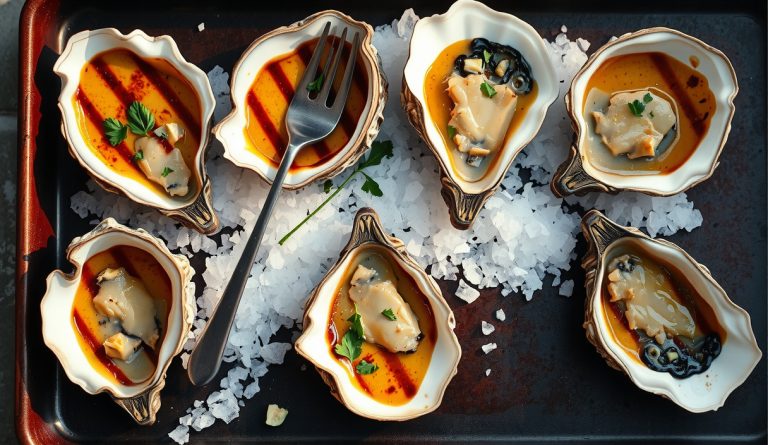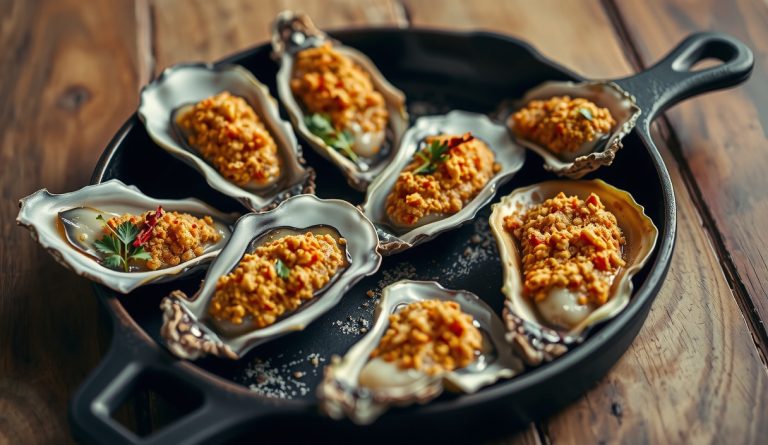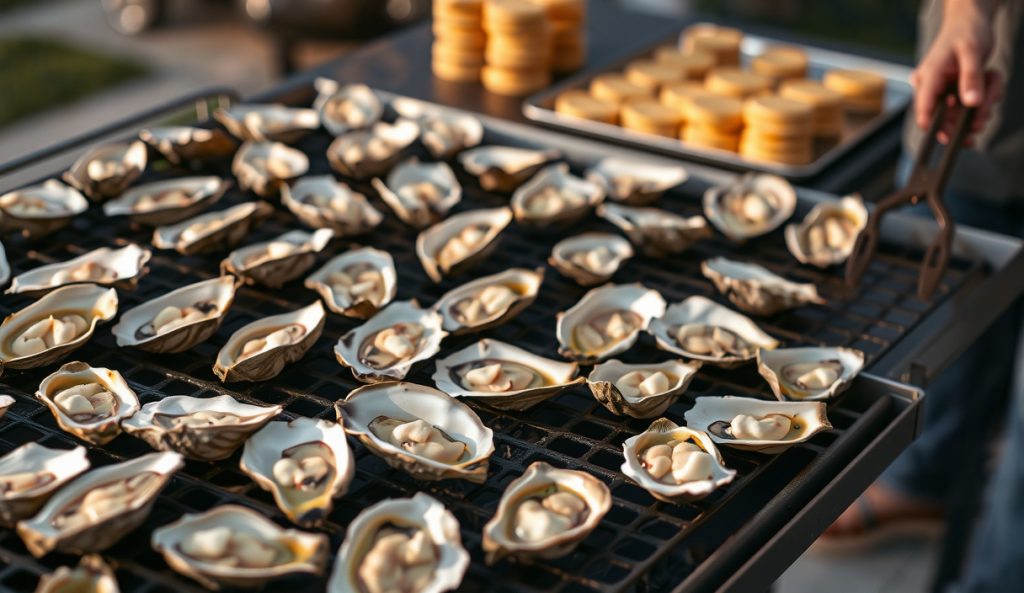
Grilled oysters are a natural centerpiece for large outdoor gatherings, but the single-batch recipe format requires structural adjustment before it can handle party-scale volume. The scaling math itself is straightforward — the more consequential decisions are about batch discipline on the grill and timing the cook relative to service.
What changes when you scale up grilled oysters?
The compound butter scales linearly: double the oysters, double every ingredient in equal proportion. Prepare the full quantity of compound butter in advance and hold it refrigerated — tightly wrapped, it keeps without quality loss for five days. Portion the butter into a piping bag or roll it in plastic wrap as a log so you can portion quickly at the grill without fumbling with spoons during service.
On the grill itself, work in batches of 6 to 12 shells depending on your available grate surface, and resist the urge to crowd. Packing shells too tightly reduces the radiant heat reaching each individual shell: the grill surface absorbs and re-radiates less energy per oyster when that energy is shared across a dense load, making cook times unpredictable rather than extending by a clean, manageable margin. Maintain visible spacing between shells so each one receives consistent direct heat from below.
The butter-bubbling doneness cue remains your signal at scale — but with a full batch, scan the grate systematically rather than watching a single shell. Shells from the same sack can vary enough in depth and thermal mass to finish at slightly different rates, so a sweep of the whole grate catches stragglers before they overcook.
What stays exactly the same at any batch size?
Every element of flavor, technique, and doneness assessment is identical to the canonical recipe. Scaling grilled oysters is purely a logistics and grill-management exercise — nothing about the chemistry or the eating experience changes regardless of how many shells are on the grate.
When is the scaled-up approach the right choice?
This approach is necessary any time you are cooking for more than four to six people, or when grilled oysters are the main event rather than a supporting course. Advance compound butter prep is worthwhile even for small batches — but at party scale it becomes the single most important organizational step, because cooking-to-order is non-negotiable for grilled oysters.
Grilled oysters held after cooking push into overcooked territory quickly. There is no holding strategy that preserves the texture of a properly grilled shell, so the only viable service model is direct from grill to guest in continuous small batches.
Use the full method, equipment list, and ingredient ratios from the original Grilled Oysters with Garlic-Parsley Butter as your per-oyster baseline when scaling.