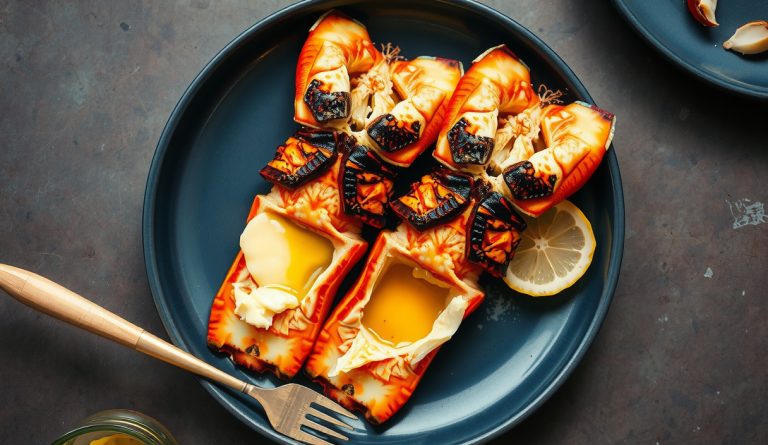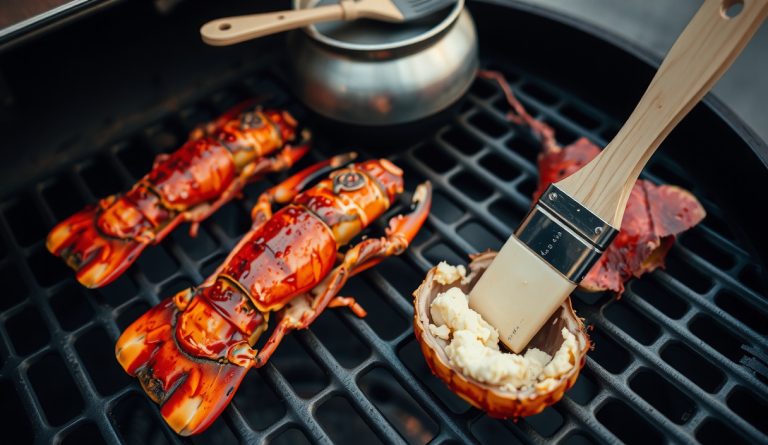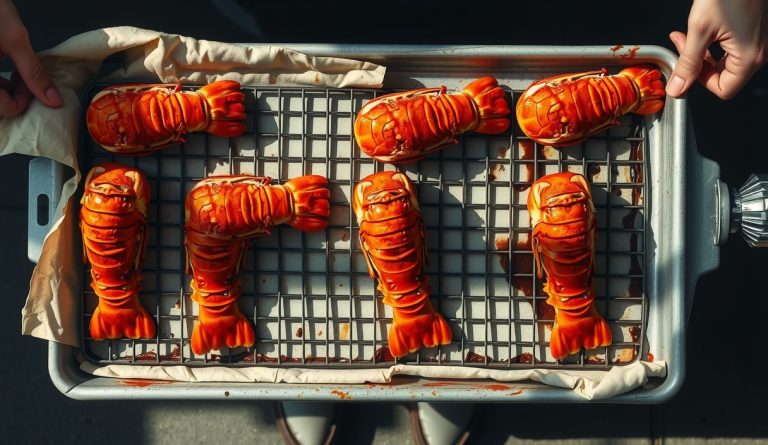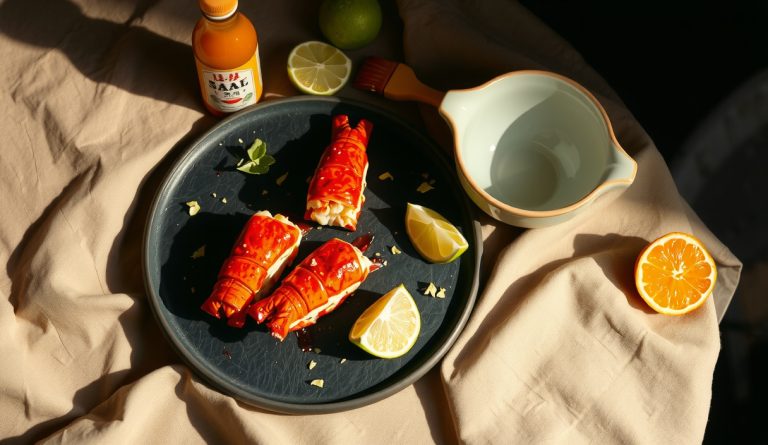
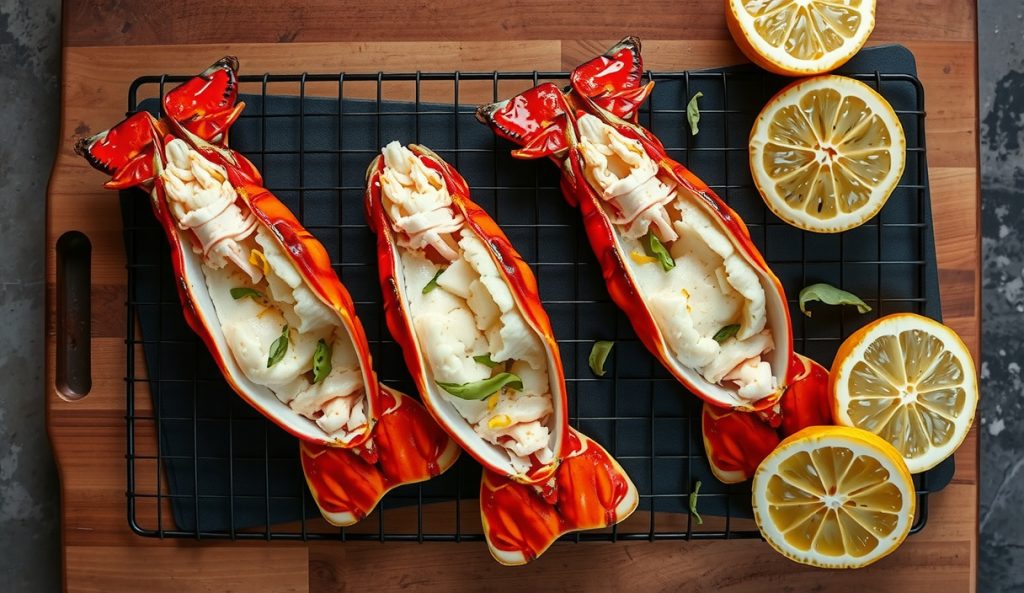
The butter-paprika baste on the canonical smoked lobster tails recipe is built around warmth and depth. This citrus-herb variant pivots toward brightness — swapping smoked paprika for Meyer lemon zest and fresh tarragon to produce a baste that reads cleaner on the finish without sacrificing any of the smoke character developed during the cook. The citrus-herb version suits warm-weather dinners, wine-forward tables, or any occasion where the lobster’s natural sweetness should lead rather than share the stage with paprika’s earthiness.
What changes in the citrus-herb baste?
Replace the smoked paprika with 1 teaspoon of finely grated Meyer lemon zest and 1 tablespoon of minced fresh tarragon, both stirred into the finished brown butter off heat — not while the pan is still on the burner. Lemon’s top notes are dominated by limonene and a short chain of other volatile terpenes that dissipate in under 90 seconds of direct heat; keeping the zest off-heat preserves the aromatic lift you are adding it for. Tarragon contributes estragole and ocimene, which are similarly heat-sensitive and function best as a finishing note rather than a cooked-in one.
Do not squeeze fresh lemon juice directly onto the lobster tails during the cook. Lemon juice lowers the local surface pH, and lobster myosin — already undergoing gentle heat denaturation — contracts more aggressively in an acidic environment, tightening the texture before the tails reach their 140°F internal temperature target. Reserve the squeeze for the plate, applied at service, where it brightens flavor without interfering with the cook.
What stays exactly the same?
Every other element follows the canonical recipe without alteration. The smoker runs at 225°F, the butterfly cut is identical, the basting cadence is unchanged, and the 140°F internal temperature target remains the doneness marker. The smoke source, shell-side-down orientation, and total cook window are all preserved. Only the flavoring compounds in the baste differ between the two versions.
When is the citrus-herb baste the better choice?
Choose the citrus-herb baste when pairing with a high-acid white wine — Chablis, dry Riesling, or Vermentino — that would clash against smoked paprika’s earthiness. The citrus-herb version is also the right call when the rest of the menu already carries significant smoky or spiced weight and the lobster course needs to contrast rather than compound those flavors. As a plated appetizer, the pale gold baste and flecks of green tarragon read more visually delicate than the deep rust of paprika-butter, making the presentation suit lighter, more refined table settings.
Use the full method, equipment list, and butter quantities from the original Smoked Lobster Tails with Butter-Paprika Baste.