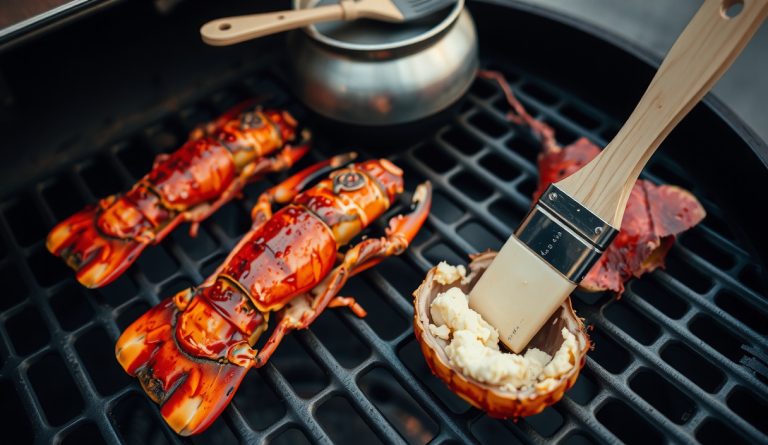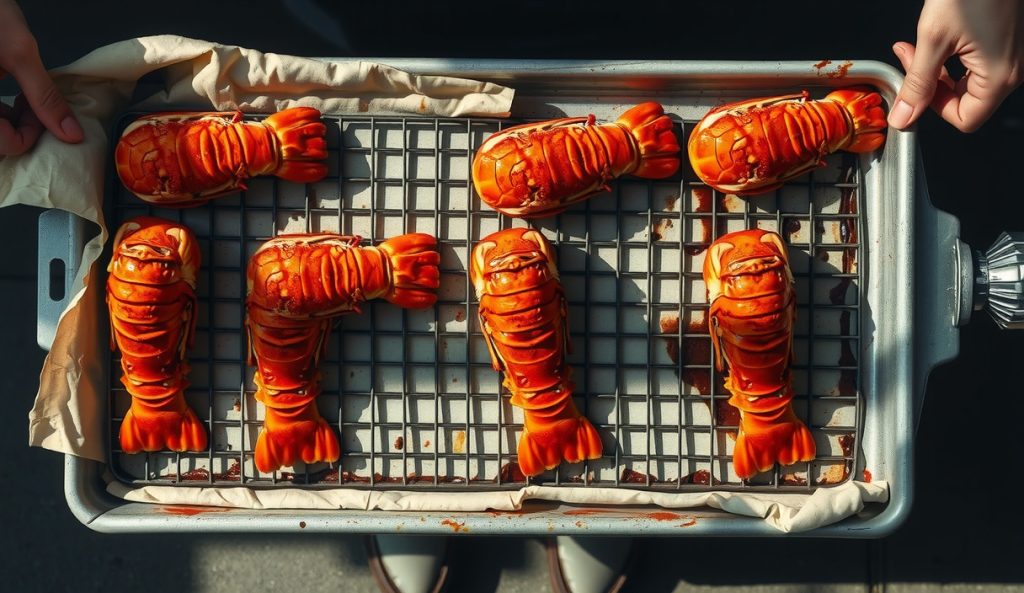
Smoked lobster tails scale well for larger gatherings. The flavor profile, internal temperature target, and baste formula all multiply linearly — there is no complexity that compounds at higher volumes the way there is with long-collagen-heavy cooks like brisket or pork shoulder. The single variable that requires actual attention when scaling smoked lobster tails is the smoker’s thermal recovery time after loading cold shellfish, and the physical spacing between tails on the grate.
What changes when you scale up smoked lobster tails?
When you load a full rack of cold tails, you introduce significant thermal mass that drops the smoker’s ambient temperature. Budget approximately 8 minutes of recovery time before the chamber stabilizes back to 225°F — during that window the tails are still absorbing smoke but not cooking at full rate, so your total cook window may extend by 5–10 minutes. Do not compensate by cranking the heat; a higher set point after loading risks overcooking the outermost edge of tails near the firebox before the interior of other tails has caught up.
Maintain at least 2 inches of clearance between each tail on the grate. Lobster shell has low thermal conductivity, and the exposed flesh is the primary smoke-absorption surface — crowding tails allows them to shade each other, reducing the effective smoke-exposed area and producing uneven coloring and flavor deposition across the batch. Scale the baste proportionally at a 1:1 ratio by tail count, and prepare it in a vessel large enough to baste every tail in a single pass per basting interval.
What stays the same no matter how many tails you smoke?
The 225°F smoker target temperature, the 140°F internal finish target, the butterfly prep, and the baste formula ratios are all identical to the single-batch canonical recipe. The per-tail cook time does not meaningfully change with volume — internal temperature is driven by each tail’s own mass and the smoker’s ambient temperature, not by how many other tails are present, provided proper spacing is maintained.
When is the scaled-up approach the better choice?
Use the scaled approach any time you are cooking for six or more people and want smoked lobster tails as the centerpiece protein rather than a single-serving accent. The scaled approach works especially well for holiday gatherings or dinner parties where synchronized plating matters — since all tails finish within the same narrow internal temperature window, you can pull the full rack together rather than staggering service.
Use the full method, equipment list, and per-tail baste ratios from the original Smoked Lobster Tails with Butter-Paprika Baste.