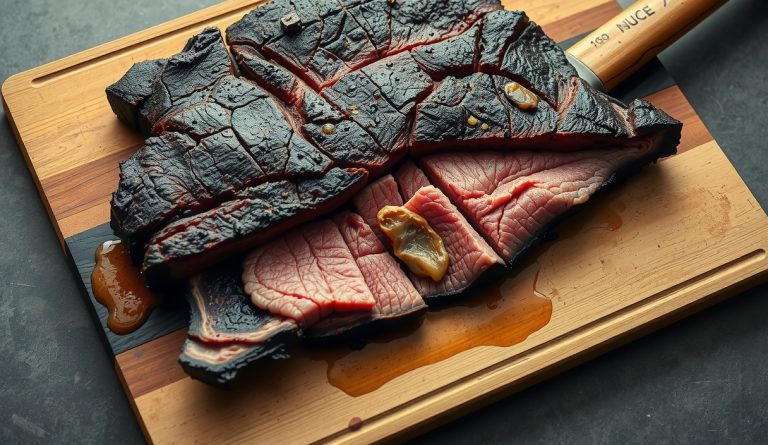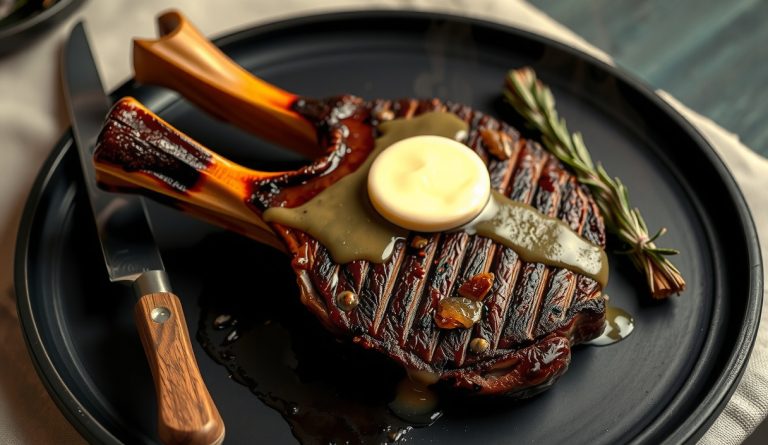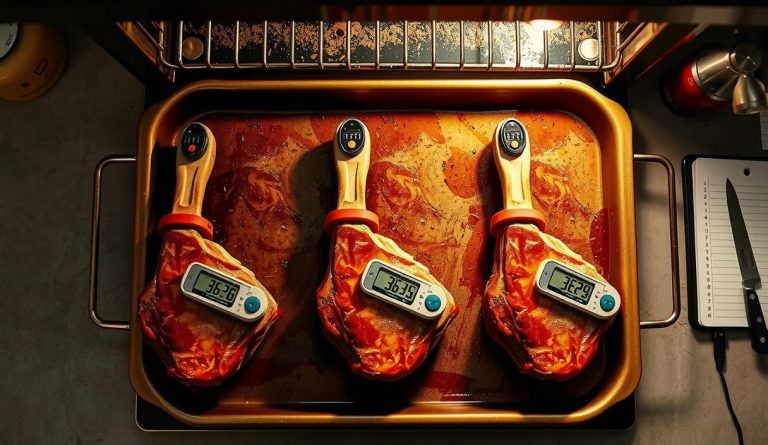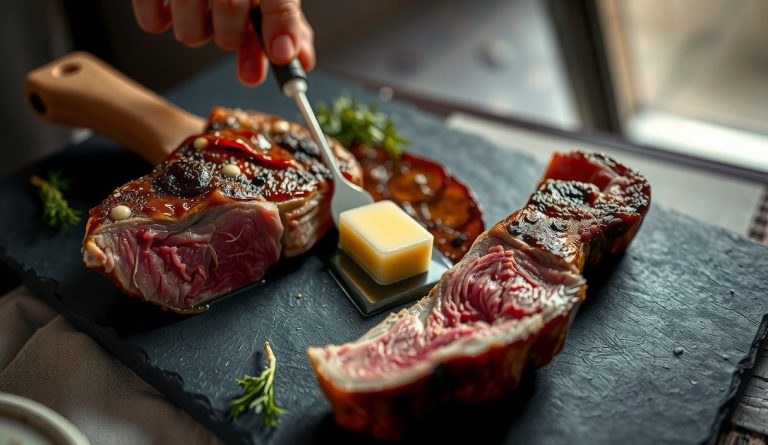
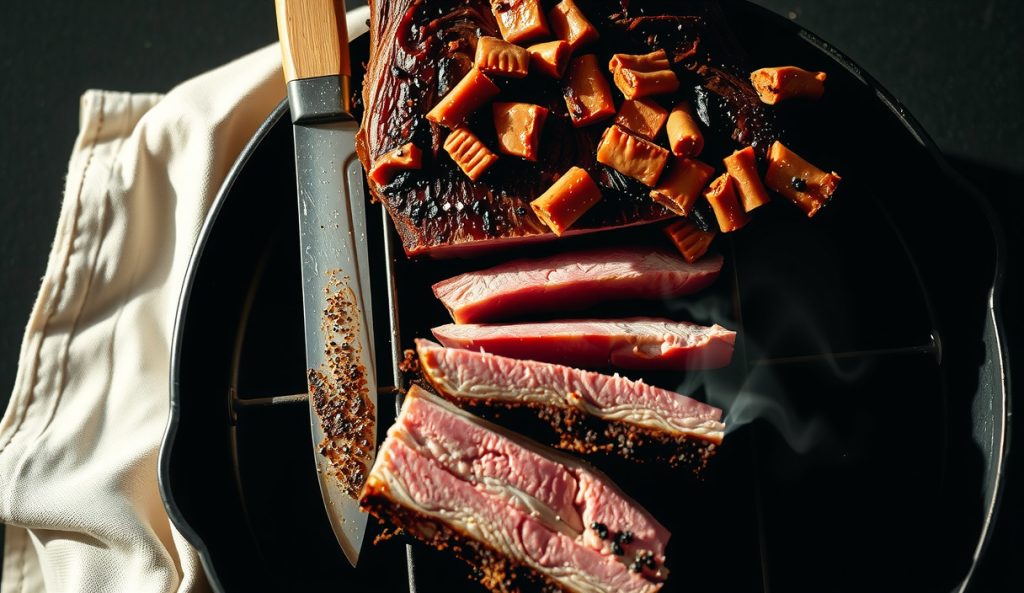
The reverse sear’s low-temperature phase is the single best window in all of barbecue for smoke absorption. Because the surface of the tomahawk ribeye stays relatively cool and moist during the extended low phase, replacing the oven with a pellet smoker or offset running oak or hickory at 225°F transforms the same technique into a competition-caliber cook — producing a genuine smoke ring, deep phenolic flavor layered beneath the seared crust, and the same precise doneness control the reverse sear method is known for.
What changes when you smoke instead of oven-roast the low phase?
Replace the low oven with a smoker set to 225°F using oak, hickory, or a blend of both. The extended time at low temperature — typically 60 to 90 minutes for a bone-in tomahawk ribeye — allows volatile phenols produced during wood combustion, primarily guaiacol and syringol, to bond with the myoglobin layer in the outer quarter-inch of the meat.
This phenol-myoglobin reaction produces both the visible smoke ring and the flavor compounds responsible for the characteristic barbecue smoke note. The smoke ring itself is cosmetic; the flavor is not. Pull the tomahawk from the smoker at 115°F internal, exactly as you would from the oven, and finish on a grate positioned directly over fully ignited coals or a gas burner at maximum output.
The sear step is identical in duration and intent — 90 seconds per side to build a Maillard crust — but the smoke-seasoned surface takes on slightly more color and complexity than an oven-run steak. Use an instant-read thermometer to confirm a final internal temperature of 130°F to 132°F for medium-rare after a five-minute rest.
What stays the same as the original reverse sear method?
The structural logic of the reverse sear does not change when you move the low phase to a smoker. The low-phase ambient temperature target (225°F), the internal pull temperature (115°F), the resting protocol, and the high-heat sear timing all carry over without modification. Seasoning the tomahawk ribeye 45 minutes before the cook or the night before remains best practice regardless of whether the low phase happens in an oven or a smoker.
When is the smoked reverse sear the better choice for a tomahawk?
Choose the smoked variation when you want a tomahawk ribeye that reads as barbecue rather than steakhouse — occasions where smoke flavor is welcome, a smoke ring adds visual drama, or you are cooking for an audience that expects a competition-style presentation. The smoke ring and phenolic flavor compounds are achieved during the low phase with no additional technique required beyond selecting the right wood.
The smoked reverse sear is also the practical choice any time you have the smoker running for a longer cook and want to add a steak to the session without firing a second appliance. The tomahawk shares ambient temperature and smoke with whatever else is on the grates, making this a low-effort addition to a full barbecue session.
Use the full method, equipment list, and rub measurements from the original Tomahawk Ribeye — The Reverse Sear Method.