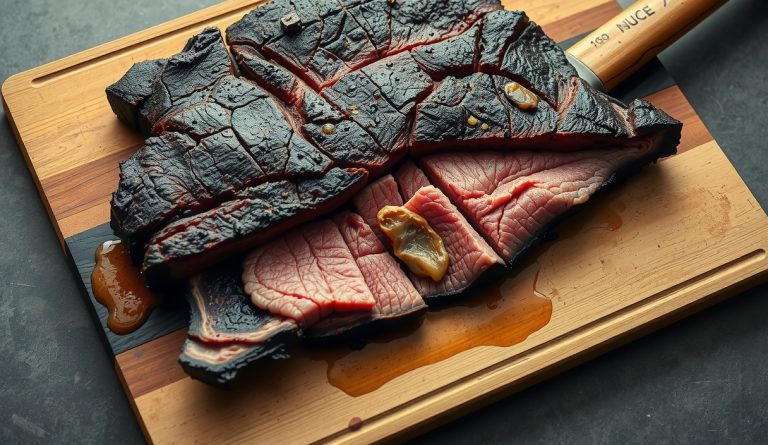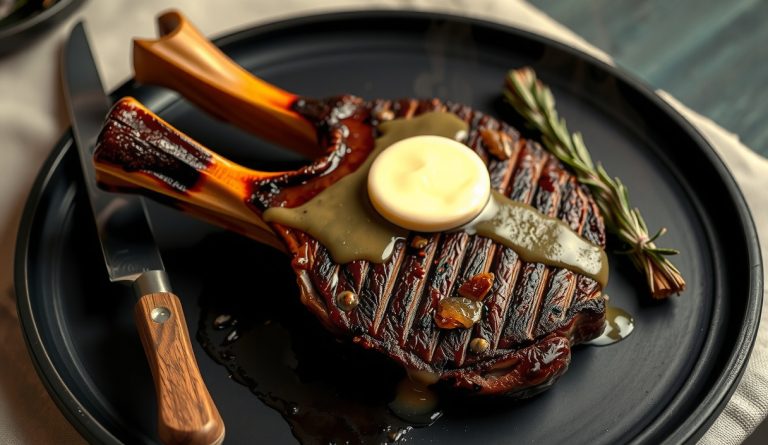
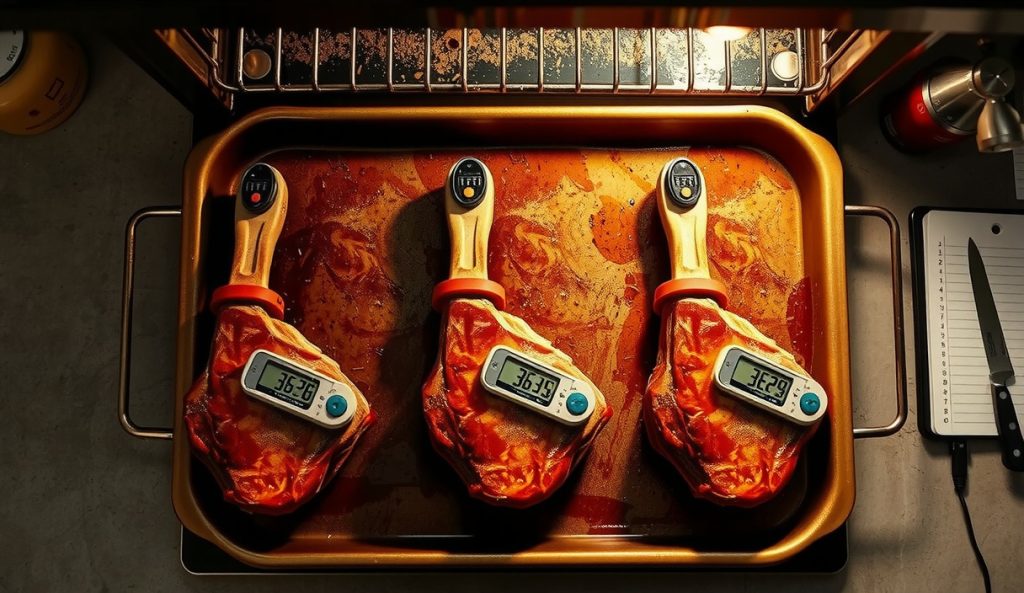
The reverse sear works beautifully for a single tomahawk ribeye, but scaling to feed six or eight guests introduces thermal physics that do not behave linearly. Understanding exactly what changes — and what stays the same — is the difference between a dinner party where every steak hits the table at the same internal temperature and one where half the guests wait while you babysit a straggler on the cutting board.
What changes when you scale tomahawk ribeyes for a group?
Each additional tomahawk added to the oven introduces significant thermal mass. A full tomahawk — bone, fat cap, and muscle combined — weighs 2.5 to 3.5 pounds. When cold protein mass enters a 250°F oven, the ambient temperature drops while the heating element works to recover. Two or three tomahawks loaded simultaneously can suppress oven temperature by 20°F to 40°F during the first 20 minutes of the cook, extending the time required to reach the 115°F internal pull point.
Budget an additional 15 minutes of oven time per steak beyond the first, and treat that estimate as a starting point rather than a guarantee. The more critical adjustment is instrumentation: every tomahawk must have its own probe thermometer inserted at the geometric center of the muscle, positioned away from bone. No two steaks — even steaks of identical weight cut from the same primal — will reach 115°F at the same time. Bone proximity, fat-cap thickness, and starting temperature all create meaningful variation across the batch.
Pull each tomahawk individually the moment its probe reads 115°F rather than pulling the entire batch on a single timer. For the sear phase, work in batches on the hottest surface available and tent completed steaks loosely in foil to hold heat while the remaining steaks finish their crust. Internal temperature loss during the foil hold is typically 3°F to 5°F over a five-minute rest, which remains acceptable within the target doneness window.
What stays the same no matter how many tomahawks you cook?
The fundamental thermal targets are unchanged regardless of how many tomahawks are in the oven. The oven temperature setting remains 250°F, the pull temperature remains 115°F internal, the sear protocol remains maximum heat at 90 seconds per side, and the five-minute rest remains constant per steak. Scaling changes timing discipline and monitoring requirements — it does not alter the core physics that define the reverse sear method.
When is the scaled approach the right choice for a dinner party?
This scaled approach is necessary any time you are serving more than one tomahawk from a single oven. The method is especially relevant for holiday dinners, rehearsal dinners, or any occasion where presenting multiple large-format steaks at a consistent doneness level is a stated goal. The per-steak probe requirement is non-negotiable at this scale — it is the only reliable way to manage the natural variance in cook time across multiple pieces of meat with differing bone geometry and fat distribution.
Use the full method, oven settings, and seasoning quantities from the original Tomahawk Ribeye — The Reverse Sear Method and multiply seasoning by the number of steaks being prepared.