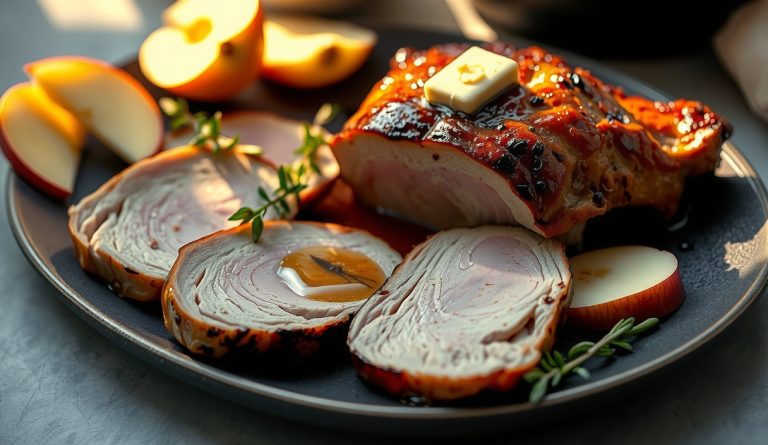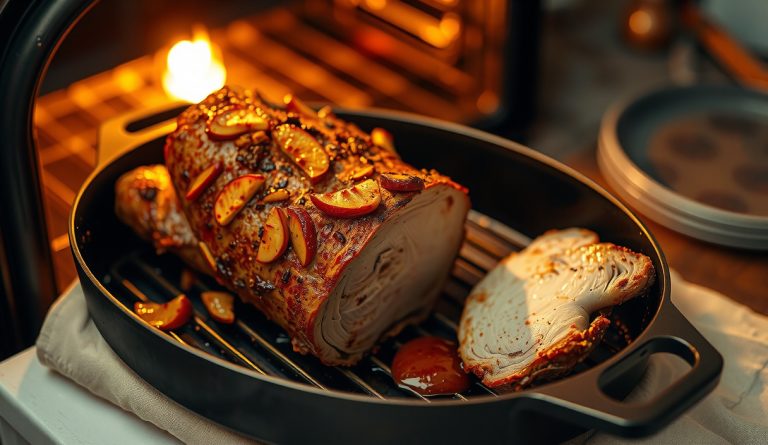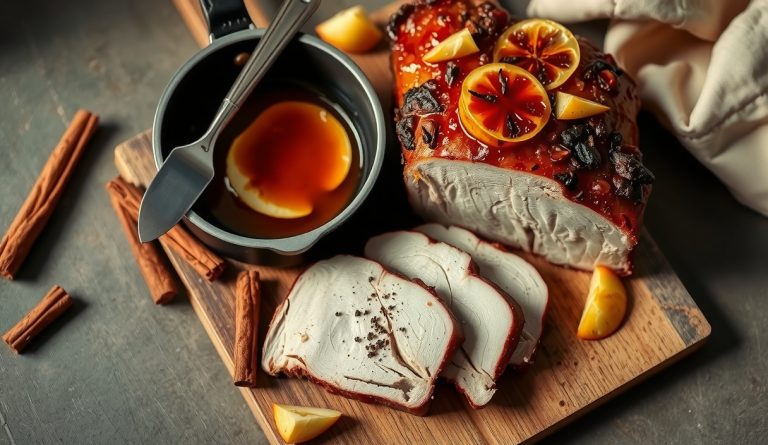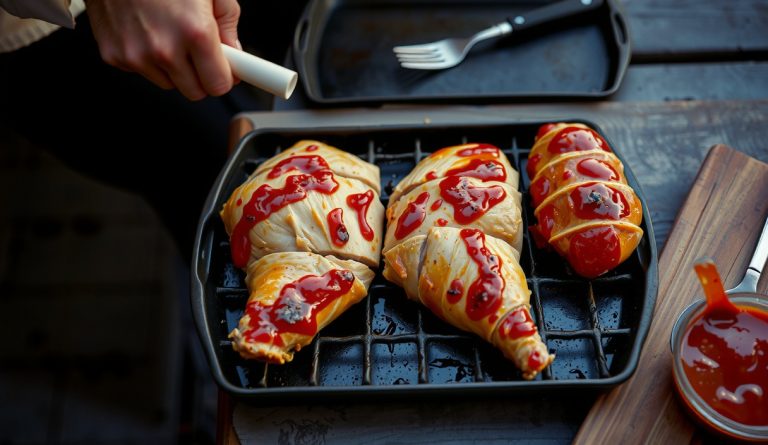
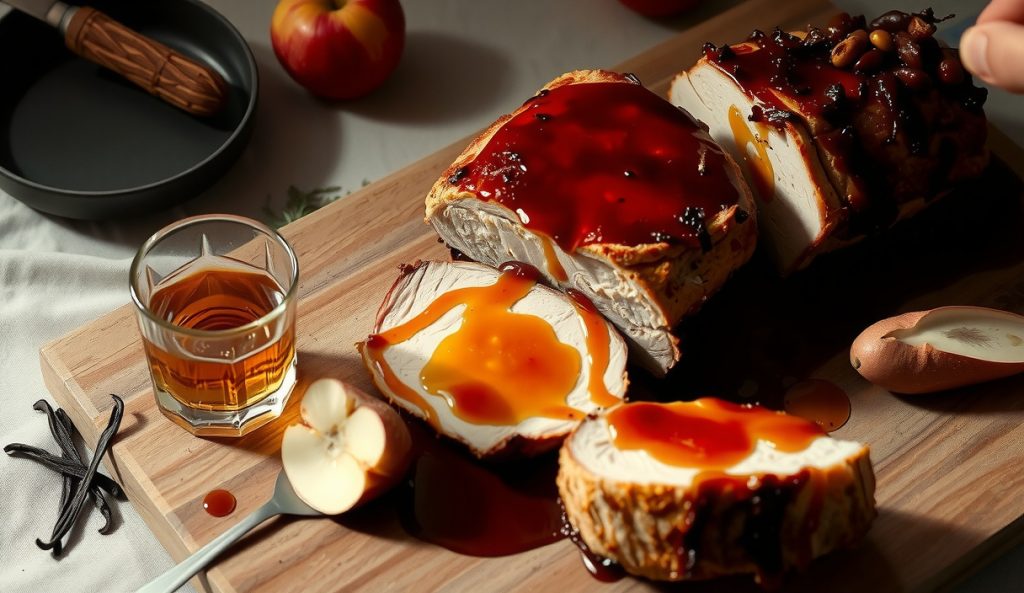
The canonical apple-cider glaze delivers a clean, bright sweetness that complements pork and smoke. Adding 2 tablespoons of bourbon in the final minute of reduction pushes that flavor profile further — toward barrel char, vanilla, and the deeper caramel register that whiskey carries from its time in oak. The change is small, the flavor return is outsized, and it requires no adjustment to timing, temperature, or application technique.
What does adding bourbon actually change?
When the cider syrup is within one minute of being pulled from heat, add 2 tablespoons of a mid-range bourbon directly to the pan. At that stage the liquid is well above ethanol’s boiling point of 78.4°C / 173°F, so the alcohol flashes off almost immediately — typically within 30 to 45 seconds of active bubbling. What remains are the congeners: ethyl acetate esters, furfural from oak lignin breakdown, and residual sugars that were present in the distillate before reduction.
Those residual reducing sugars integrate into the glaze and function as additional Maillard browning substrate, meaning the glazed tenderloin surface develops color slightly faster and more deeply under heat than the unmodified version. Choose a bourbon with visible sweetness on the nose — wheated mash bills complement apple particularly well, but any 80-proof whiskey works. Avoid anything heavily peated or with pronounced rye spice, as those flavors compete with rather than reinforce the smoke coming from the wood.
What stays exactly the same as the original recipe?
The cider reduction process — starting volume, heat level, target viscosity (nappe consistency, coating a spoon cleanly), and total reduction time — remains unchanged. The application window on the tenderloin (internal temperature of 130°F, with one to two glaze passes over the final 10 minutes of the cook) is identical to the canonical method. Rub composition, smoker temperature, and the target final internal temperature of 145°F are all unaffected.
When is the bourbon-apple variation the better choice?
This variation is the stronger call when serving adults in a context where a slightly more complex, spirit-forward flavor profile is welcome — a dinner party, a holiday spread, or any occasion where the canonical recipe might read as too straightforward. The bourbon note also bridges well when pairing with a richer side like a sweet potato purée or a grain salad with dried fruit, where the glaze needs enough depth to anchor the plate rather than disappear into it.
Use the full method, equipment, and rub measurements from the original Smoked Pork Tenderloin with Apple-Cider Glaze.