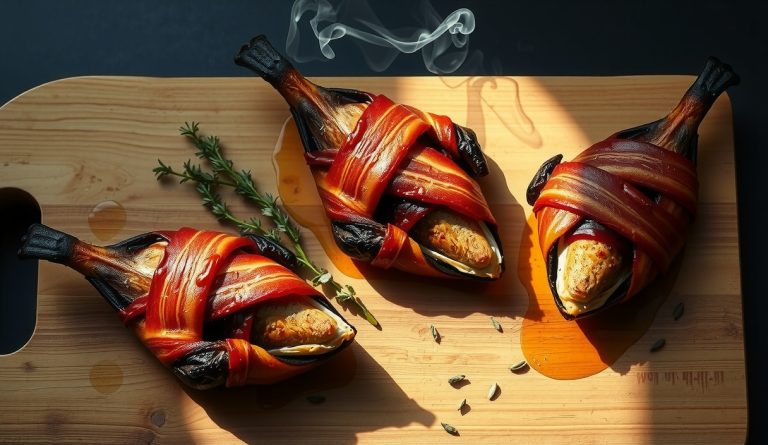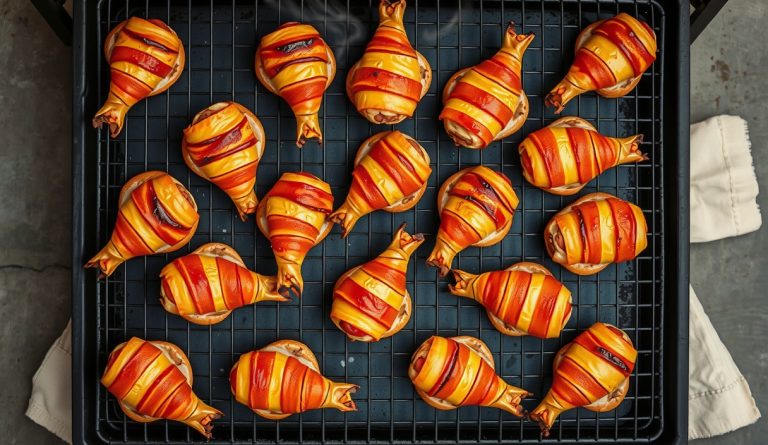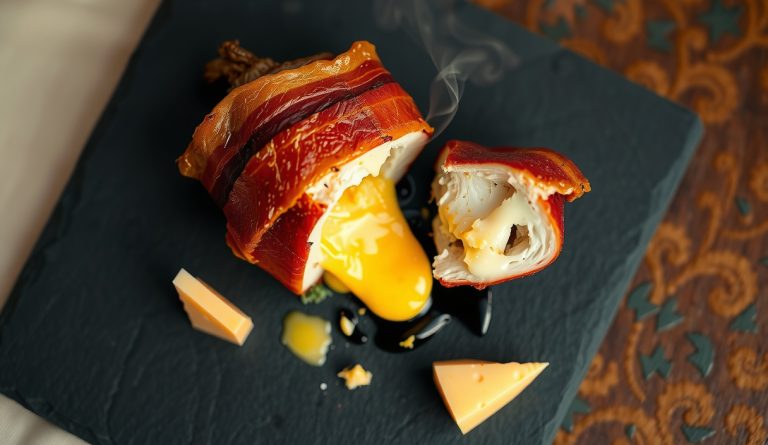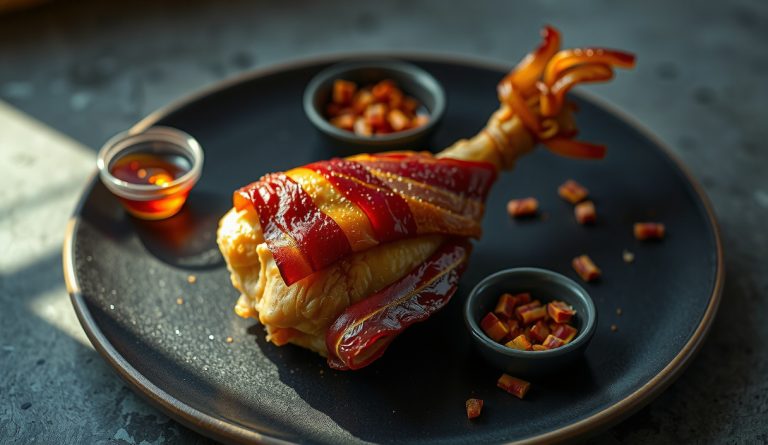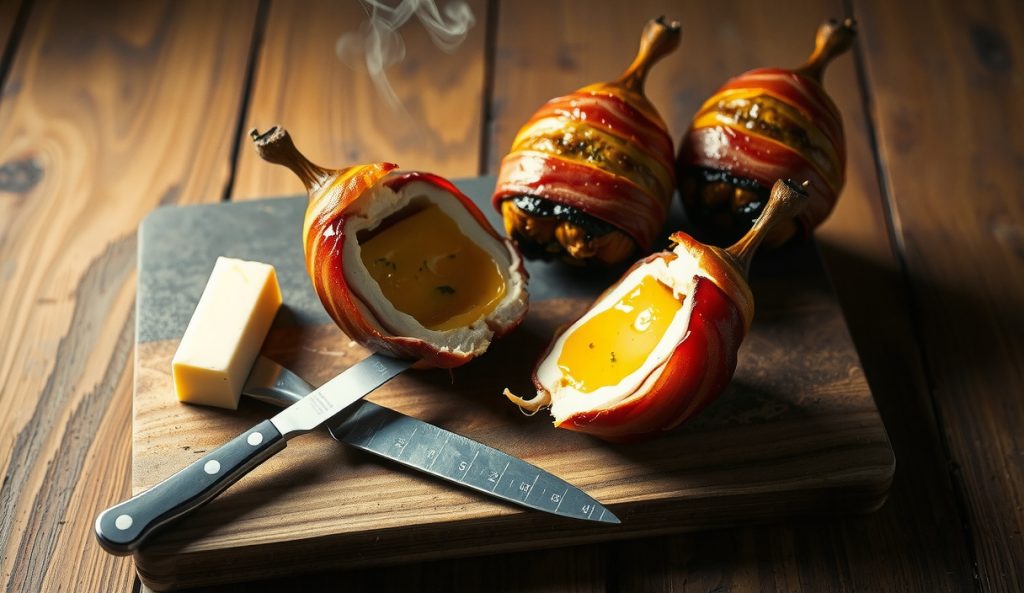
Quail breast meat is lean and compact, making it vulnerable to drying out even during a short smoke. Tucking one teaspoon of compound butter inside the cavity before the bacon wrap creates an internal fat reservoir that compensates for that leanness — no change to technique or cook time required. The result is noticeably juicier breast meat and a subtly aromatic interior that plain-wrapped birds cannot match.
What changes when you add compound butter?
Blend softened unsalted butter with fresh thyme leaves, a small amount of minced garlic, and finely grated lemon zest until fully incorporated. Chill the mixture briefly so it holds a rough coin shape, then tuck approximately one teaspoon into the cavity before wrapping the bird in bacon.
Butter melts at approximately 90°F — well before the smoker’s convective heat reaches the geometric center of a four-ounce quail — so the fat is already pooled and circulating inside the cavity by the time the proteins begin to set. Aromatic volatiles (thyme terpenes, garlic sulfur compounds, lemon citral) remain trapped inside the cavity and infuse the interior protein matrix rather than escaping into open air.
Do not overfill the cavity. Excess butter migrates toward the neck opening and drips onto the grate, where it can ignite under direct radiant heat and spike grate temperature unpredictably. One level teaspoon is the practical ceiling for a standard four-ounce quail.
What stays exactly the same as the canonical recipe?
Every core parameter of the canonical recipe remains unchanged. Smoker temperature holds at 275°F. The target internal temperature is 160°F measured in the thickest part of the breast. Estimated cook time stays at 35 to 45 minutes. The bacon wrap technique and the resting protocol are identical. The compound butter is a purely interior addition and does not interact with the bacon exterior or the smoke environment in any meaningful way.
When is the compound butter variation the better choice?
This variation is best suited to birds cooked for a plated dinner where presentation and interior juiciness matter more than pure smoke-forward simplicity. The compound butter also serves as a practical safeguard when cooking quail sourced from farms with leaner, older birds, or when the cook anticipates any temperature variability that might push internal temps slightly past the 160°F target before the birds are pulled. In those scenarios the additional fat provides a meaningful moisture buffer.
- Plated dinner service where interior juiciness and aromatic complexity are the priority
- Leaner or older farm-sourced birds with less intramuscular fat
- Any cook where smoker temperature control is uncertain and overshooting 160°F is a real risk
Use the full method, equipment, and rub measurements from the original Smoked Bacon-Wrapped Quail.