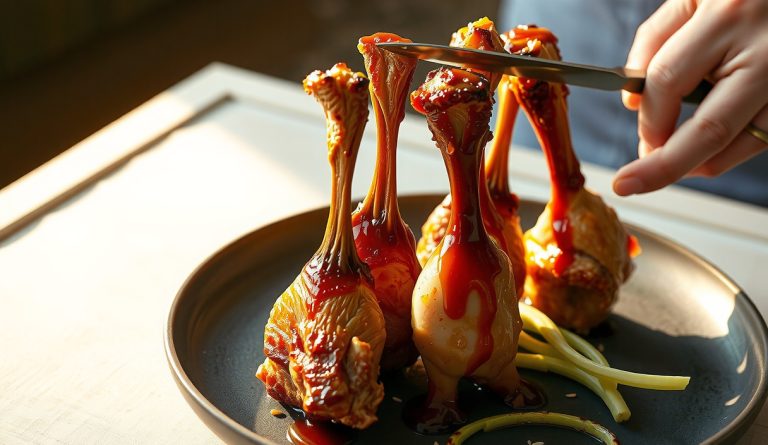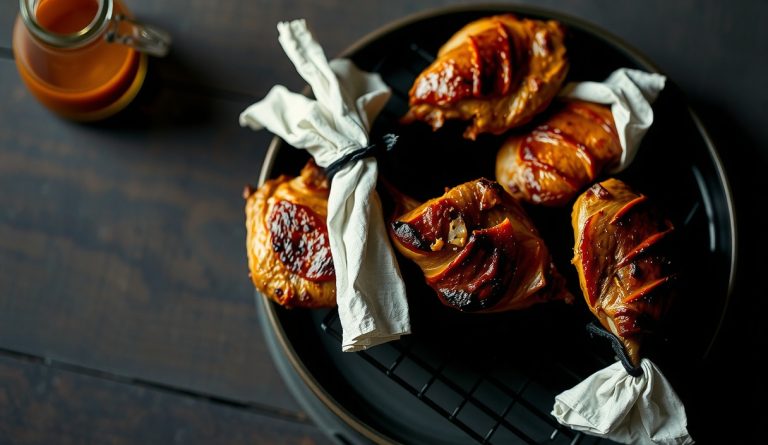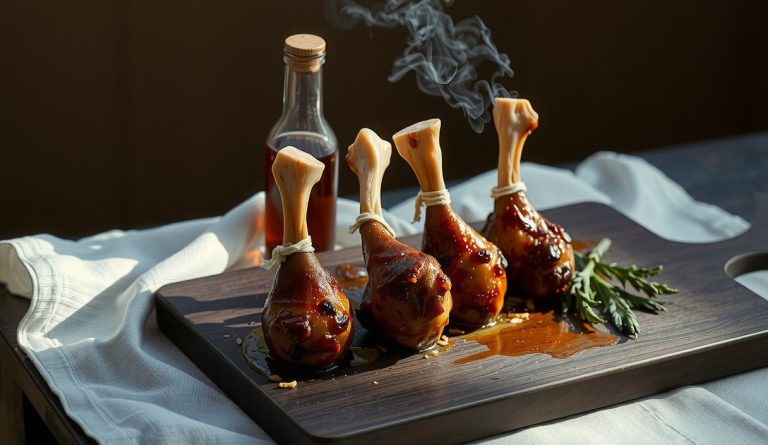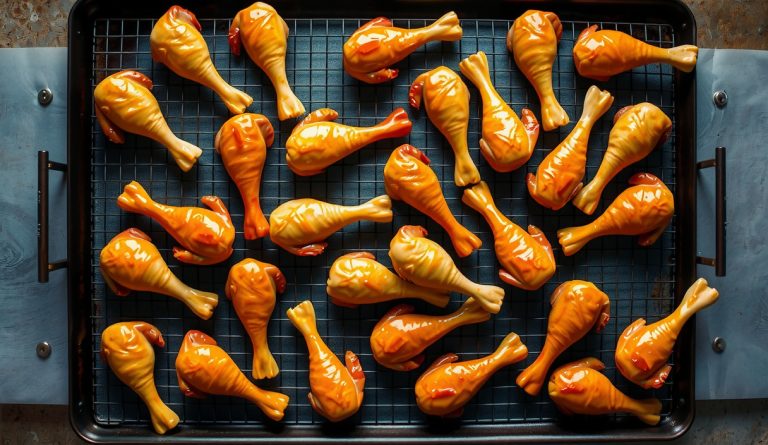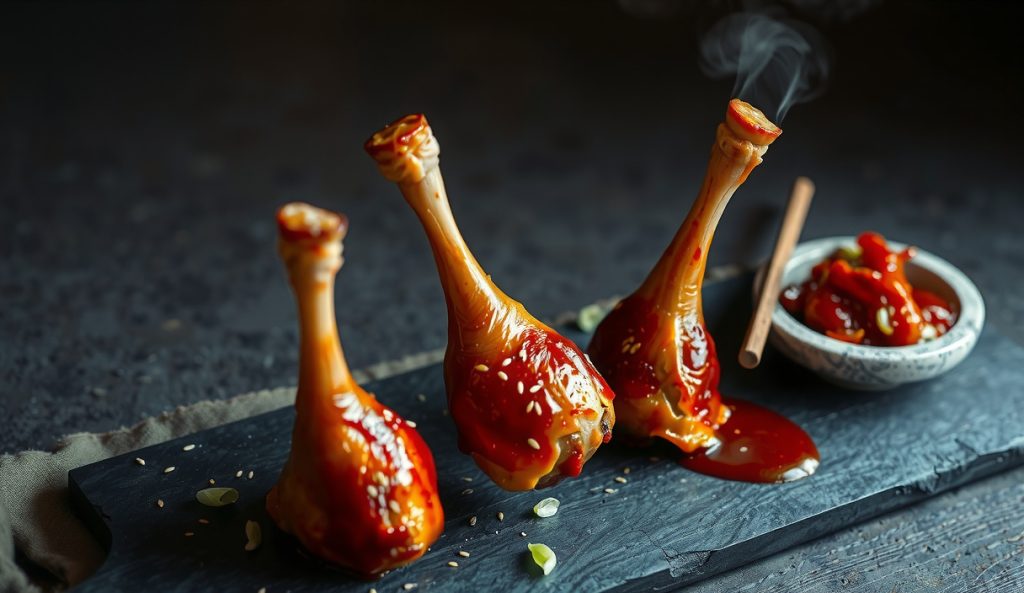
The canonical honey-bourbon glaze builds sweetness and a clean caramel sheen. This Korean gochujang variation replaces that simple sweetness with layered complexity — fermented soybean umami, moderate TRPV1-activating capsaicin heat, and the aromatic lift of toasted sesame. The result reads unmistakably Korean in flavor profile while staying fully compatible with the smoke-and-char structure of the lollipop format.
This variation is the right move when you want smoke to act as a background note rather than the lead, and when you are cooking for an audience that gravitates toward savory-fermented flavors over sweet-barbecue ones.
What changes from the original — and why does the Korean glaze work?
Replace the honey-bourbon glaze with a blend of 3 tablespoons gochujang, 2 tablespoons rice wine vinegar, 1 tablespoon sesame oil, 1 tablespoon honey, and 1 teaspoon fish sauce. Whisk until fully emulsified before applying. The vinegar thins the paste enough to brush cleanly, and its acidity keeps the glaze from clumping on the meat surface.
The fish sauce contributes glutamate-driven savoriness that rounds out the fermented pepper base without reading as fishy in the finished product. Each of the five components has a structural role: gochujang supplies the fermented heat base, vinegar controls viscosity and pH, sesame oil adds aromatic fat, honey moderates the paste’s sharpness, and fish sauce deepens the umami floor.
Apply the first glaze coat at 155°F internal temperature, exactly as with the canonical glaze, but watch the second coat closely. Gochujang contains residual fermented starches and sugars that brown significantly faster than refined honey under radiant pit heat. The Maillard reaction onset is the same — roughly 280°F surface temperature — but the denser sugar matrix in gochujang means the window between deep mahogany and scorched is narrower than with a honey-based glaze. Check the color every three to four minutes after the second application. Finish with sesame seeds and thinly sliced scallion greens applied off heat.
What stays the same from the base recipe?
The full lollipop prep — cartilage scoring, meat pushing, and bone cleaning — and the 250°F smoke protocol remain unchanged from the base method. Target internal temperature is still 165°F. The base dry rub applies as written; its salt-and-pepper backbone is complementary to the gochujang glaze rather than redundant with it.
When is the Korean gochujang glaze the better choice?
Choose this variation when you are building a spread that already includes sweeter barbecue items and need a savory counterpoint. It is also the stronger pick when cooking for guests who prefer umami-forward heat over sweet lacquer, or when you want the versatility of pairing smoked chicken lollipops with rice, pickled vegetables, or other Korean-adjacent accompaniments.
The gochujang glaze also performs well in direct-heat finishing on a charcoal kettle if you want more surface char. Because the sugar matrix browns faster than a honey glaze, the kettle’s high radiant output accelerates the Maillard crust without requiring extended time over the coals.
Use the full method, equipment, and rub measurements from the original Smoked Chicken Lollipops.