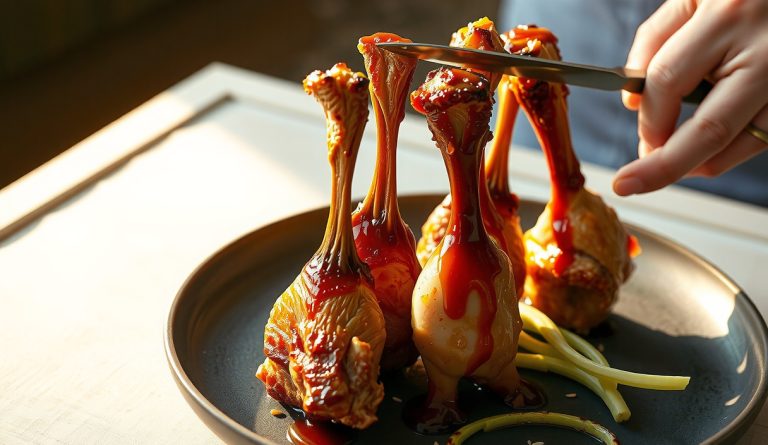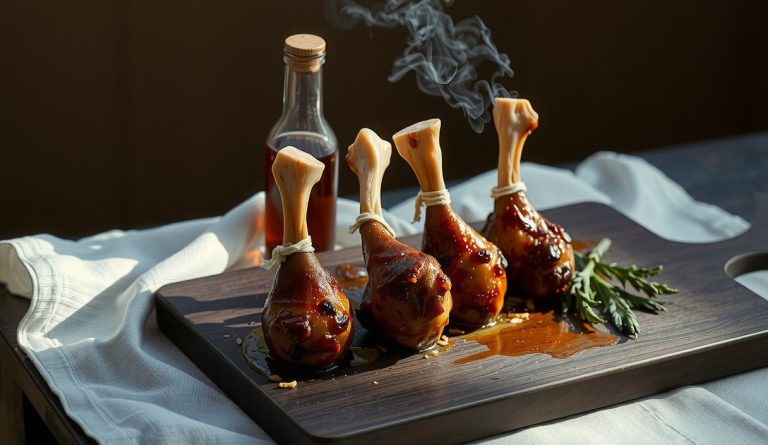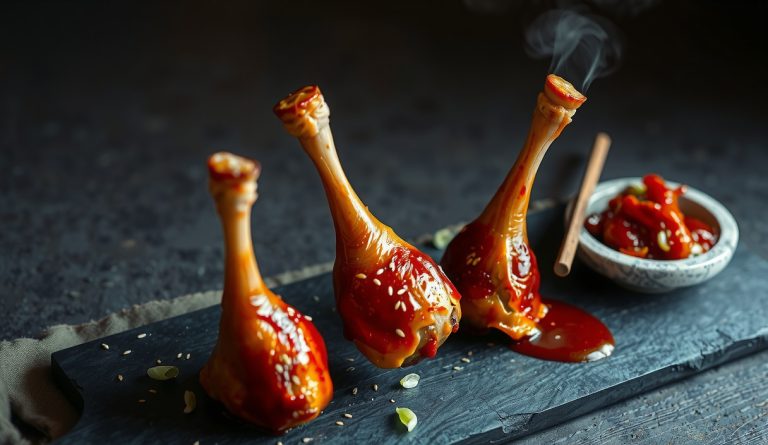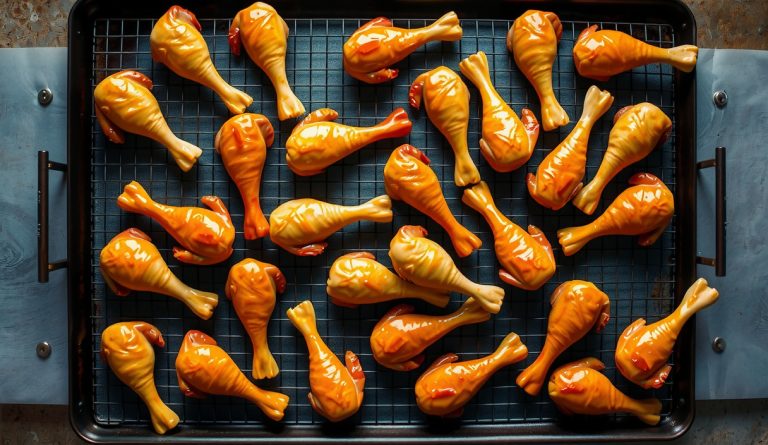
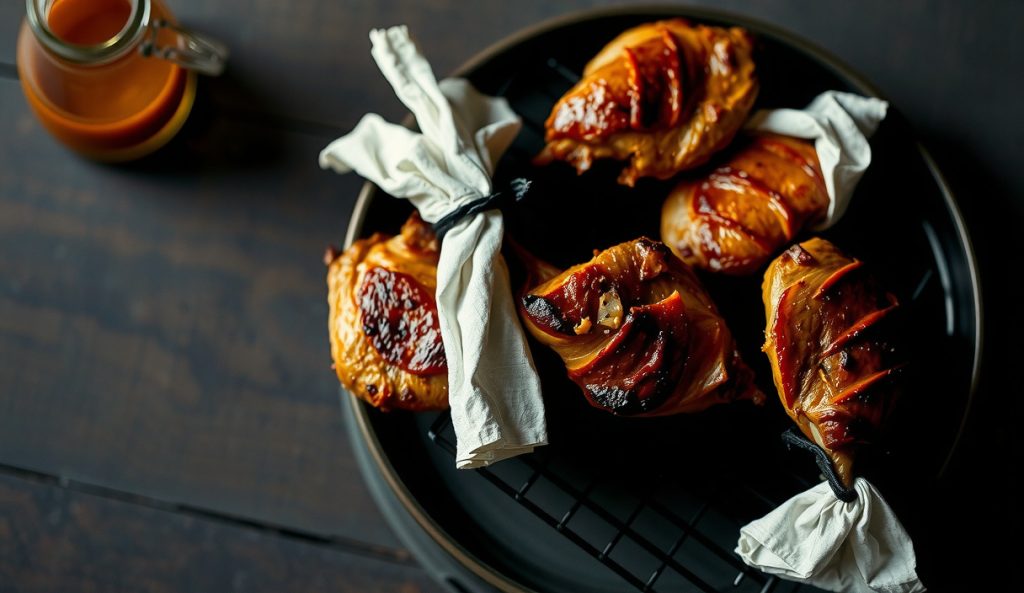
The canonical smoked chicken lollipop is built around a lacquered finish — glazed twice in the final cook window to produce a glossy, tacky exterior. This dry-finish variation abandons the glaze completely and invests instead in bark development. The payoff is a drier, deeply mahogany surface with concentrated smokiness and a firm, snappable crust that showcases the wood and the rub rather than a sauce layer over them.
If your audience values crust texture and smoke intensity over sweetness and sheen — or if you are serving the lollipops alongside a dipping sauce you want to control separately — this is the cleaner approach.
What changes in the dry-finish method?
Increase the brown sugar in the rub from the canonical amount to 3 tablespoons. That additional sugar feeds Maillard and caramelization reactions across the full cook window at 250°F, building crust progressively rather than in a concentrated late-stage glaze application. Caramelization of sucrose begins around 320°F at the meat surface, but the sustained low-heat environment means the reaction proceeds slowly and evenly, producing complex bitter-sweet byproducts — furans, diacetyl, hydroxymethylfurfural — that register as deep roasted character rather than sharp sweetness.
Skip both glaze coats entirely. Ride the cook straight to 165°F internal without opening the pit beyond standard temperature checks. Wood selection matters more here than in the glazed version — a cherry-hickory blend is the recommended pairing. Cherry contributes mild fruitiness and accelerates mahogany color development through phenolic smoke deposition; hickory adds the backbone smoke intensity that the glaze would otherwise mask. Avoid woods with high resin content (pine, spruce) or overly dominant single-note woods (mesquite alone) — without glaze sweetness to balance them, they read as harsh.
What stays the same as the original recipe?
Lollipop prep, pit temperature at 250°F, and the 165°F internal target are unchanged. All rub ingredients except the brown sugar quantity remain at their canonical proportions. Rest time after pulling the lollipops from the pit should stay at a minimum of five minutes to allow carryover cooking and juice redistribution before serving.
When is the dry-finish variation the better choice?
The dry-finish variation outperforms the canonical glazed method when serving the lollipops as a component in a larger plated dish where sauce control matters, when guests prefer a non-sticky eating experience, or when you want to highlight the smoke and wood character of your pit without a glaze layer obscuring it. Removing the glaze timing also simplifies execution — it eliminates one of the more attention-intensive steps in the original cook.
Use the full method, equipment, and rub measurements from the original Smoked Chicken Lollipops.