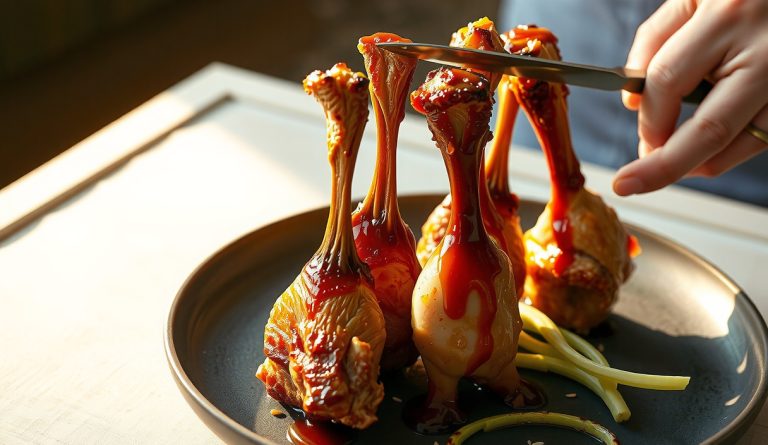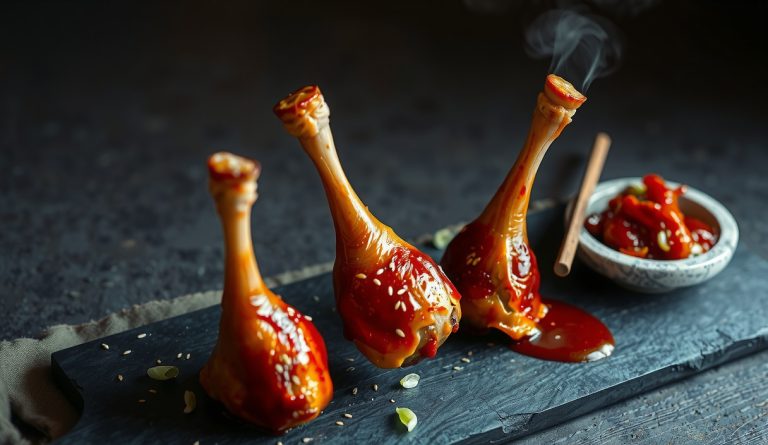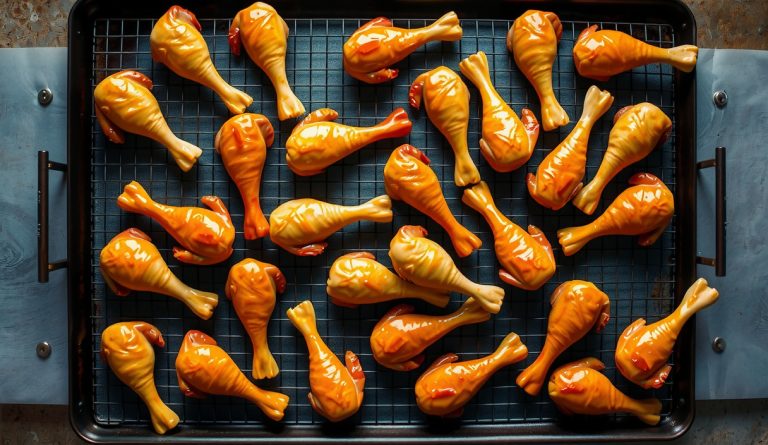
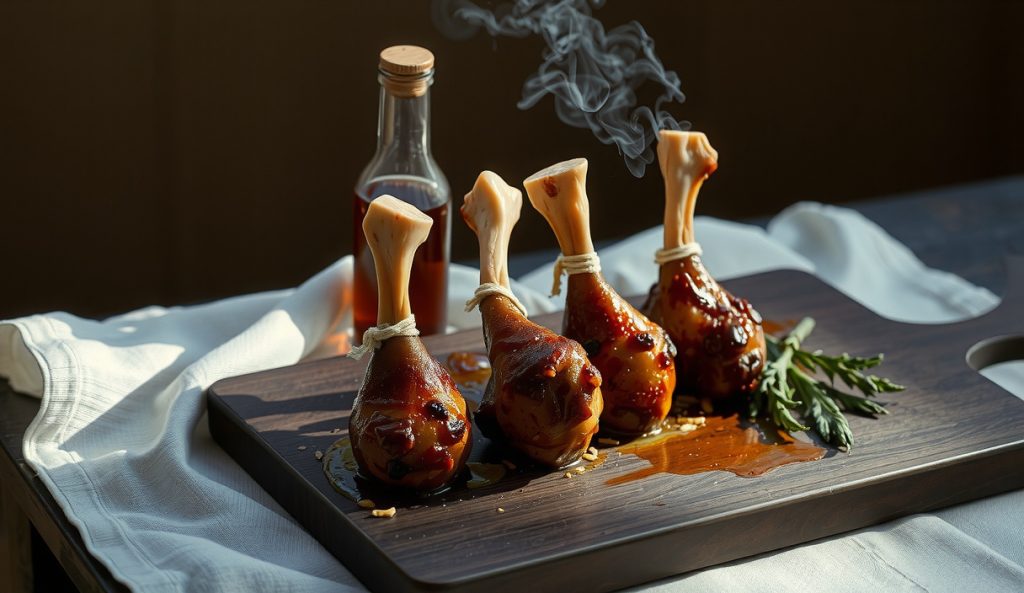
Smoked Chicken Lollipops as written contain no dairy and no intentional gluten sources. For most cooks and most guests, the canonical recipe is already fully compliant. This variant exists for one reason: Worcestershire sauce is the single ingredient in the recipe where gluten can enter unannounced, and understanding exactly why — and how to close that gap — lets you serve every guest with confidence.
What actually changes to make this recipe gluten-free?
The only ingredient requiring attention is Worcestershire sauce. Traditional Worcestershire is a fermented condiment whose original formulation includes malt vinegar — a vinegar distilled from barley, a gluten-containing grain. While distillation theoretically removes gluten proteins (whose molecular weight far exceeds what passes through the distillation column), some individuals with celiac disease or non-celiac gluten sensitivity react to malt vinegar at the trace levels present in fermented products.
Regulatory thresholds for gluten-free labeling in the United States require below 20 ppm gluten, but this standard is not universally applied across Worcestershire brands. The label is therefore the only reliable indicator — not the ingredient list alone. Check your Worcestershire bottle for an explicit certified gluten-free designation before proceeding.
If your brand does not carry a certified gluten-free label, substitute an equal volume of tamari — a Japanese soy sauce brewed without wheat, as distinguished from standard Chinese-style soy sauce, which typically includes wheat as a fermentation substrate. Tamari delivers a comparable umami-salinity profile at a 1:1 volume substitution with no other recipe adjustments required. The flavor contribution in the rub or glaze will be marginally less complex (Worcestershire carries tamarind, anchovy, and spice notes that tamari does not replicate exactly), but the difference is imperceptible after smoke exposure.
What stays exactly the same?
Every other ingredient, quantity, temperature, and technique in the canonical recipe is unchanged. No rub ratios, glaze components, pit settings, or cook times require modification for this variation. The change is a label-verification step, not a reformulation — one swap, zero other adjustments.
When is this gluten-free version the right choice?
Use this checklist any time you are cooking for guests with celiac disease, a diagnosed non-celiac gluten sensitivity, or a self-reported gluten-avoidance preference. The gluten-free version is also the right default for a mixed group: one preparation serves everyone without a separate batch, and the tamari swap adds no complexity and costs no detectable flavor in the final smoked product.
- Cooking for a guest with celiac disease or non-celiac gluten sensitivity
- Hosting a mixed group and want a single preparation for all
- Your Worcestershire bottle lacks an explicit certified gluten-free label
Use the full method, equipment, and rub measurements from the original Smoked Chicken Lollipops.