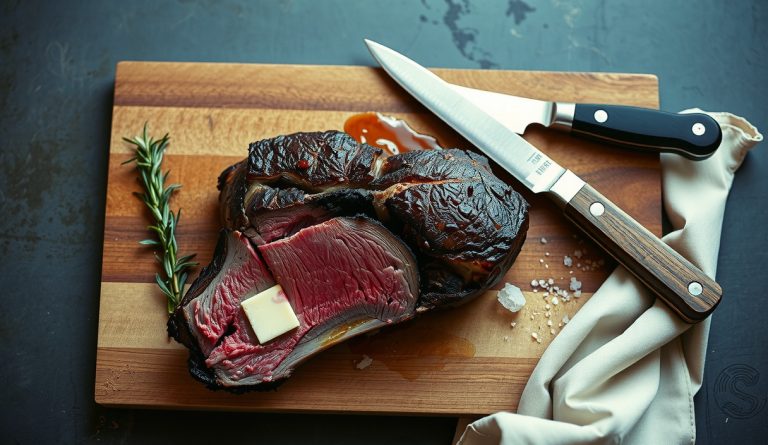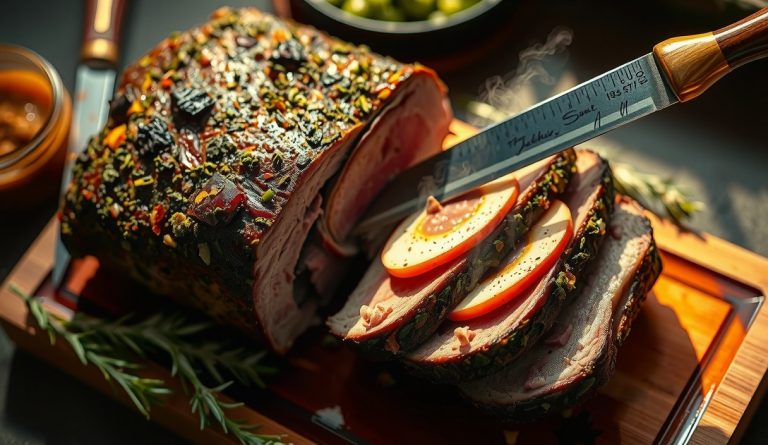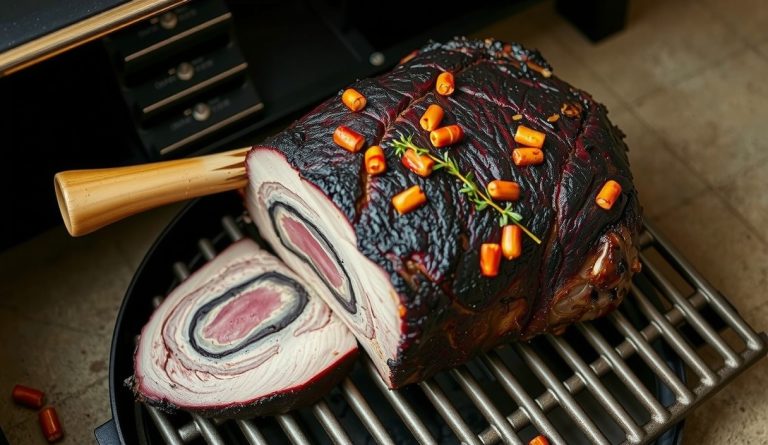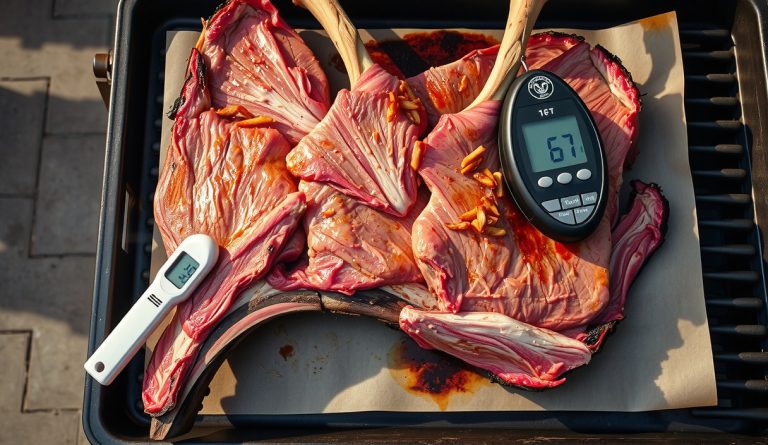
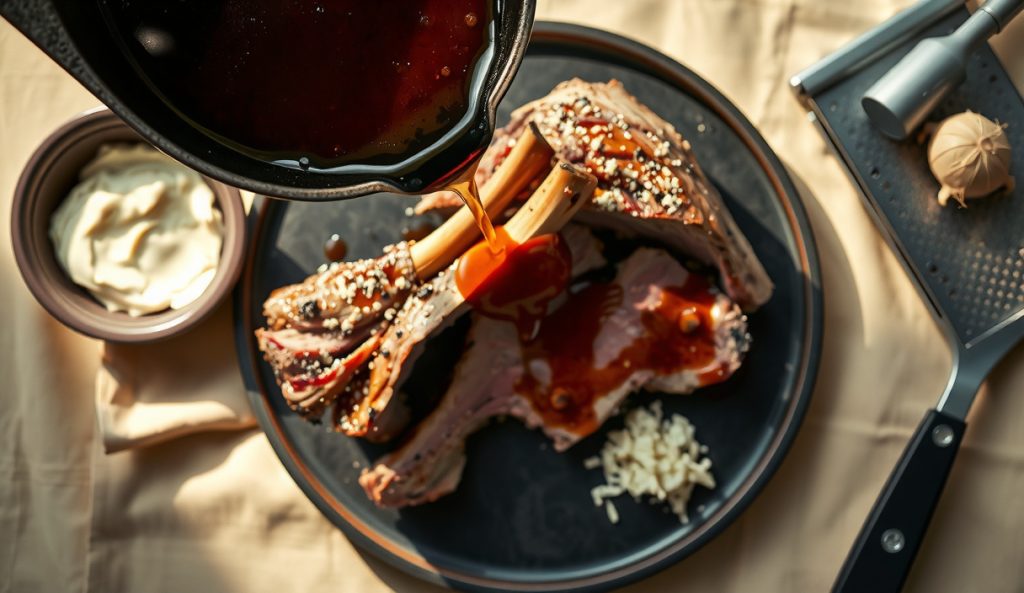
By the time a smoked prime rib finishes its low-and-slow smoke phase, the pan beneath it has collected something genuinely valuable: rendered beef fat, smoke-soluble compounds deposited from the combustion stream, and purge — the mix of water and solubilized proteins that exits the muscle as it heats. This is not a byproduct to discard. It is the base of a pan au jus with a smoke character that no stovetop sauce can replicate, because the smoke chemistry is already embedded in the fat and liquid before the sauce even begins.
Paired with a fresh horseradish cream, the combination addresses smoked prime rib from two directions: the smoked au jus amplifies the beef and smoke, while the horseradish cuts the fat and adds enzymatic sharpness that makes each bite feel clean on the palate.
What changes when you add these accompaniments?
After pulling the prime rib roast from the smoker to rest, set the drip pan on a stovetop burner over medium heat. Deglaze with a combination of beef stock and dry red wine — roughly a 2:1 ratio — scraping up any fond that has formed on the pan floor. Strain the liquid through a fine-mesh sieve to remove solids, then reduce by approximately half until the smoked au jus coats a spoon lightly. Season with salt only at the end; the drippings carry significant salt from the dry brine and must be tasted before any addition is made.
For the horseradish cream, grate fresh horseradish root on a microplane directly into cold, full-fat sour cream, then add a pinch of fine salt and fold together. The pungency of fresh horseradish comes from allyl isothiocyanate, a volatile compound produced when glucosinolates in the root tissue are hydrolyzed by the enzyme myrosinase upon cell damage — in this case, grating. Allyl isothiocyanate is highly volatile and dissipates quickly, which is why pre-made prepared horseradish loses its sharpness over time. Grating tableside or within one hour of service preserves maximum enzymatic activity and delivers the clean, sinus-clearing heat that makes the pairing with smoked prime rib work.
What stays the same in the base recipe?
Nothing in the prime rib roast preparation or cook method changes when adding these accompaniments. The drippings are a natural byproduct of the canonical smoking process and require no modification to the roast itself in order to collect them. The smoked au jus and horseradish cream work equally well with any bone count or variation of the base recipe.
When is this pairing the better choice?
This pairing is the right call whenever smoked prime rib is the centerpiece of a formal or semi-formal meal and the table expects the full presentation. The smoked au jus adds a liquid component that particularly benefits leaner end cuts, keeping them moist and flavorful through service. The horseradish cream provides table-interactive flavor that guests can modulate to their own heat preference, which adds engagement to the meal without extra work from the cook.
The accompaniments also extend the perceived value of the cook: the drip-pan liquid would otherwise be discarded, and instead it becomes a smoke-forward sauce that guests will ask about. The conversion from byproduct to centerpiece sauce costs nothing beyond ten minutes of active stovetop time.
Use the full method, equipment, and rub measurements from the original Smoked Prime Rib — Bone-In; these accompaniments require no changes to how the roast itself is prepared or cooked.