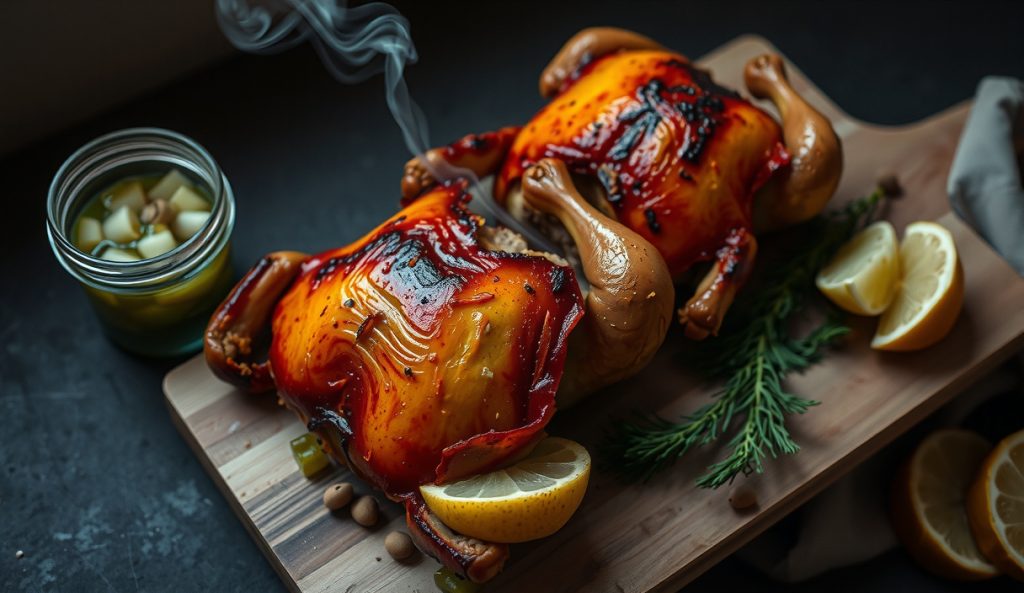
The structural core of fermented pickle brine smoked chicken — lacto-fermented pickle brine, whole spatchcocked chicken, wood smoke, and a salt-and-spice dry rub — is inherently gluten-free. Wheat has no place near a smoker. The real risk lives in the periphery: commercial dry rubs, Worcestershire-based table sauces, and shared kitchen equipment. This guide audits every ingredient in the canonical recipe for hidden gluten so coeliacs and gluten-sensitive cooks can fire up without anxiety.
What changes when you make this recipe gluten-free?
Dry rub scrutiny. The canonical rub uses common pantry spices — salt, pepper, garlic powder, paprika — that are individually gluten-free. The danger is in commercially blended rubs or pre-mixed seasoning packets, which routinely use wheat-derived starch as an anti-caking agent in garlic and onion powders, and occasionally add maltodextrin sourced from wheat. Read every label. Build the rub from single-ingredient spices or use a certified gluten-free blend. Bob’s Red Mill and Penzeys label their spices explicitly; store-brand garlic powders often do not.
Worcestershire and table condiments. If you are serving the finished bird with any Worcestershire-containing sauce or glaze, note that most conventional Worcestershire contains barley malt vinegar — Lea & Perrins in the US being a notable exception with full GF certification. Swap to a certified gluten-free Worcestershire, or replace the tangy-umami role entirely with a combination of coconut aminos (gluten-free, lower sodium) and a few drops of apple cider vinegar. The depth difference is minimal on a bird already carrying lactic acid and smoke phenolics.
The brine itself. Homemade lacto-fermented brine made from cucumbers, water, salt, dill, garlic, and peppercorns is completely gluten-free. If you are sourcing brine from a commercial deli or farmers market, ask whether the same fermentation vessel is used for any wheat-containing products — rye bread kvass ferments occasionally share equipment in traditional delicatessens. A shared vessel can deposit hordein or gliadin residue well above the 20 ppm EU/FDA threshold that defines a gluten-free product.
Cross-contamination at the smoker. Wire grill brushes and basting brushes that have touched flour-dusted proteins, beer-braised items, or wheat-basted birds can transfer gluten to your grates. Clean the grates with a brass-bristle brush and heat the smoker to 450°F for 10 minutes before cooking, or use dedicated gluten-free cookware. A separate brine container and injector (if used) eliminates the most likely cross-contact vector.
What stays exactly the same in the gluten-free version?
The entire six-week fermentation protocol, the spatchcock geometry, the pellicle formation window, the cherry-wood smoke schedule, and the internal temperature targets are untouched. Lactic acid’s collagen-swelling mechanism and myosin solubilization are purely protein chemistry — no gluten is involved anywhere in the process. The bark, the smoke-phenolic deposition, and the dill-garlic volatile delivery system perform identically whether or not gluten is present elsewhere in the kitchen.
When is this the better choice for your cookout?
Any cookout where a diagnosed coeliac is present — or where you simply want the cleanest possible ingredient list — benefits from this audit pass. Building the dry rub from single-ingredient spices rather than a commercial blend also tends to produce a more balanced bark, so the gluten-free version is frequently the better-tasting version regardless of dietary need.
Follow the full fermentation and smoking method at the original recipe; this post covers only the gluten audit layer on top of it.