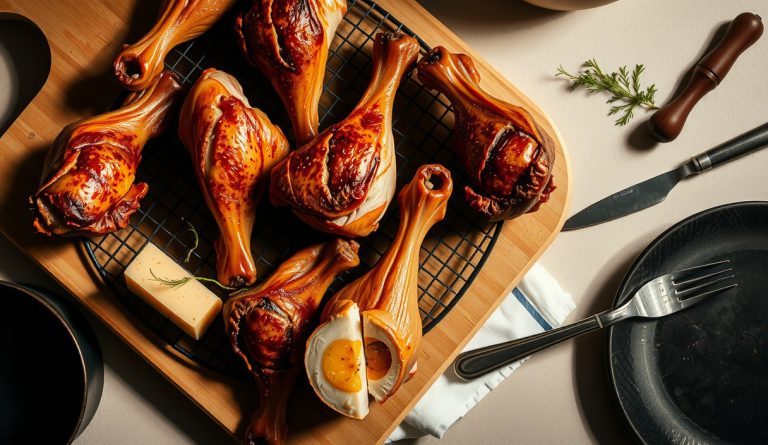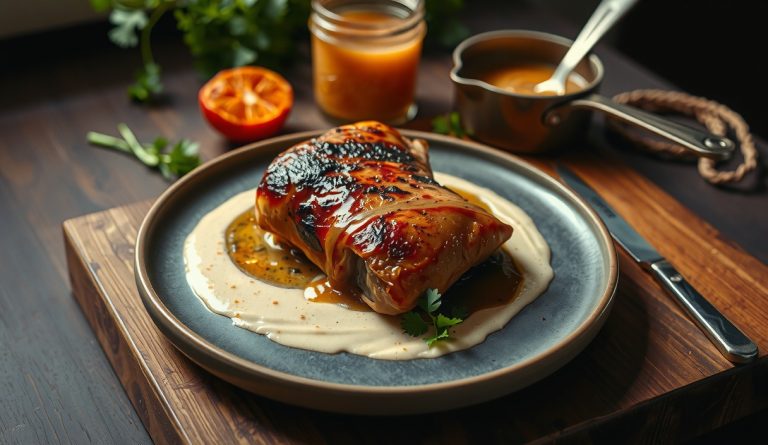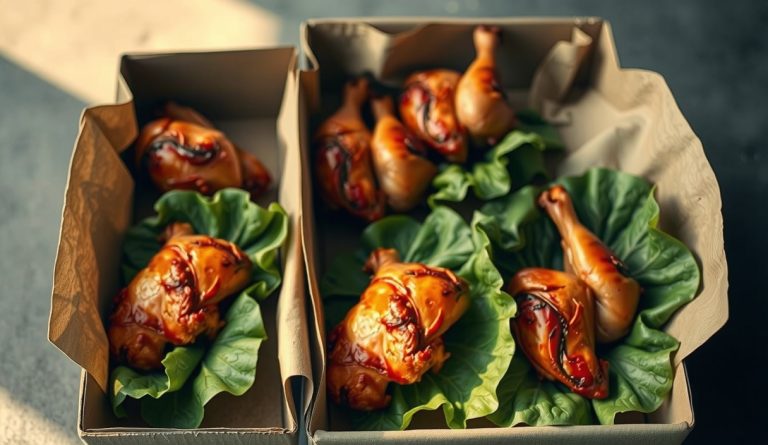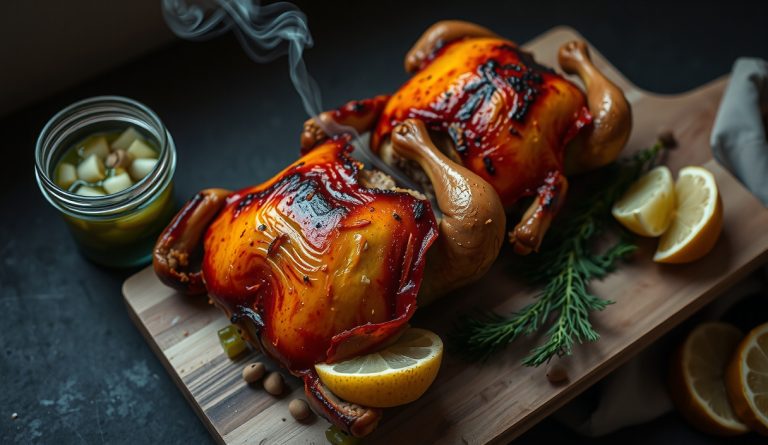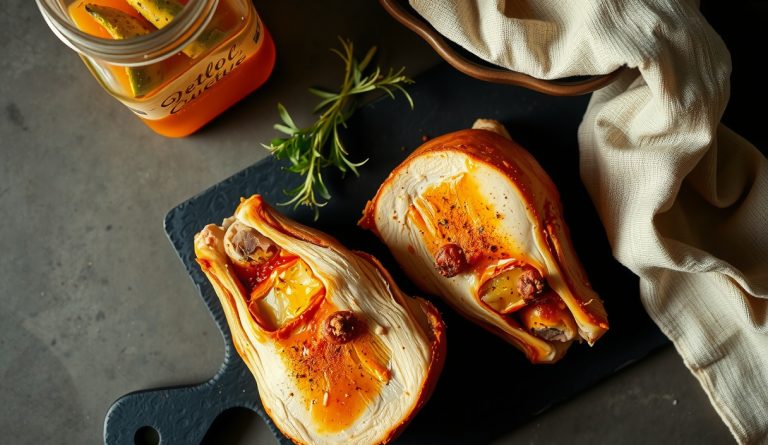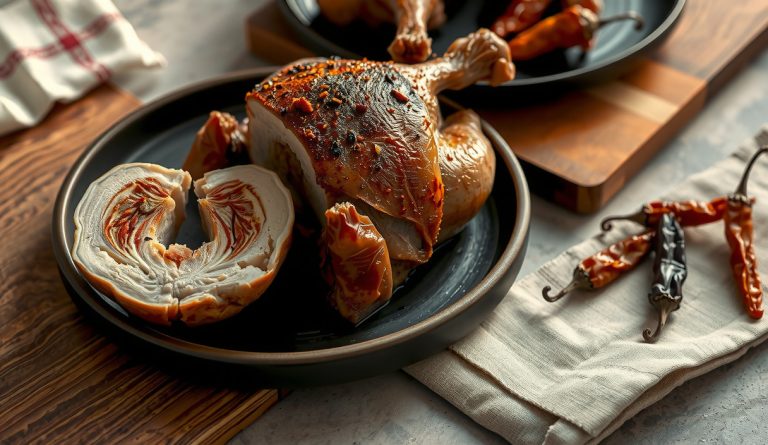
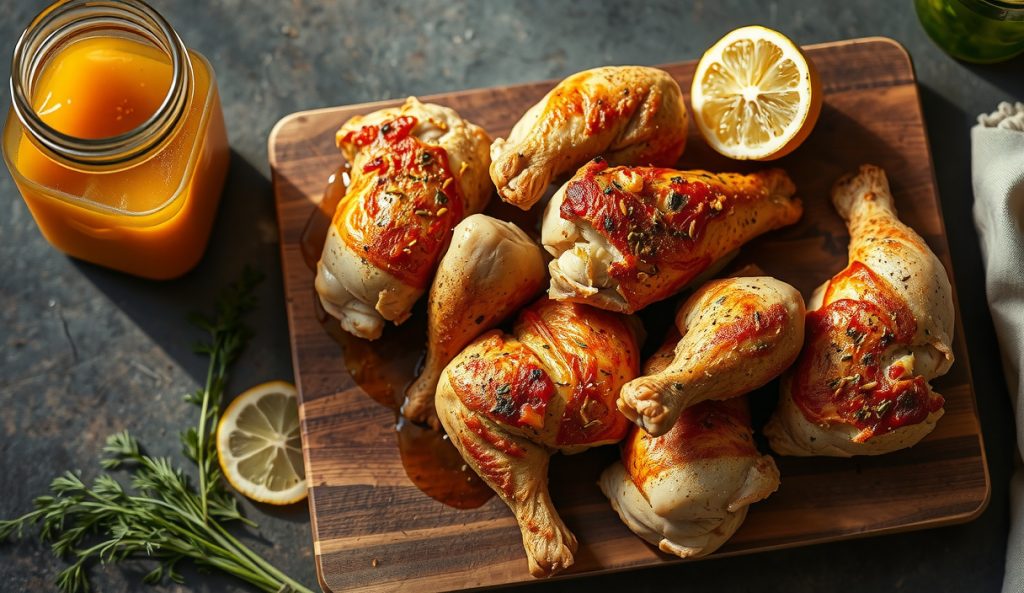
Salt is not decoration in this recipe — it is doing precise molecular work in two separate phases, and reducing it requires compensating for each function individually rather than simply dialing down a number. This low-sodium adaptation cuts total sodium by roughly 50–60% while maintaining the brine’s tenderizing mechanism, preserving viable bark formation, and rebuilding flavor complexity through alternative routes. The bark will be modestly less craggy, but the finished bird remains deeply flavored and significantly more accessible to anyone managing hypertension or renal load.
What changes in the low-sodium version?
The brine sodium load. A standard lacto-fermented cucumber brine begins at 2–3% NaCl by weight — essential for creating the selective osmotic environment that favors Lactobacillus over spoilage organisms during fermentation. That baseline cannot be reduced during the six-week ferment without risking pathogen proliferation. You control sodium uptake on the chicken side instead: limit the brine soak to 4–6 hours rather than overnight (8–12 hours). Diffusion via Fick’s second law means sodium uptake is front-loaded in the first few hours and the rate flattens significantly after that. A shorter soak retains the lactic acid tenderization and aromatic penetration while reducing the equilibrium sodium concentration reached in the muscle tissue.
The dry rub. Reduce the NaCl in the rub by 60%, replacing half the removed salt with a potassium chloride-based salt substitute such as Nu-Salt or No Salt. Potassium chloride provides the same ionic strength on the palate up to roughly 30% of total chloride; beyond that threshold it introduces a metallic bitterness that competes with the dill and smoke character, so stay under that threshold. Rebuild the flavor volume that salt was providing through: doubled black pepper, smoked paprika increased by 50%, added dried dill (which reinforces the brine’s carvone signature), lemon zest (the limonene is volatile but the citric acid surface contribution enhances perceived savoriness), and a small addition of ground coriander, whose linalool note bridges the ferment aromatics and smoke.
Bark formation honesty. Bark forms when surface proteins denature and dehydrate, creating a Maillard-reactive crust. Sodium plays a supporting role by drawing surface moisture outward and accelerating pellicle development. With less salt, the pellicle will be thinner and the bark slightly less structurally crisp. Mitigate this by extending the air-dry period after brining and before smoking to 2–3 hours uncovered on a wire rack in the refrigerator, rather than the standard 1 hour. The prolonged evaporative drying compensates for the reduced osmotic moisture-wicking that high-salt rubs provide. Do not skip this step in the low-sodium version.
Table sauces. Commercial barbecue sauces carry 200–400 mg sodium per two tablespoons. Serve the finished chicken with a fresh herb vinaigrette — cider vinegar, olive oil, fresh dill, and cracked pepper — that delivers acidity and aromatic brightness without the sodium penalty.
What stays exactly the same?
The six-week fermentation protocol, spatchcock geometry, wood selection, smoke schedule, and internal temperature targets are entirely unchanged from the standard recipe. Lactic acid’s collagen-swelling chemistry operates on pH, not sodium concentration — the tenderizing mechanism is fully preserved even with a shortened brine window and a reduced-salt rub.
When is the low-sodium version the better choice?
This adaptation is essential for guests managing hypertension, chronic kidney disease, or heart failure, where even a single high-sodium barbecue meal can cause meaningful fluid retention. It is also a useful exercise for any pitmaster who wants to isolate smoke and ferment character — stripping back salt reveals how much aromatic complexity the lactic acid, dill, and cherry wood are actually contributing on their own.
The full fermentation and cook method is detailed at the original recipe; apply these sodium reduction strategies as a layer over that technique.