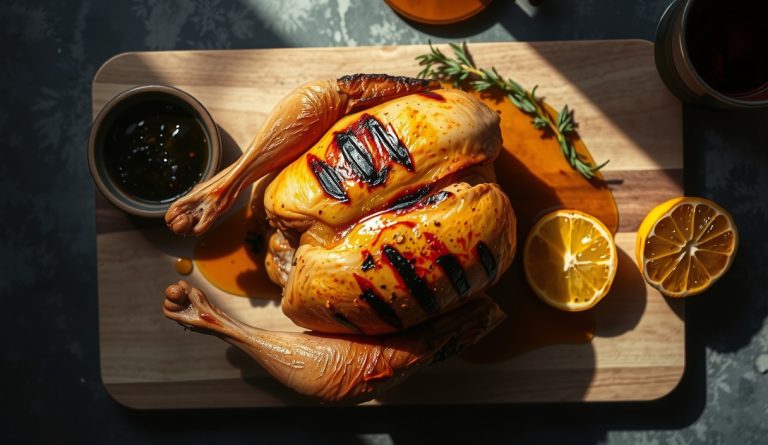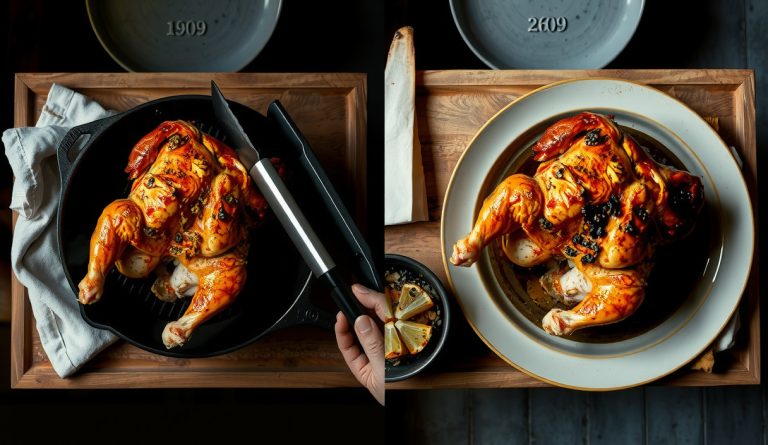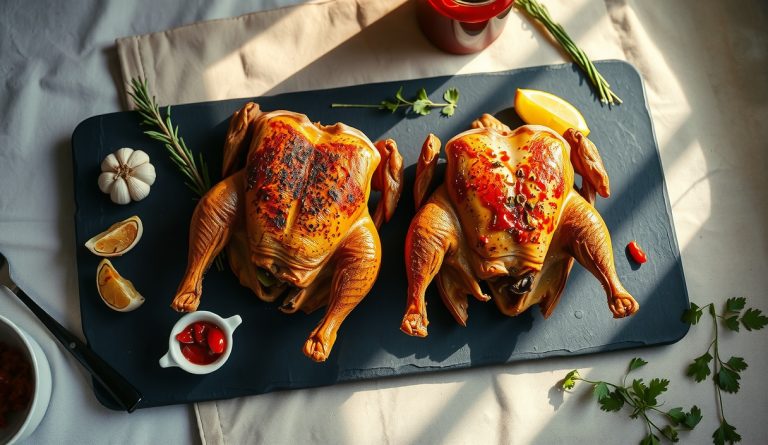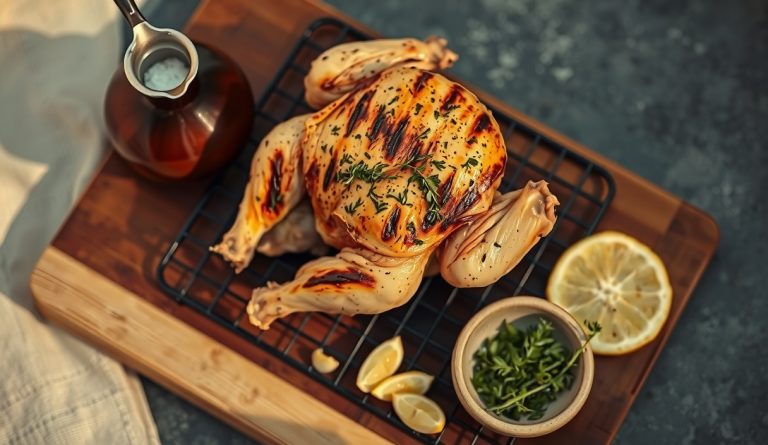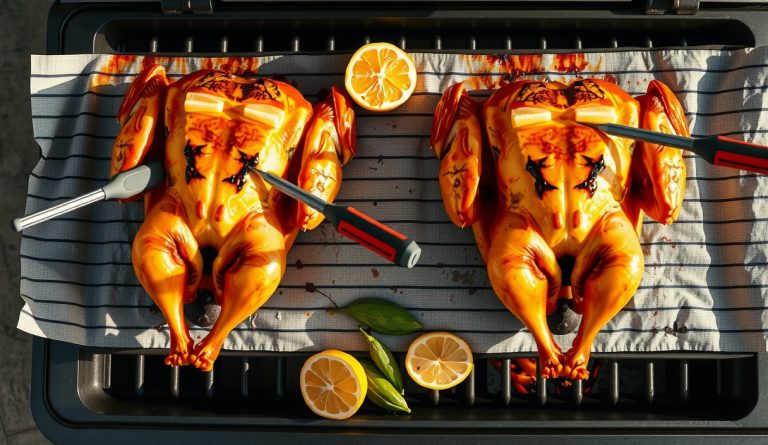
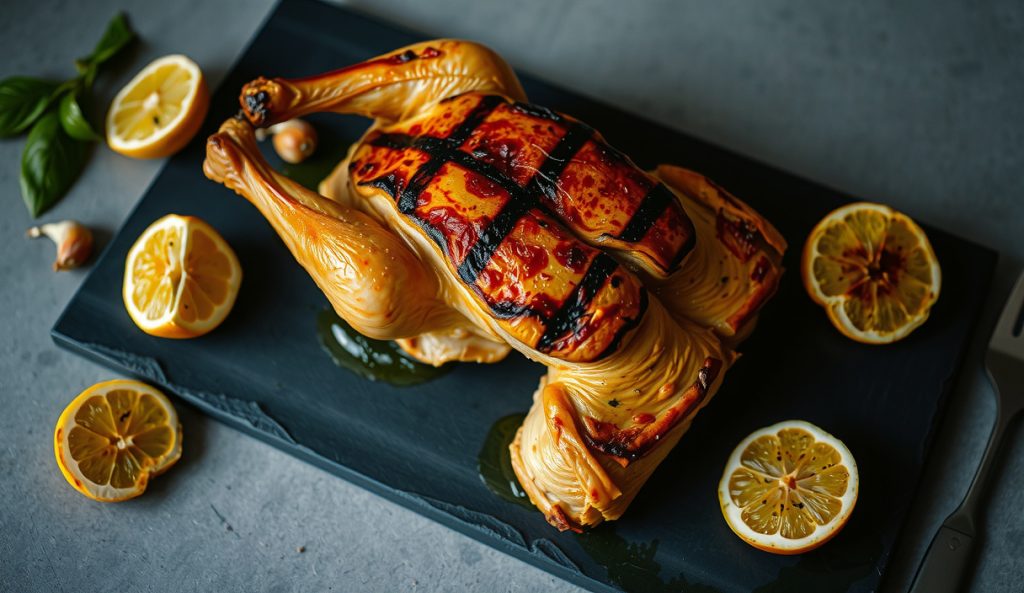
The Grilled Spatchcock Chicken — Lemon-Garlic is already one of the most keto-friendly canonical BBQ recipes on the site. Chicken thighs and breast are pure protein and fat. Olive oil, garlic, thyme, and fresh lemon contribute negligible net carbs. A careful audit reveals two places where carbohydrates sneak in, and one where the wrong sweetener swap will sabotage your bark. This guide closes both gaps with food-science precision so the keto version is indistinguishable from the original at the table.
What changes for keto — and exactly how much does it matter?
Fresh lemon juice — keep it, but account for it. One large lemon yields roughly 3 tablespoons of juice, contributing about 2.5 g of carbohydrate (primarily citric acid and a small fraction of fructose/glucose). Split across four servings of a whole spatchcocked bird, that is under 1 g net carb from the marinade acid per portion — well within keto thresholds. No swap is needed; simply be aware if you are stacking multiple lemon-forward dishes in the same meal.
The charred lemon for serving — a meaningful keto win, not a liability. Halving lemons and placing them cut-side down over direct heat caramelizes their surface sugars via Maillard and pyrolytic reactions, concentrating flavor dramatically. The total sugar delivered by a squeeze from one charred lemon half at the table is approximately 1–2 g per bird. For strict keto practitioners, squeeze the charred lemon over the bird before resting rather than encouraging guests to add extra at the table. The flavor payoff is high enough that most people will use only a modest squeeze regardless.
Any rub additions or glazes — audit and swap sugar sources precisely. The canonical marinade contains no added sugar, which is excellent for keto. However, if you extend the recipe with any variation that includes honey, brown sugar for bark development, or a finishing glaze built on ketchup or barbecue sauce, those are the carbohydrate targets to eliminate. Brown sugar (sucrose) contributes to the Maillard cascade and caramelization on skin above 160°C (320°F). For keto, replace sucrose gram-for-gram with allulose. Allulose is a rare sugar that participates in the Maillard reaction and caramelizes at temperatures close to sucrose — unlike erythritol, which does not brown efficiently and leaves a noticeable cooling sensation on the palate as it dissolves endothermically. A blend of allulose (80%) and monk-fruit concentrate (20%) delivers sweetness parity and genuine amber bark color with near-zero net carbs. Avoid pure erythritol on skin surfaces; recrystallization on cooling produces a gritty, frosty texture that is immediately detectable.
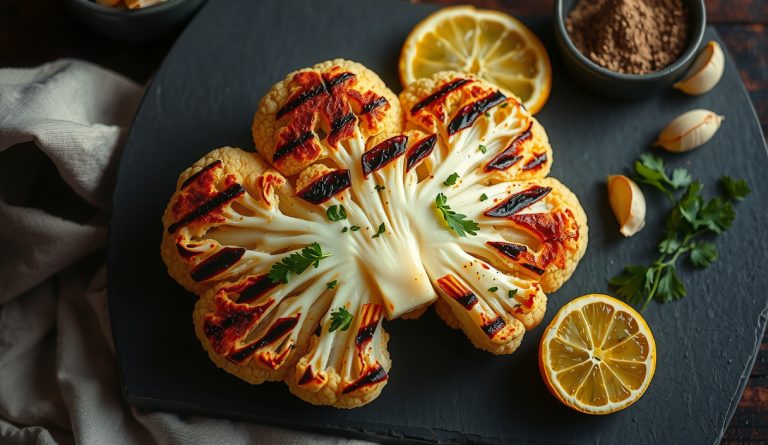
Serving context — eliminate the carb surroundings. The canonical recipe’s natural pairings — bread and starchy sides — are where keto meals unravel, not the bird itself. Serve the spatchcock chicken over a bed of grilled zucchini and halved cherry tomatoes dressed with the same olive oil and thyme from the marinade, or alongside a cauliflower purée finished with roasted garlic and the rendered chicken drippings from the resting board. Those drippings — lemon-infused olive oil, denatured garlic VOCs, and Maillard-flavored fond — carry near-zero net carbs and deserve to be used, not discarded.
What stays exactly the same as the original recipe?
The spatchcock geometry, the 45-minute acid marinade window, the two-zone 400°F indirect setup, the 157°F breast pull temperature with a 5-minute tent, and the optional direct-heat skin finish are completely unchanged for the keto version. Chicken, olive oil, garlic, thyme, salt, pepper, and fresh lemon are all naturally keto. The thermodynamic and food-chemistry logic that makes this bird exceptional — protecting the actin network, driving the Maillard cascade on skin, achieving pasteurization below the 165°F actin-collapse threshold — applies identically whether the plate beside it is keto or not.
Who should use this keto adaptation instead of the original?
This adaptation is the default choice for anyone tracking net carbs tightly, following a therapeutic ketogenic protocol, or simply trying to keep a weekend grill session from derailing a metabolic week — without making a separate, lesser dish. Because the canonical recipe is already almost entirely fat and protein, the delta between the original and the keto version is minimal: under 3 g net carbs per serving as written, dropping to under 1 g per serving if you skip the table-side lemon squeeze and avoid any sugared glaze variations.
Follow the complete technique, timing, and temperature guidance at the original recipe.